skip to content
Toby Lunt

Finishing planking

/ 8 min read

Planking a hull is one of those jobs that initiall seems straightforward, but really isn’t. It looks like you’re just attaching a rectangular board to the frames behind it! But the reality is that every plank is a unique three-dimensional puzzle. Each one has to be spiled to shape, beveled to match its neighbors, and often twisted or bent to follow the hull’s compound curves. And in the curviest parts of the boat, the geometry gets genuinely wild.

Ferry lit up at night in fog on the water
The night ferry through the fog. #art
Completed stern planking viewed from below, showing new mahogany planks alongside original hull
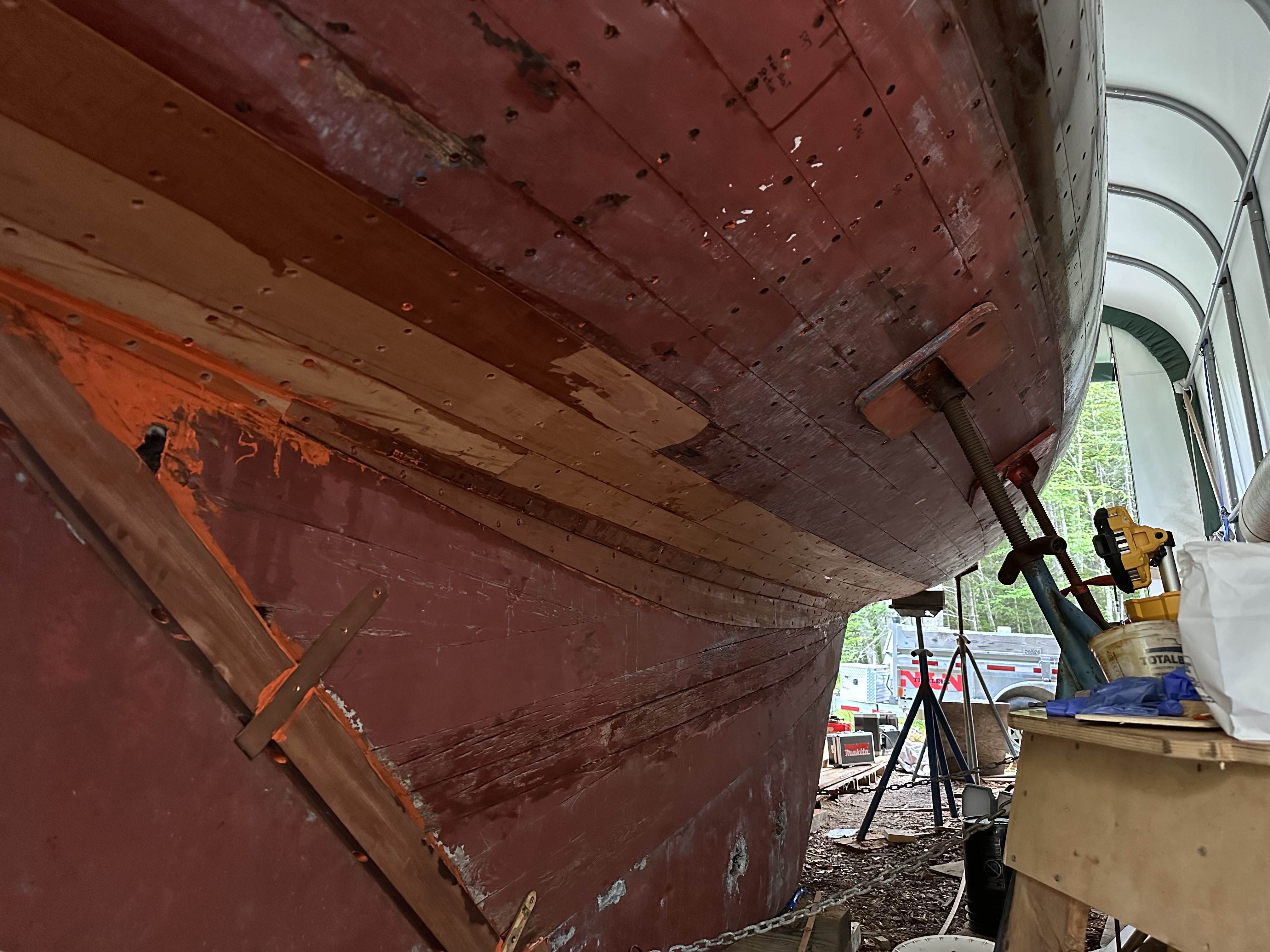
The starboard side, shuttered. New mahogany planks fill in the gaping holes below the waterline that we had become so accustomed to.

Swell testing

A carvel-planked hull relies on the wood swelling when it hits the water to close up the seams between planks. But how much will it swell? And how tight do the seams need to be on land so they close up properly in the water? How precisely matched do the bevels really need to be? Obviously the correct answer is “do it perfectly, then you don’t need to worry” but we wanted to get a sense of our tolerances before taking on the rest of the planking work.

We built a test rig — a small section of planking with controlled gaps of different widths and types — and sank it in a buddy’s pond to find out.
Swell test rig: small planking section with spacers, viewed from above
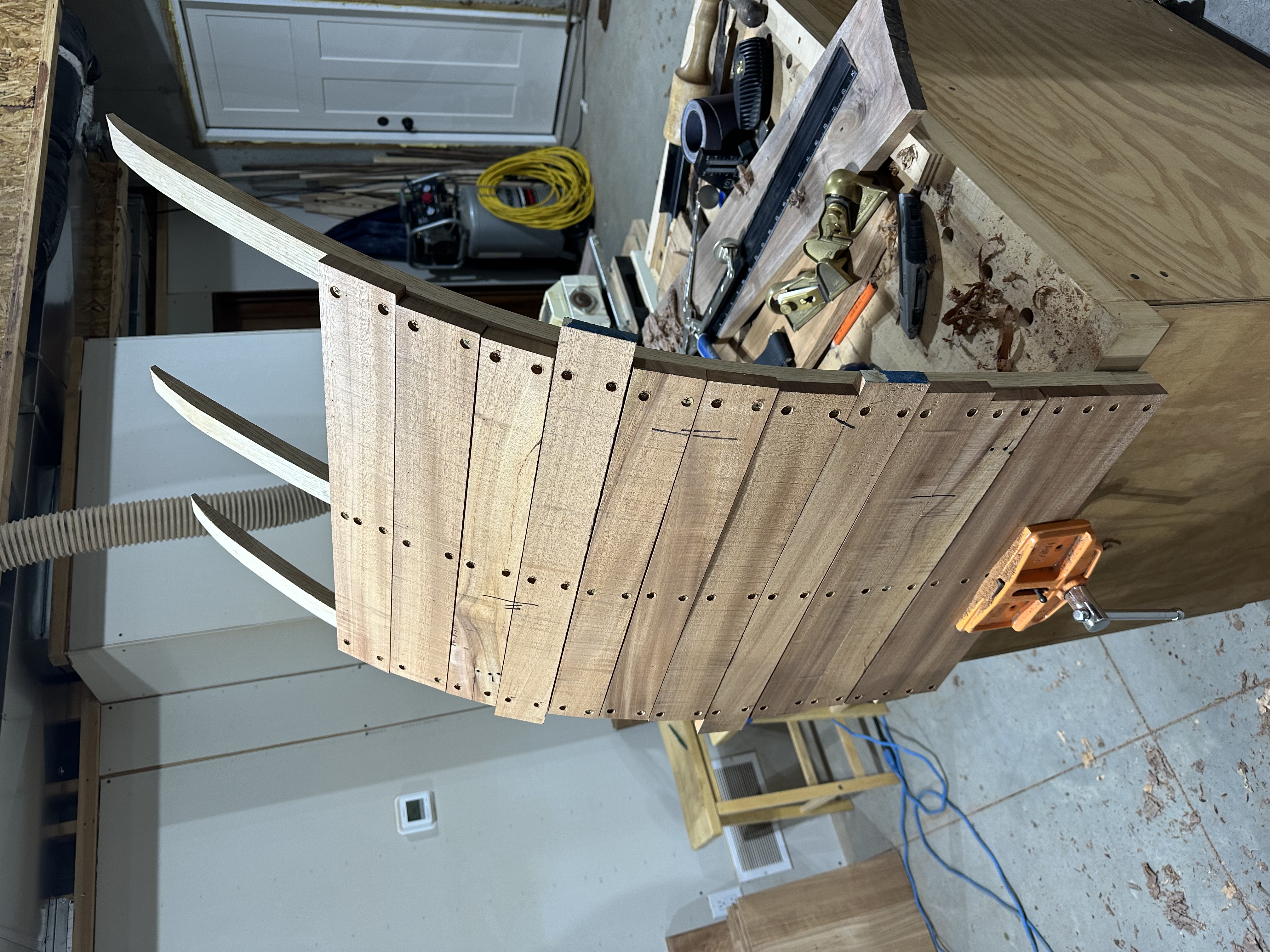
The swell test rig before submersion. Multiple plank sections with different gap widths between them.
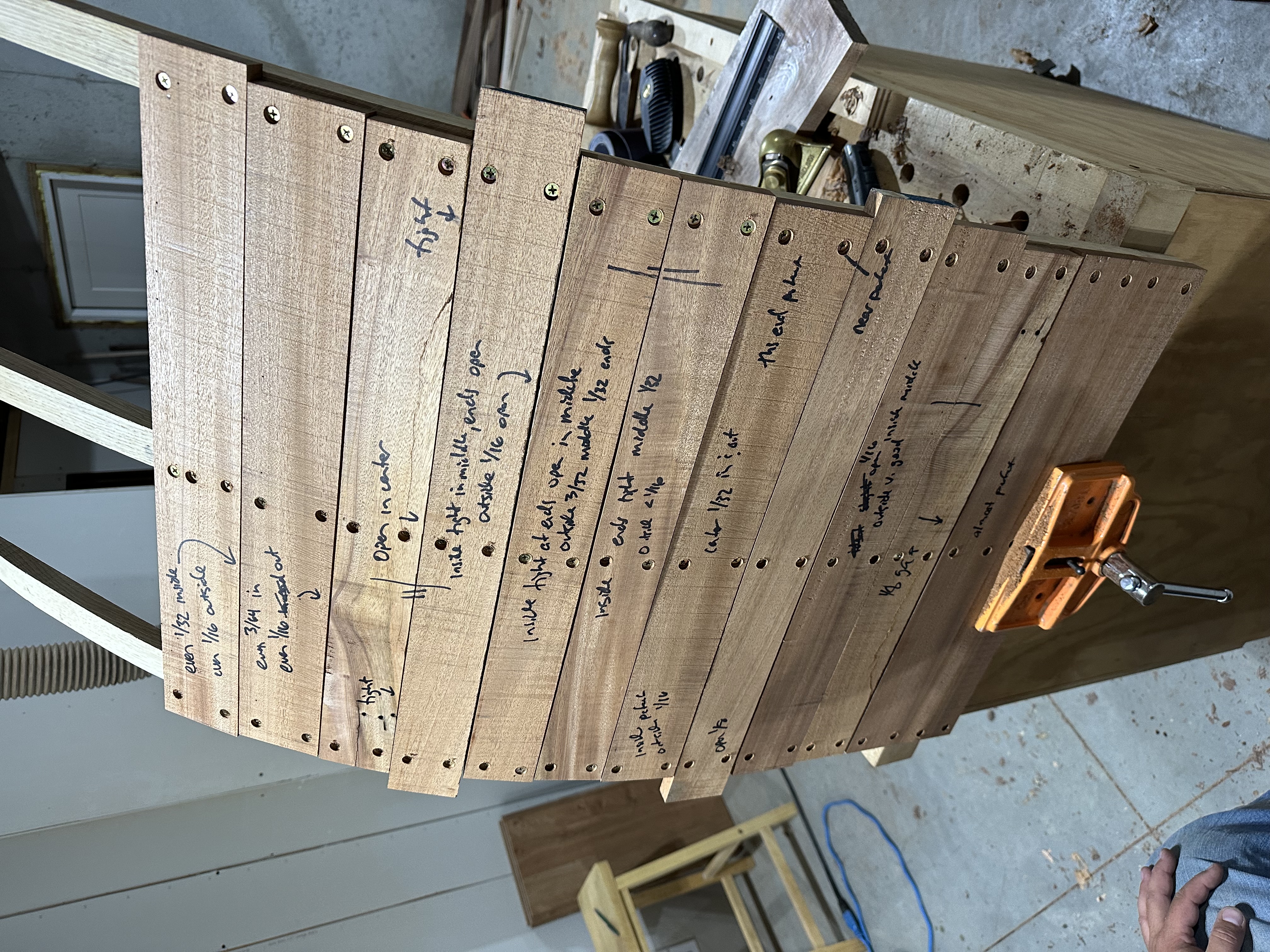
Swell test rig with bevel readings and gap measurements written on each station
The same rig with measurements and descriptions in sharpie. Bevel mismatches, short gaps, long gaps - we wanted to know how much each variable affected the swell.
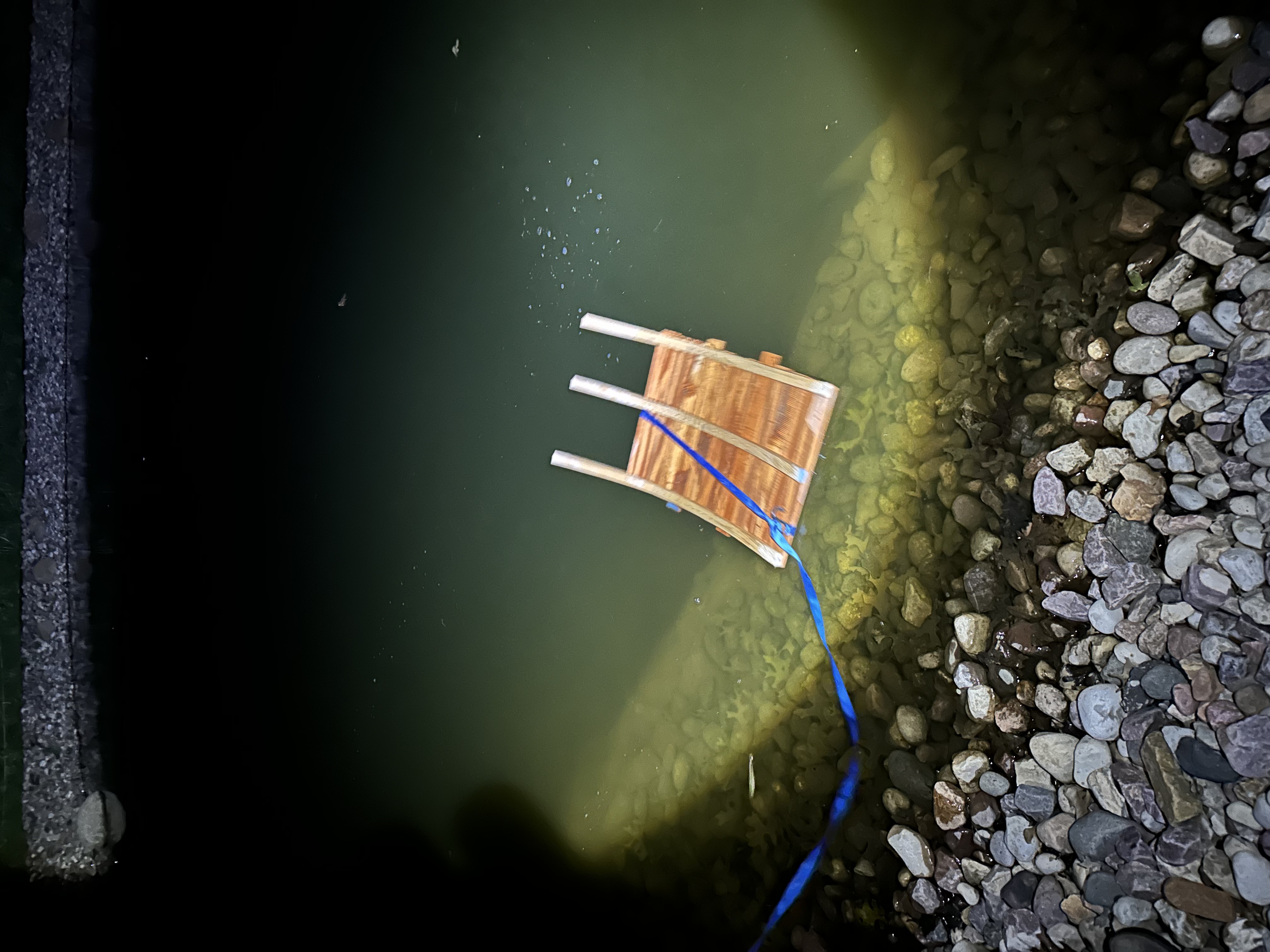
Swell test rig submerged in pond, weighted with a rock
The rig in the bond. We added a big rock to keeps it submerged. Now we wait.

After a few days in the pond, all but the largest offenders had closed up nicely. We’d still shoot for perfect, but this result was encouraging.

Spiling
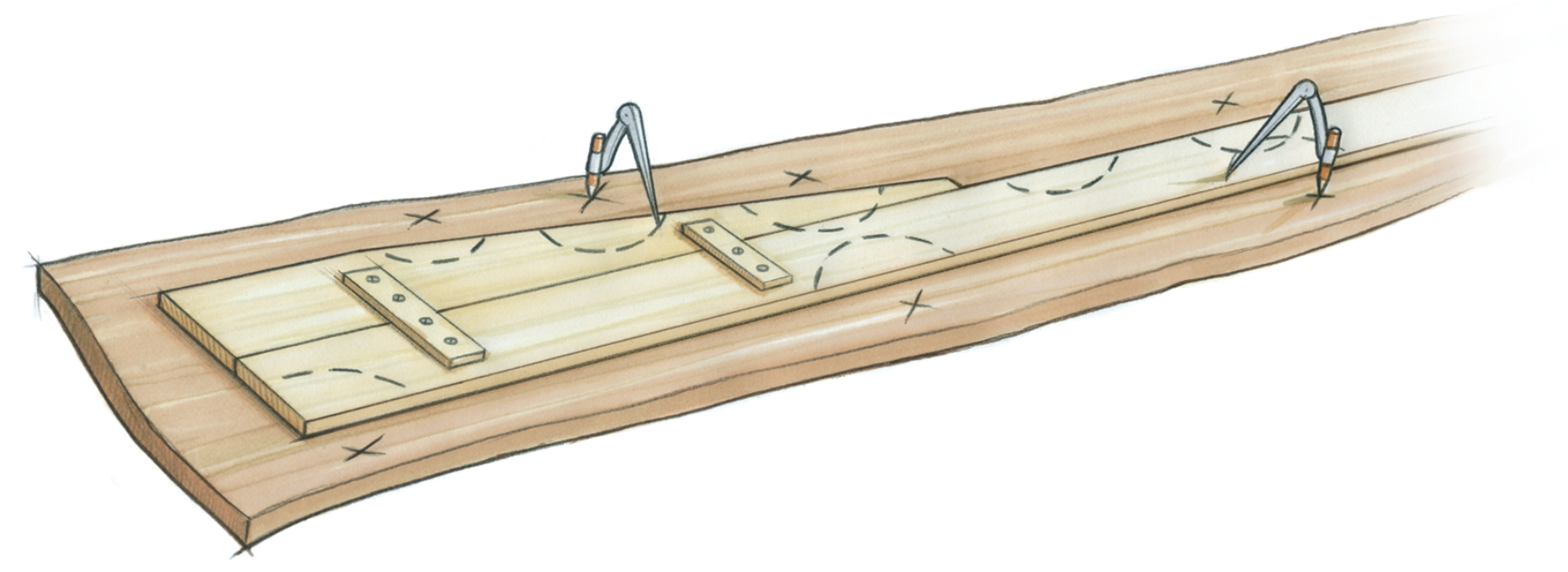
Illustration of spiling process showing batten on plank stock with dividers
The spiling process: a thin batten is clamped where the plank will go, and dividers transfer the edge shape onto the batten as arcs. Back at the bench (shown), the arcs are reversed onto the plank stock to lay out the true shape.

Spiling is how you transfer the shape of a plank from the boat to a flat board to be shaped. You can’t just hold a board up to the hull and trace — the curves are three-dimensional and the plank stock is flat and rigid. Instead, you clamp a thin spiling batten to the frames where the plank will go, then use dividers to transfer a series of reference points from the hull’s edge onto the batten. Back at the bench, you reverse the process to draw the plank’s true shape onto the stock. Easy, right?\

Like many things in boatbuilding, the devil is in the details. You must end up with a plank outline that is EXACTLY correct, or you will have leaks. You need to be mindful of plank thicknesses and bevels, whether you’re templating the inside or outside face of the plank, and many other things. But at the end of the day it’s really just kindergarten skills executed at a high level. Draw a line. Cut to the line.
Long spiling board made of door skin with a plywood hood end template hot-glued to the end, held against the hull
The spiling board — a long strip of door skin plywood nailed to the frames.

We found that spiling alone wasn’t accurate enough for the hood ends — where the planks land in the centerline timber rabbets. With a long, slender boat such as this, the geometry is too tight and the tolerances too small to spile properly. So we pre-templated the hood ends separately: a full-size template cut from thin plywood, then hot-glued to the end of the spiling board (made from door skin). This gave us the exact shape at the ends.
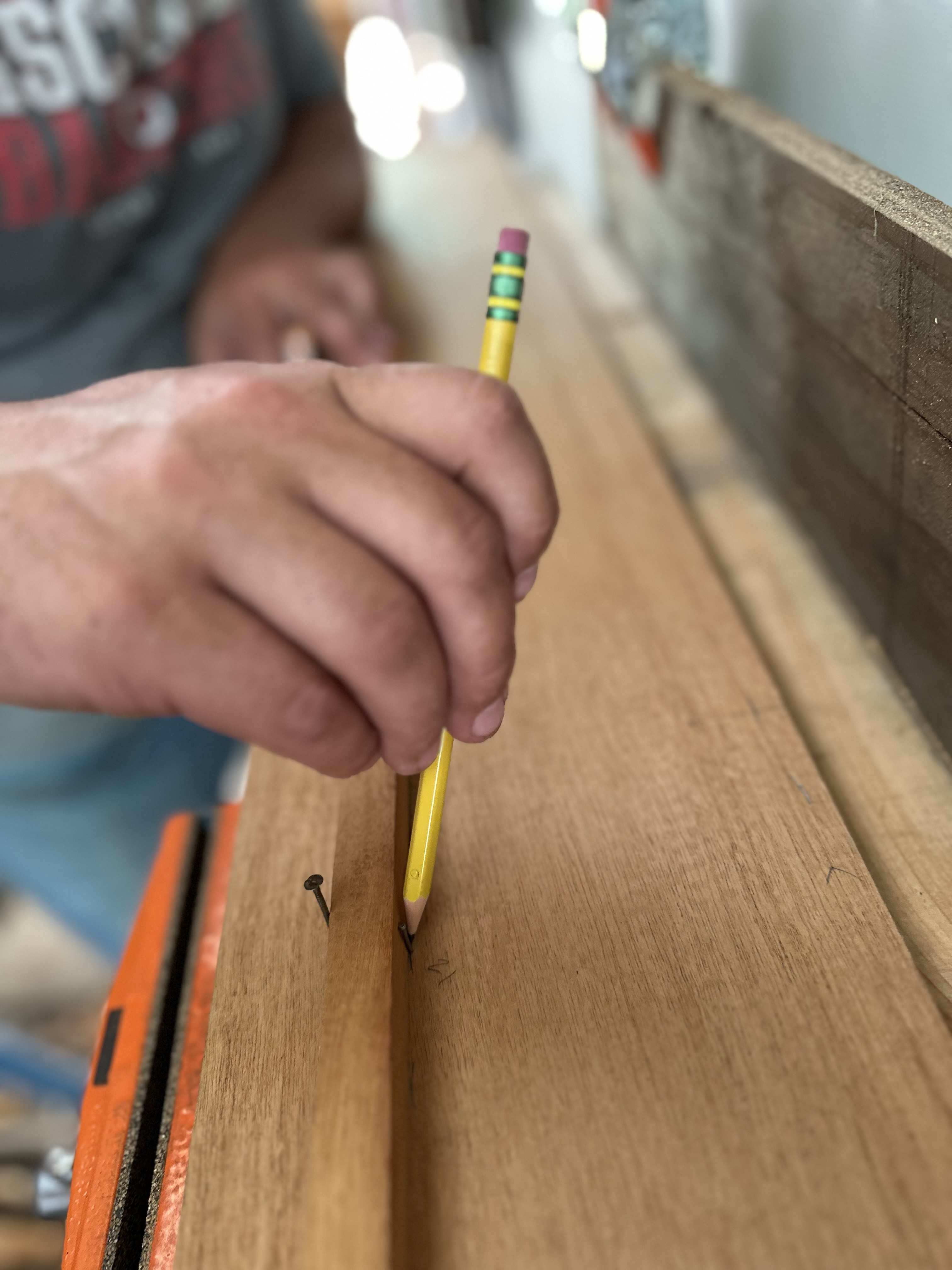
Spiling board and hood end template viewed from inside the hull
A better view of a hood end template. A full-size plywood template for the very end was pre-fitted then hot-glued onto the spiling board, giving a precise fit where the plank lands on the aftertimber or the stem.
Hand marking spiling points on a plank with a pencil
Connecting the spiled points on the plank stock with a flexible batten.
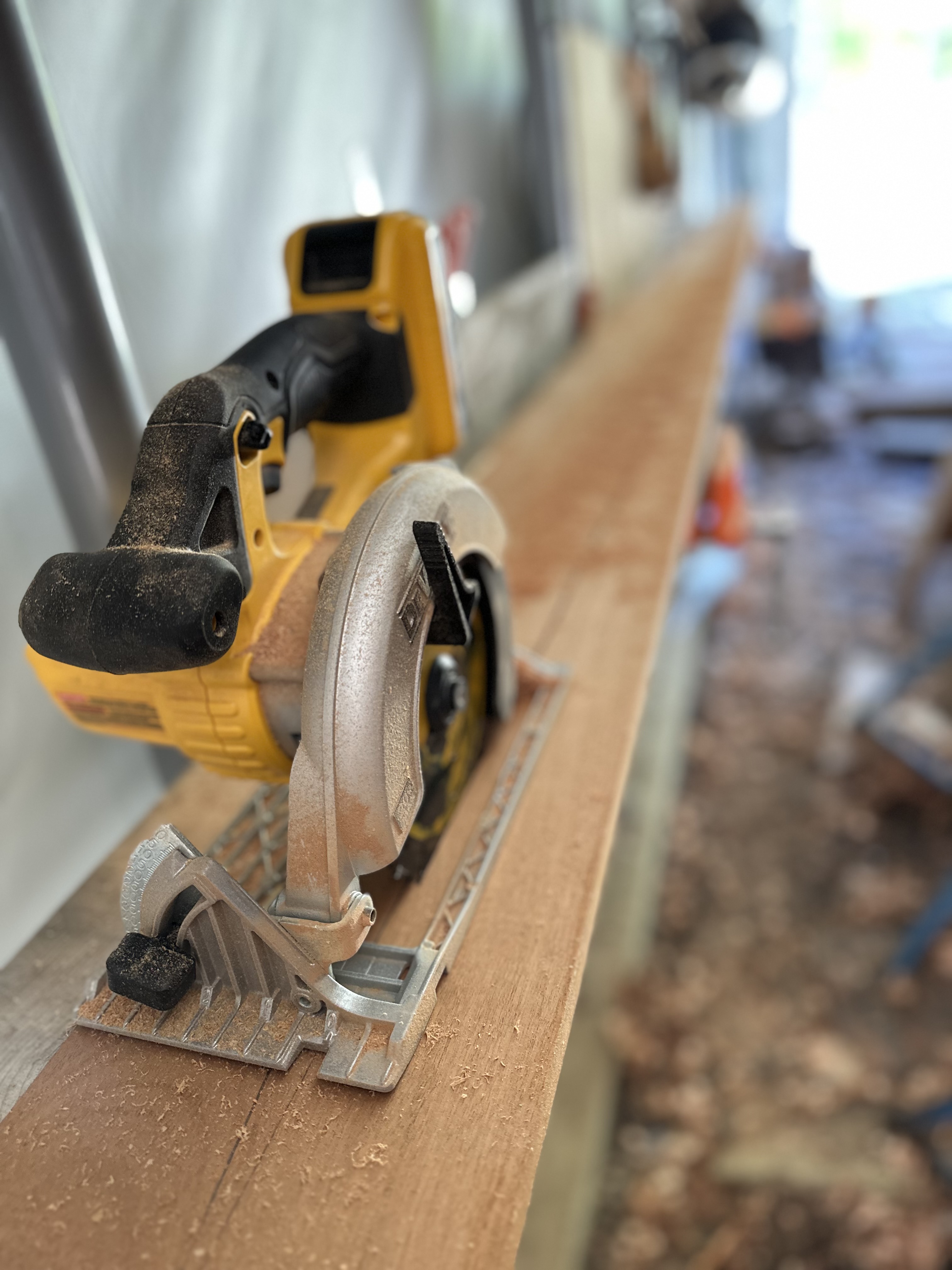
Circular saw cutting a plank to shape
Cutting to the spiled line. The rough shape is cut with a circular saw, then refined with hand planes.

Rolling bevels

The planks don’t meet their neighbors at a right angle. The bevel changes continuously along the length of the plank as the hull curvature shifts from station to station. This is called a rolling bevel, and if you don’t get it right, the boat looks (are we picking up on a theme?).

We measured the bevel at each frame station using a bevel gauge, then wrote the readings on a piece of scrap for quick reference. These readings directed our final hand planing of the plank edge: at station 22 the bevel is one angle, at station 30 it’s another, and everything in between has to transition smoothly. The human eye and the tips of the fingers were the final judges of the fairness of these bevel transitions. They are incredibly sensitive instruments.
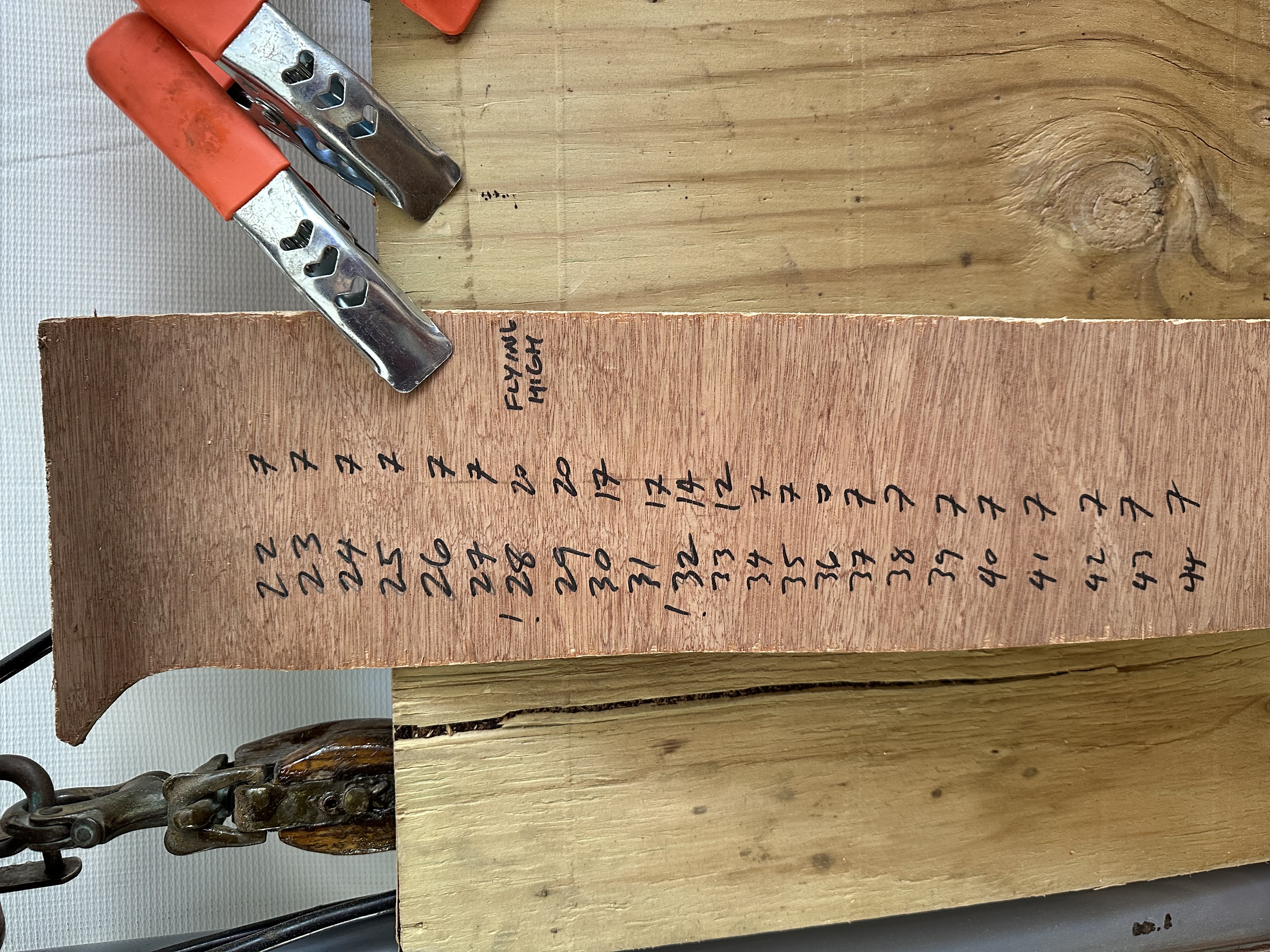
Scrap plywood with station-by-station bevel readings written in marker
Station-by-station bevel readings written on scrap plywood and kept at the planing station for reference. Each number is a frame station, each angle mark shows the bevel to cut at that point. This is the roadmap for shaping.

The bevels are cut by hand with planes on a two-vise workbench — the plank is clamped on edge and you work the bevel in progressively, checking against your readings as you go.
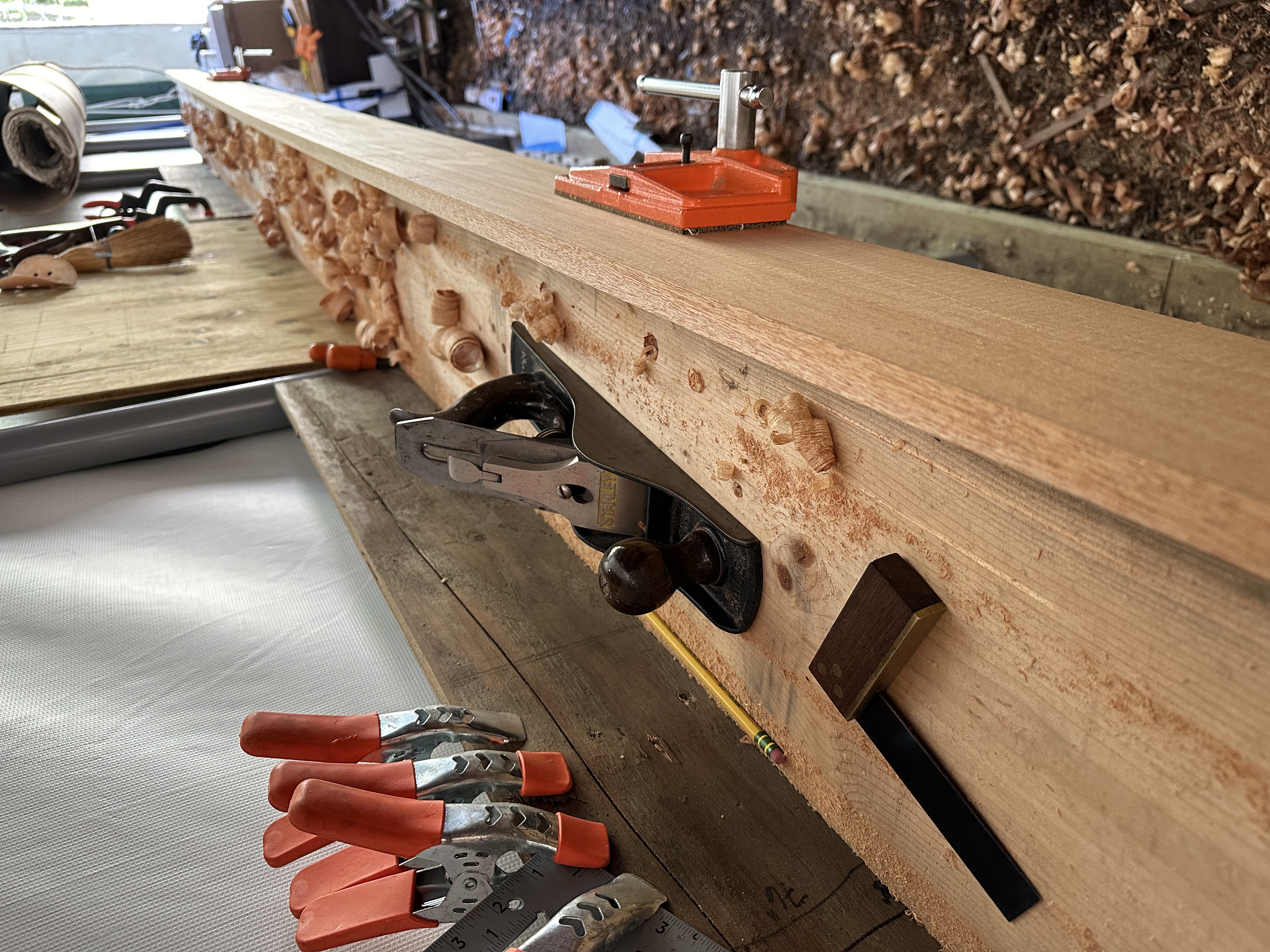
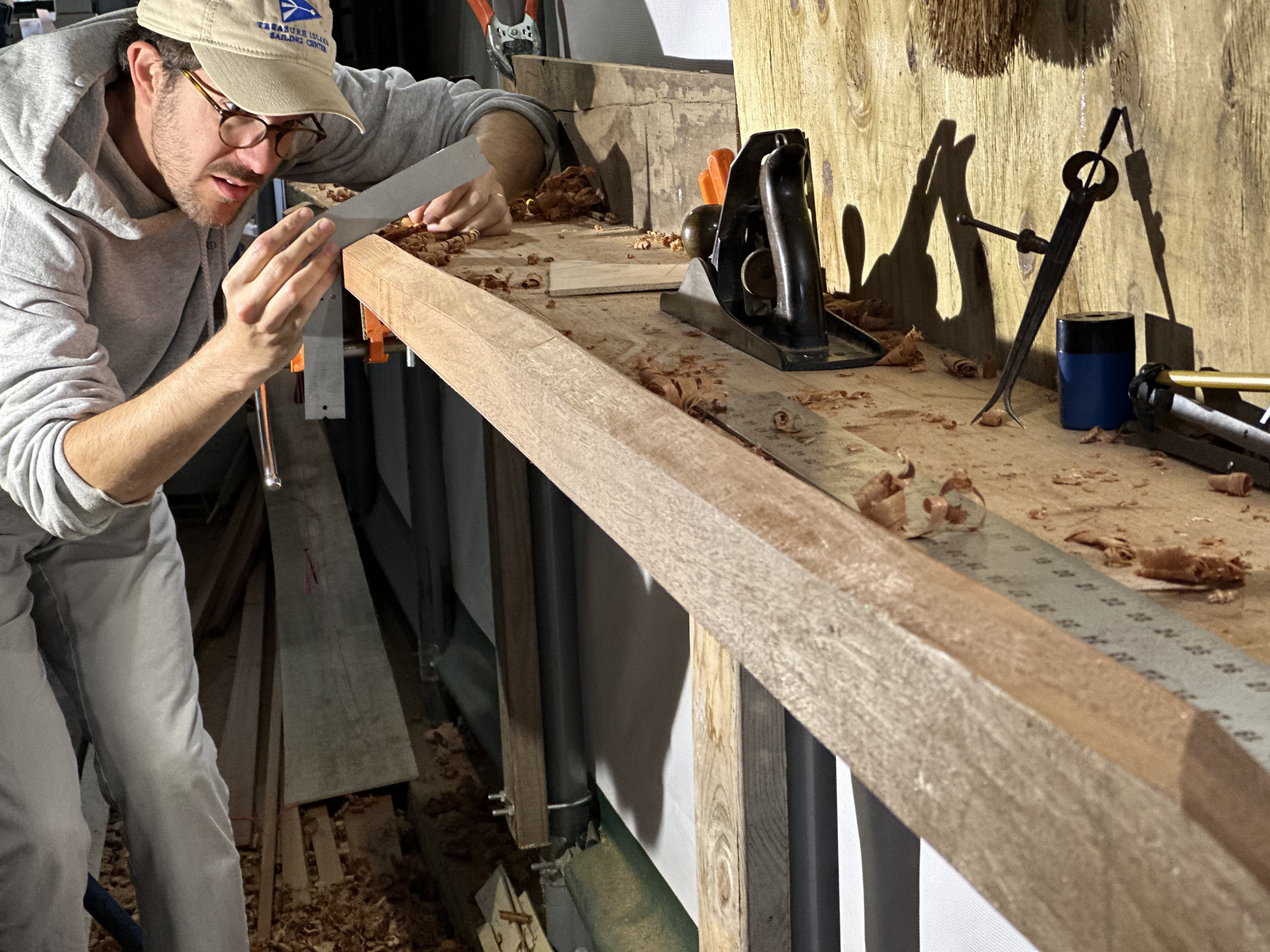
Plank held on edge in the two-vise workbench with hand planes and shavings
The two-vise workbench. The plank is held on edge and the bevel is cut in with hand planes — a jack plane for rough work, a jointer to straighten, a smoother to finish.
Person sighting down the edge of a plank on the workbench to check the bevel
Checking the bevel. Your eye is still the best tool for checking whether the bevel transitions smoothly from one station to the next.
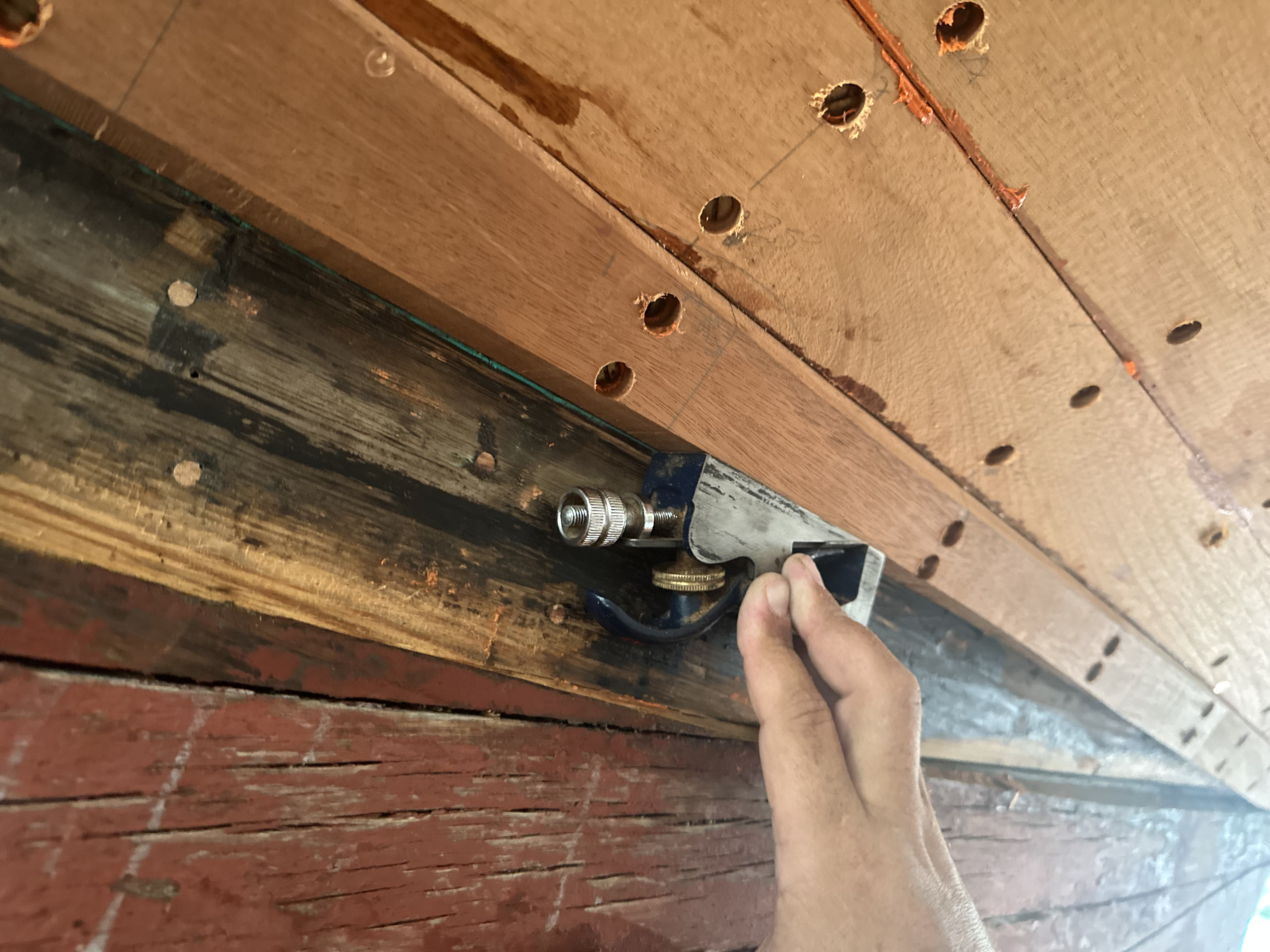
Squaring up a plank seam with a rabbet plane on the hull
Squaring up a plank seam with a rabbet plane. When planking top-down, the bottom edge of every plank is square — the rolling bevels are only applied to the top edge to match the mating plank above. This plank was the hardest and weirdest one. We had to add this extra step to make both the top and bottom edges 90 degrees for the garboard.

Matching camber

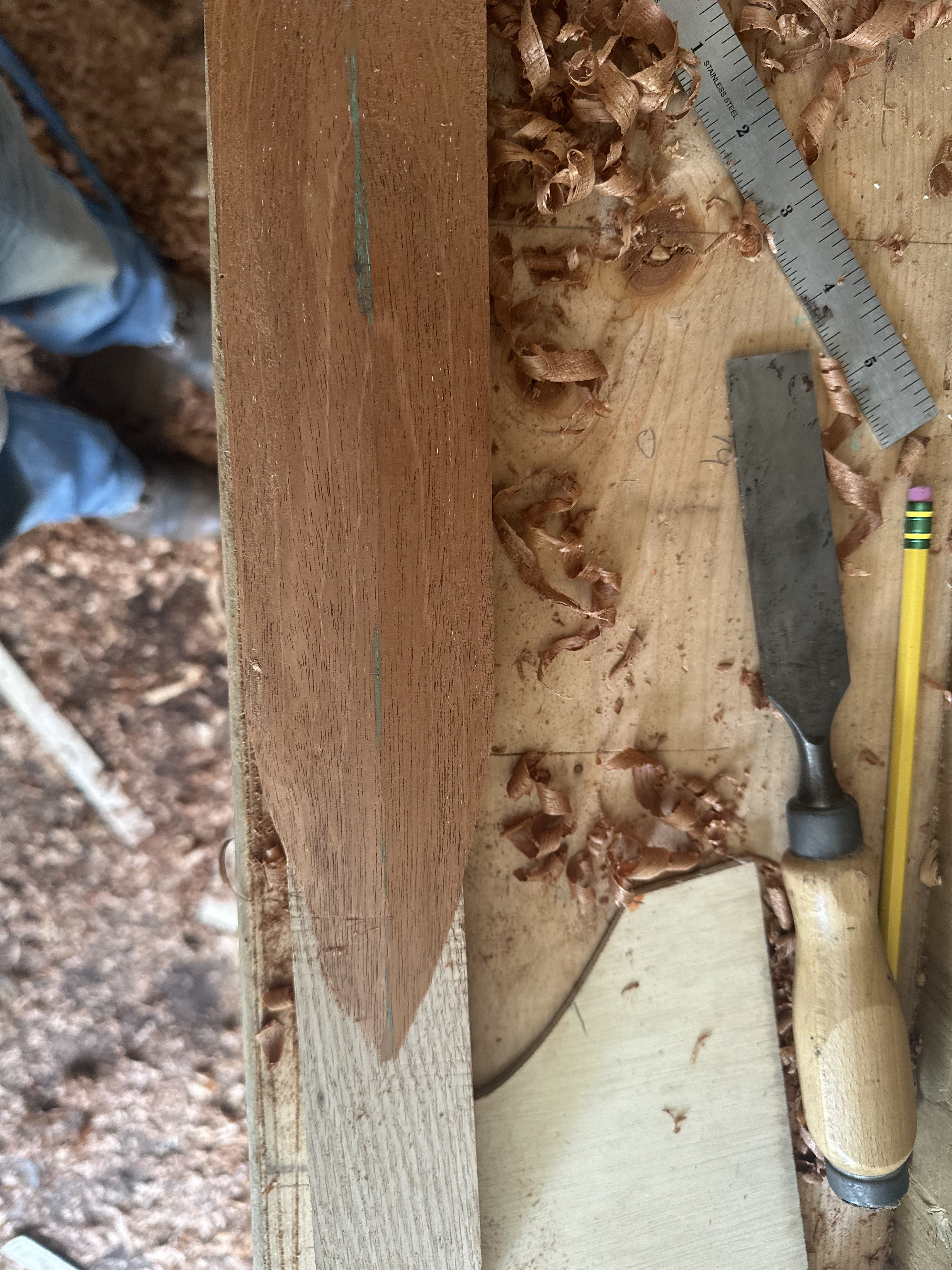
There’s another degree of freedom we haven’t talked about yet. The inside face of each plank has to match the outside camber of the floor timbers and frames it lands on. If the plank is flat on the inside and the floor timber is curved, you get a gap — the plank only contacts the timber at the edges, and the fasteners can’t pull it tight. Or the fasteners pull the plank in so hard that it cracks down the middle. So you shape the inside face of the plank to match, either convex or concave. This is done by hand.
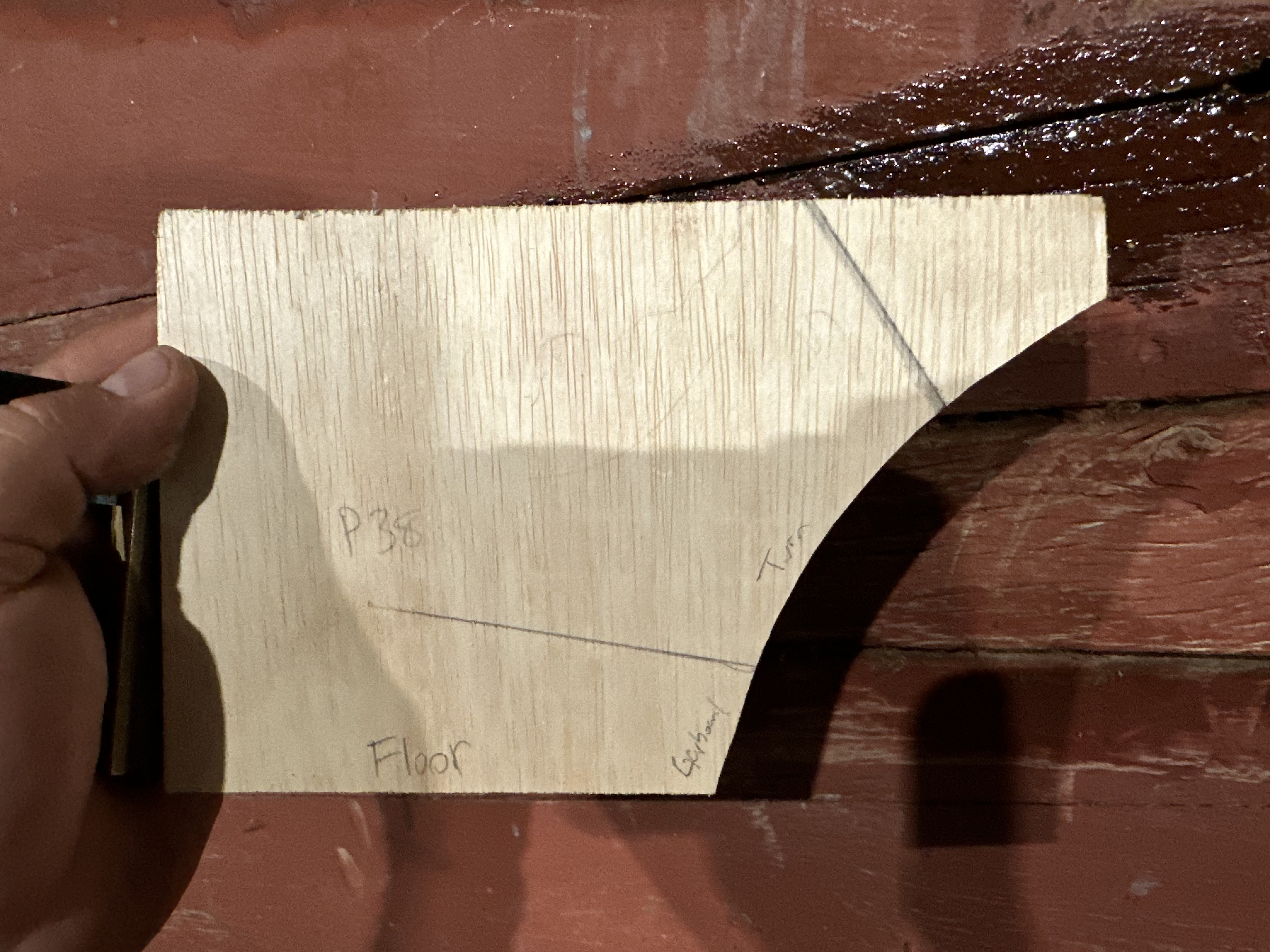
Cross-section template held against hull showing floor timber camber profile
A cross-section template taken from the port side of station 38. Planks seams marked. The curve shows the convex profile the plank's inside face needs to have.
Shaping an additional piece of mahogany to laminate onto the back of the tuck plank
Shaping a second piece of mahogany to epoxy onto the back of the tuck plank. The camber in the tuck was so extreme that a single piece would have required 10/4 stock for a 5/8-inch plank — wasteful and we didn't have it. Laminating in two pieces let us build the camber from thinner stock.

Fitting planks

Getting a plank to its final fit is an iterative process: hang it on the hull, check where it bears and where it gaps, take it down, adjust, repeat. Wedges are essential — they force the plank tight against its neighbor and hold it in position while you assess the fit or fasten it down. The bendiest and twistiest planks needed a decent amount of persuasion.
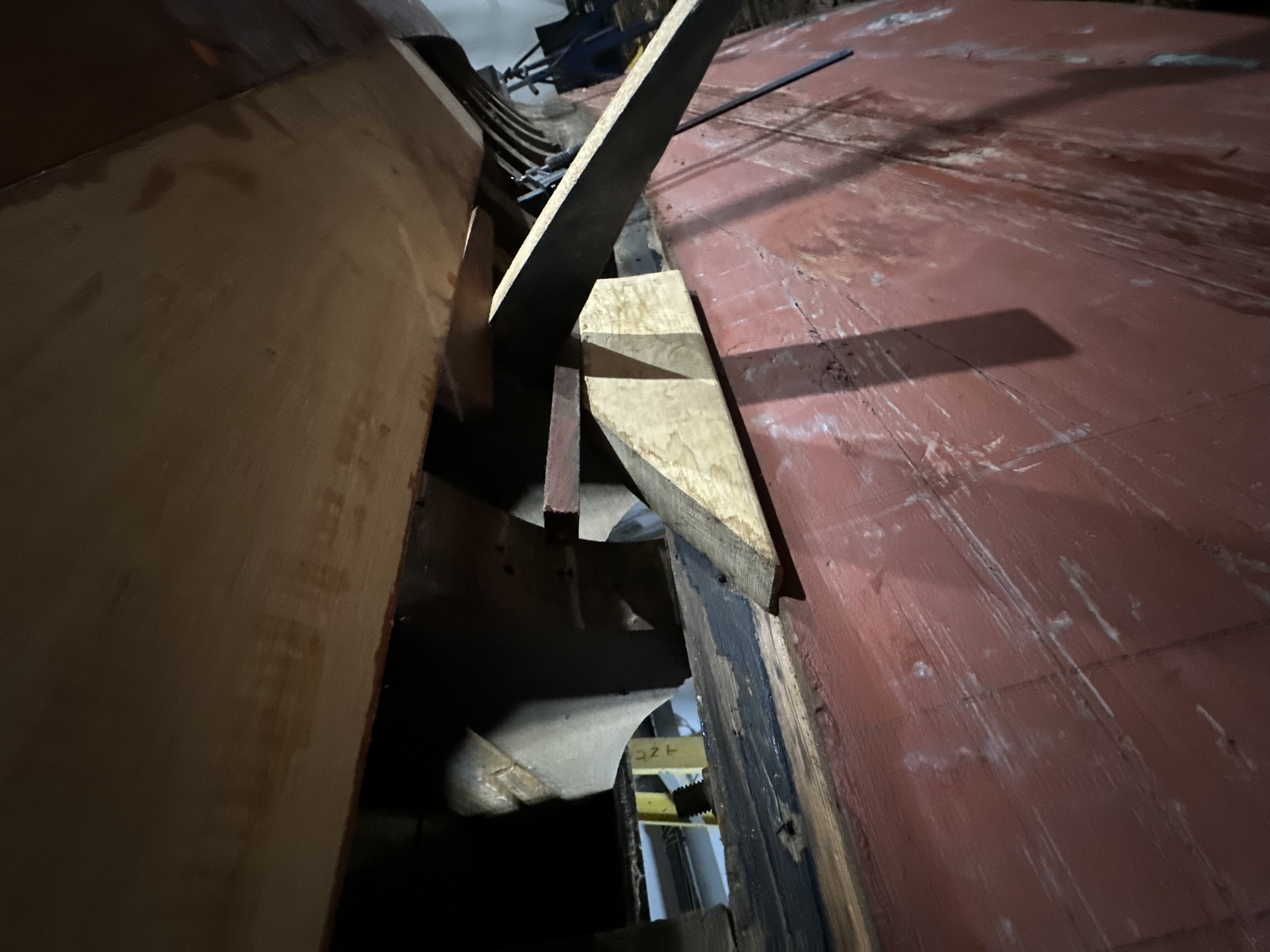
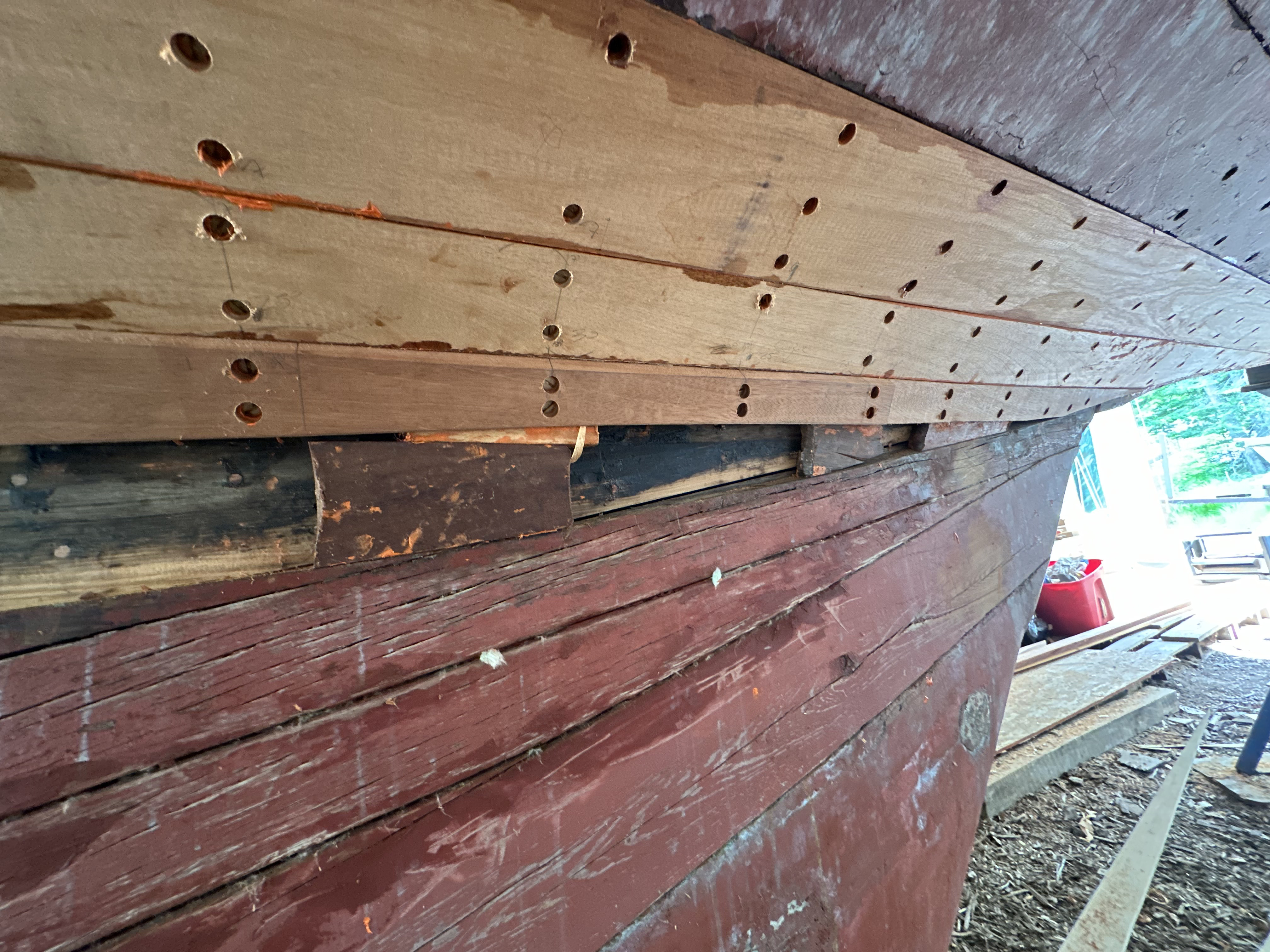
Wedges forcing a new plank tight against adjacent planking on the hull
Wedges doing their job. They force the new plank tight against its neighbor so you can see where the seam is tight, where it gaps, and what still needs to come off.
New planks fitted on the hull with wedges visible at frame locations
New planks fitted and fastened. You can see wedges yet to be removed - they were used to apply upwards pressure during fastening across the full length of the plank.

The tuck

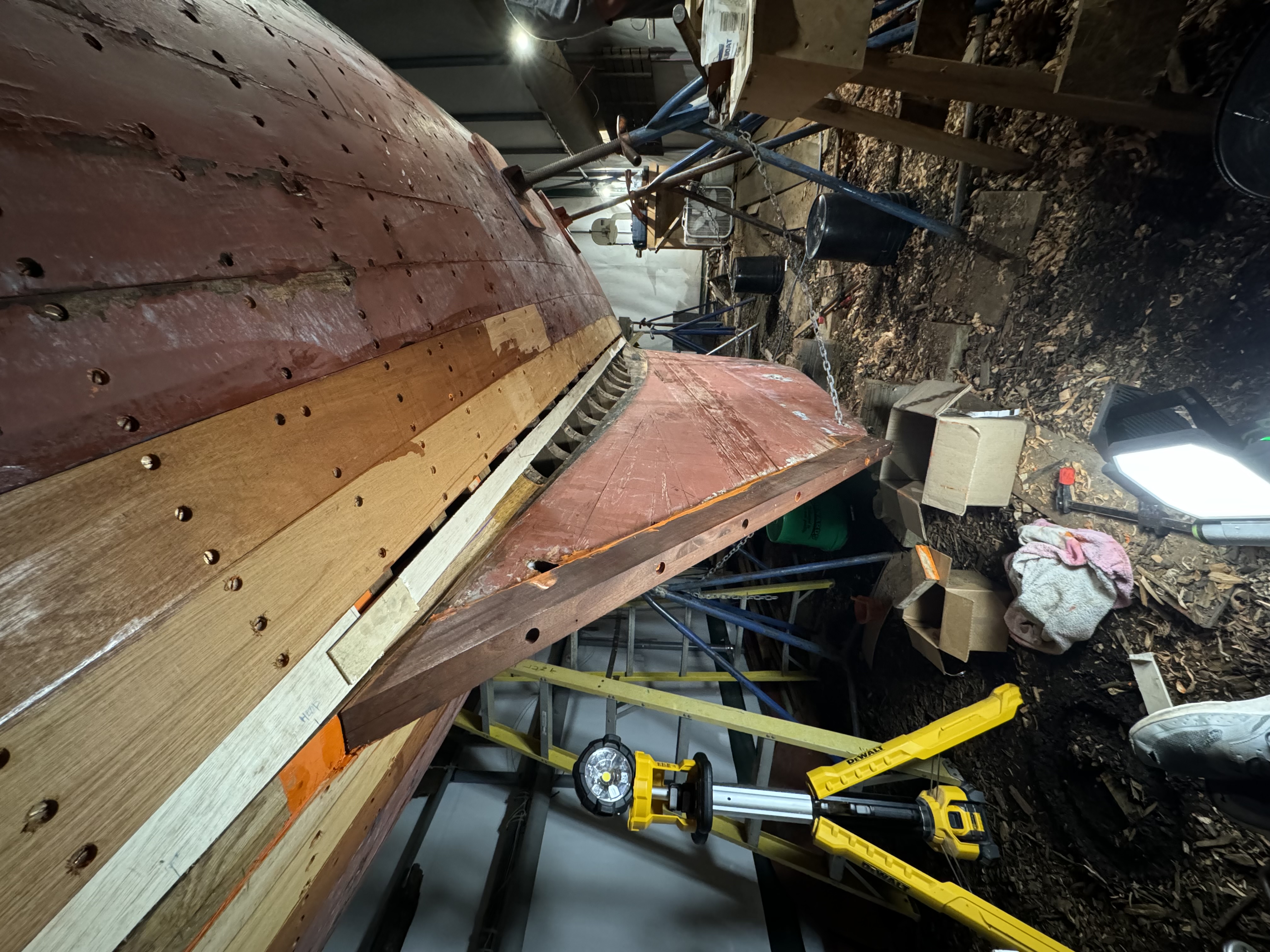
The tuck is where planking gets particularly tough. The planks bend and twist sharply as they wrap around the hull’s wineglass shape. (The tuck is where the stem of the wineglass meets the bowl). Bevels go insane and plank shapes can end up looking unsettlingly strange.
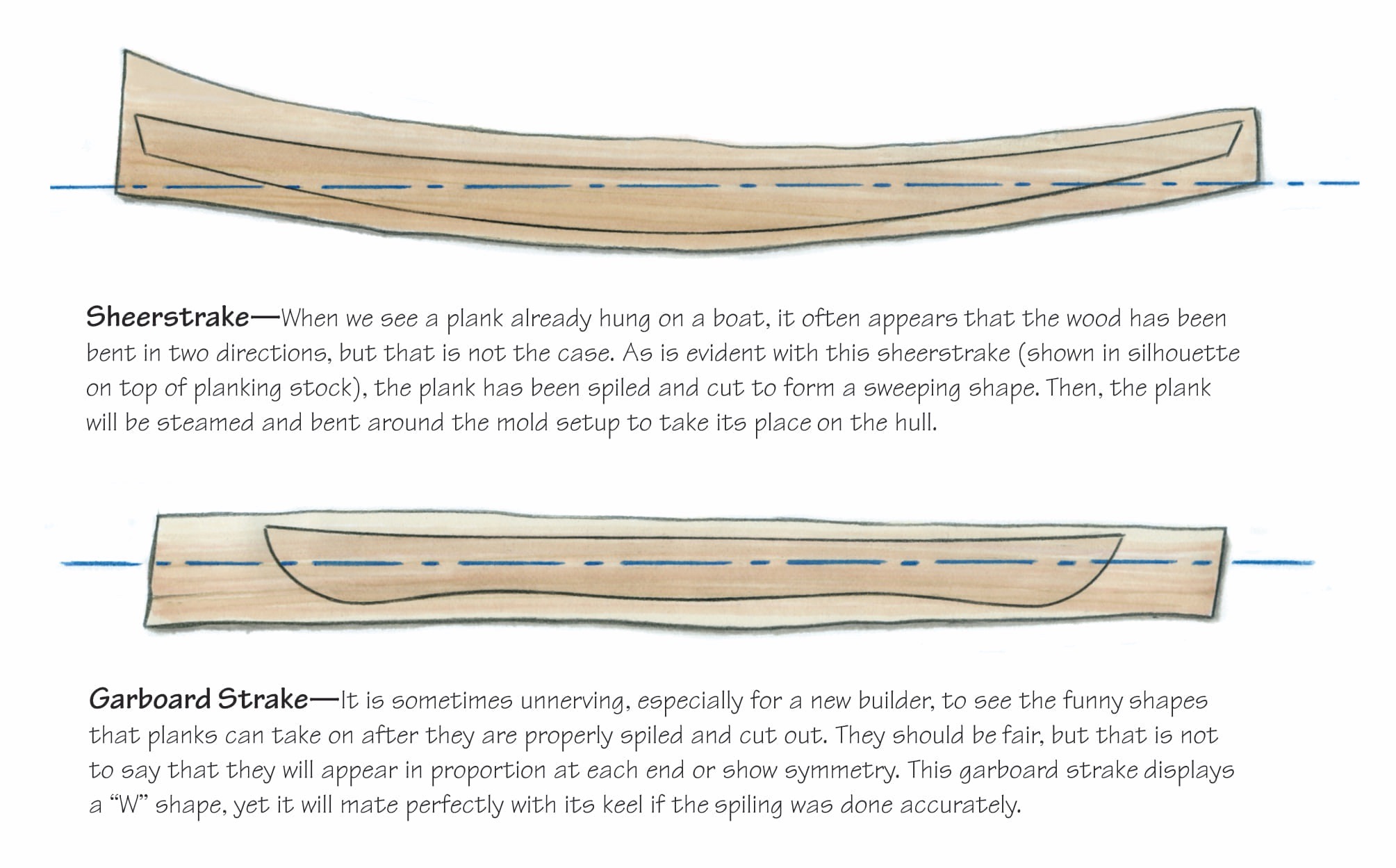
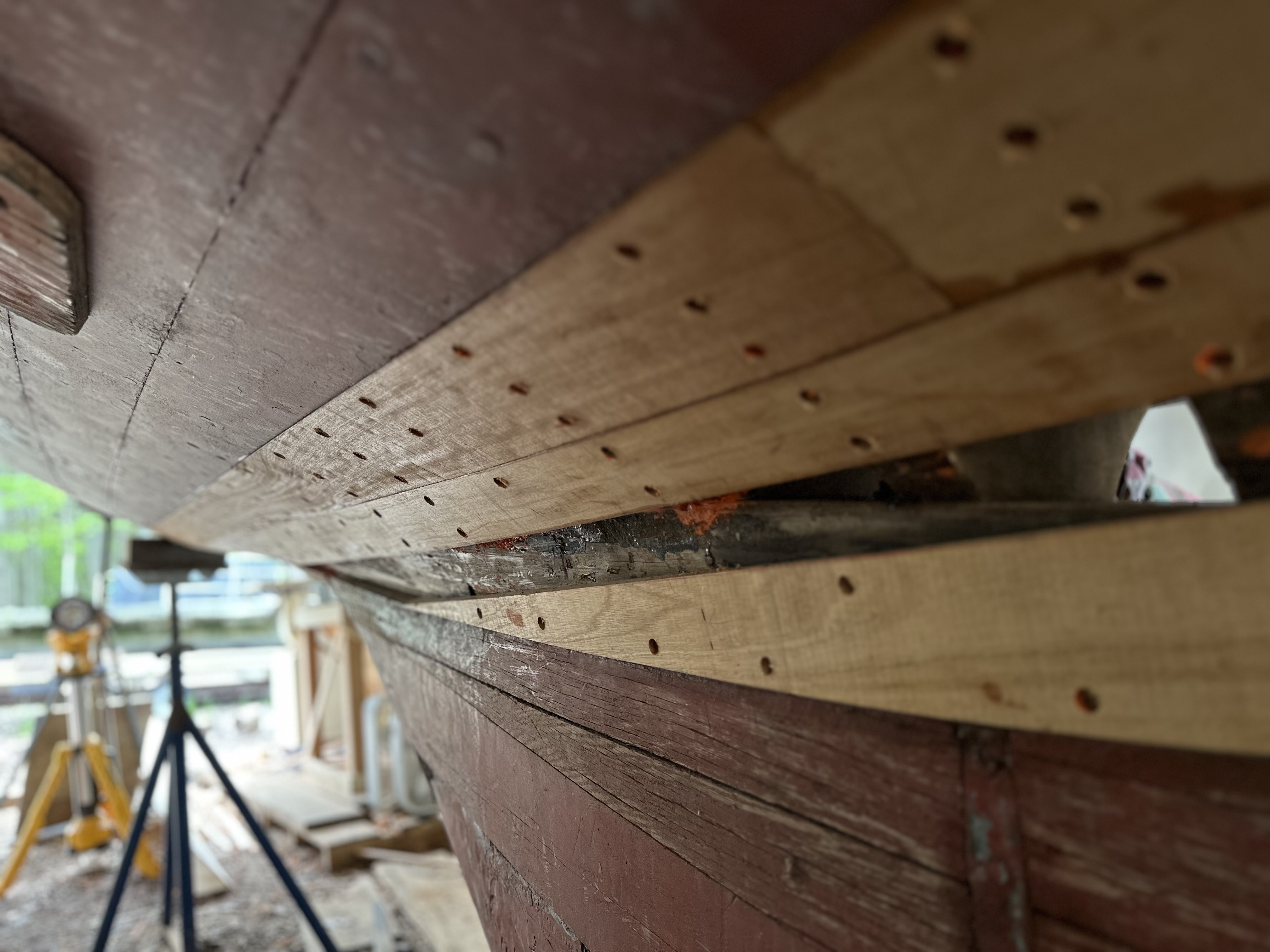
Illustration of sheerstrake and garboard strake plank shapes
From Wooden Boat. Plank shapes can look bizarre when laid flat even if the spiling was done right.
New planks converging sharply at the stern tuck
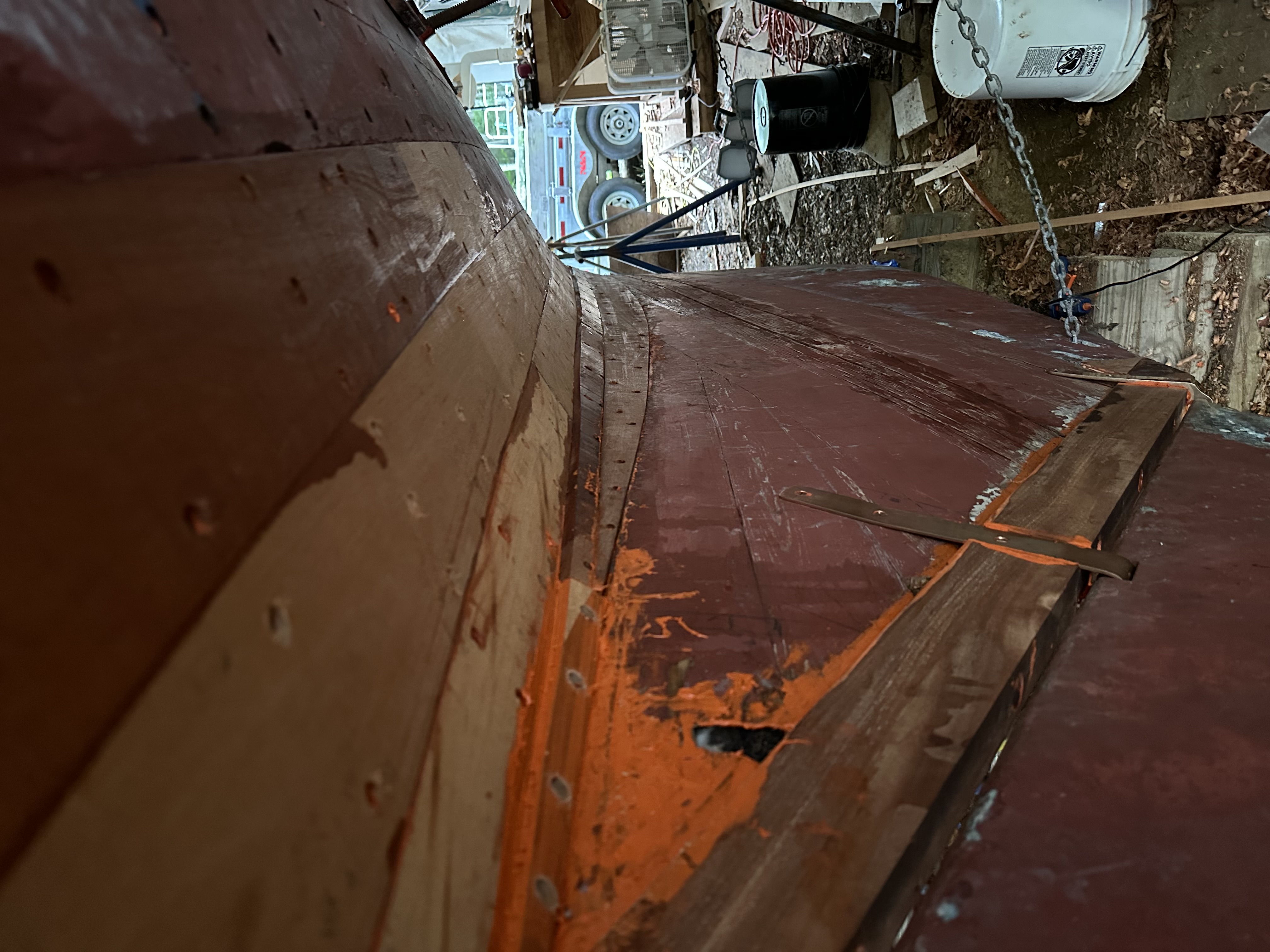
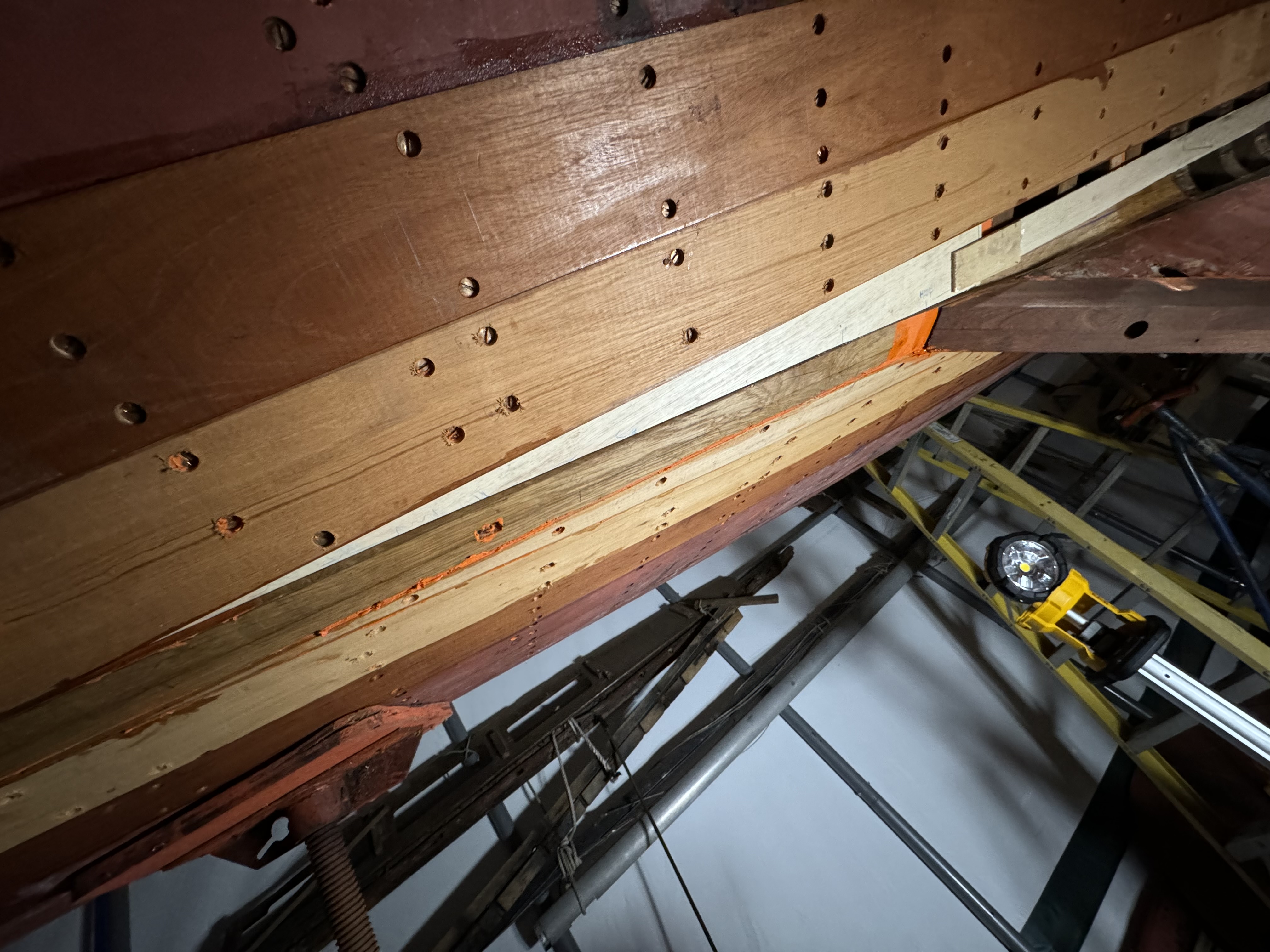
Planking at the tuck. Each plank twists a ton as it moves aft toward the sternpost, and the angles between them change rapidly.

For one plank right in the tuck, we had to cut twist directly into the stock — the plank needed to change its plane of rotation along its length so severely at such a small feather edge that we didn’t think we could get it to twist enough. We cut the twist in with hand planes, then steamed the plank to twist it even further for installation.
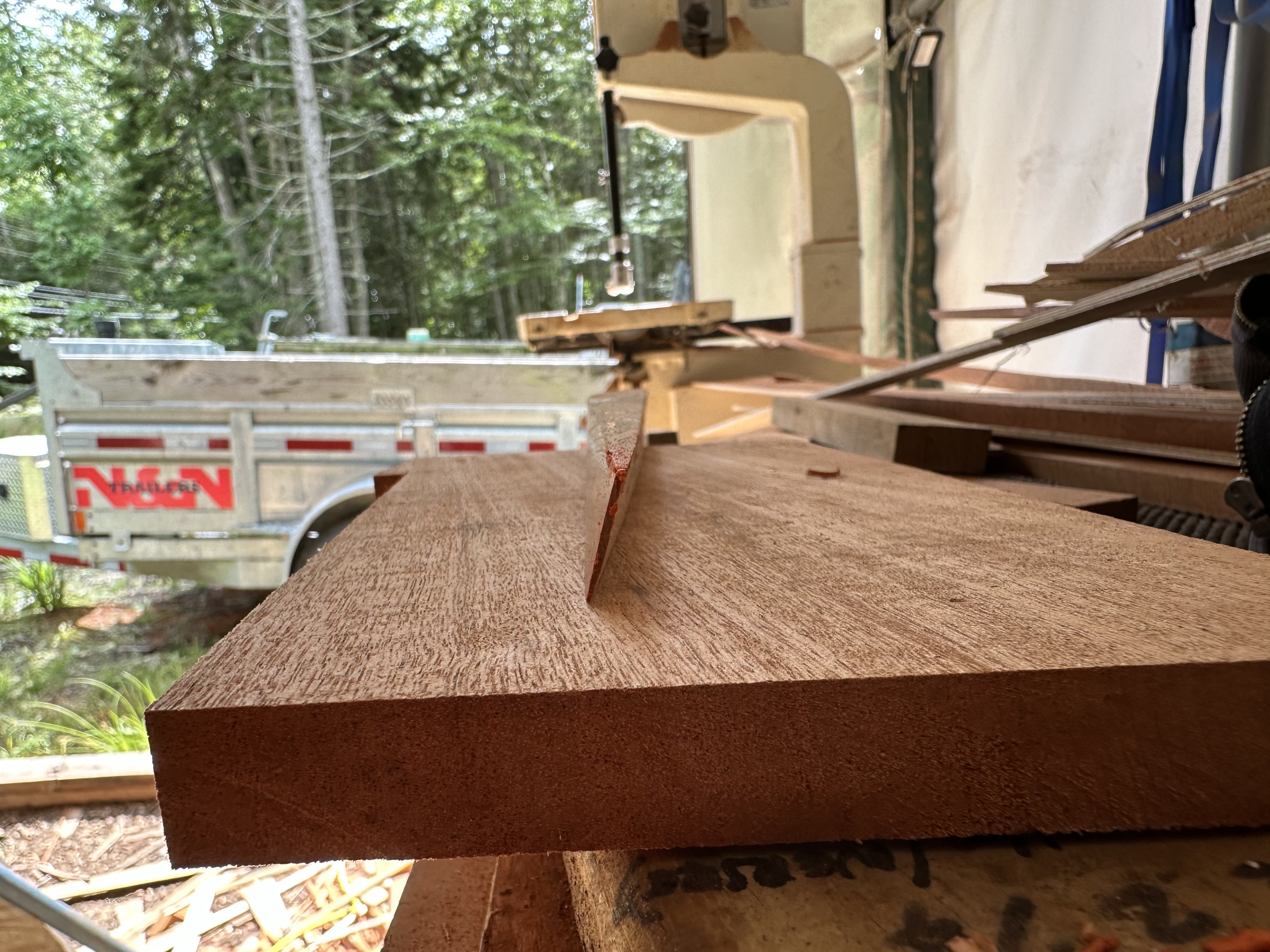
End of a plank on the bandsaw showing twist cut into the stock
Twist cut into the end of a plank on the bandsaw. The plank needs to change its angle of twist along its length to follow the hull in the tuck. You cut what you can, then steam the rest.

Steaming the twisted plank. The steam box softens the wood fibers enough to bend and twist the plank beyond what the dry wood would tolerate. Once it cools and dries in place, it holds its shape.
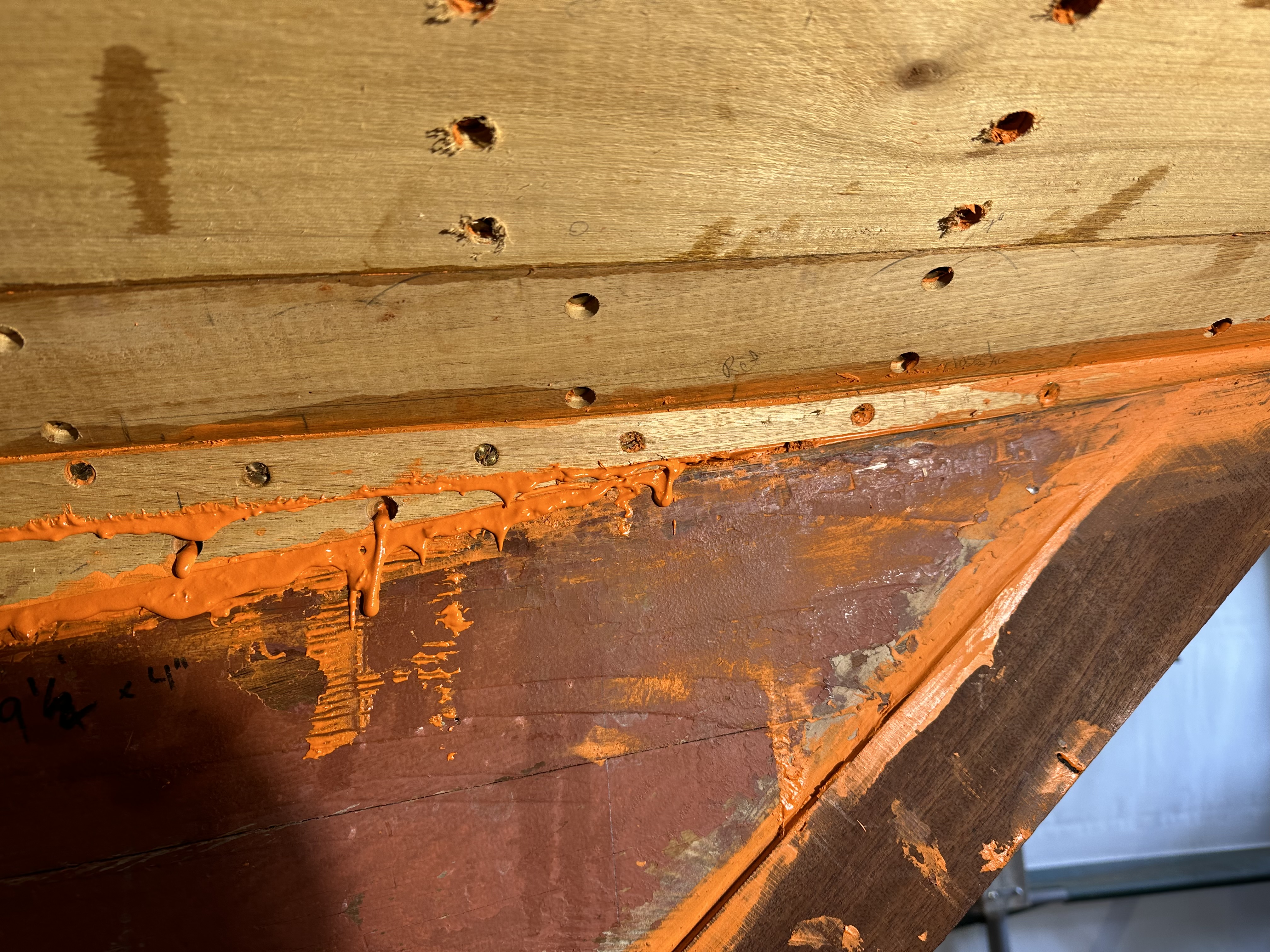
Twisted plank installed at the stern with red lead and Dolfinite visible
The twisted plank installed, bedded in red lead and Dolfinite. Red lead seals and protects the wood; Dolfinite is a flexible bedding compound that fills any remaining gaps and stays pliable so the wood can move with seasonal changes.

All closed up!

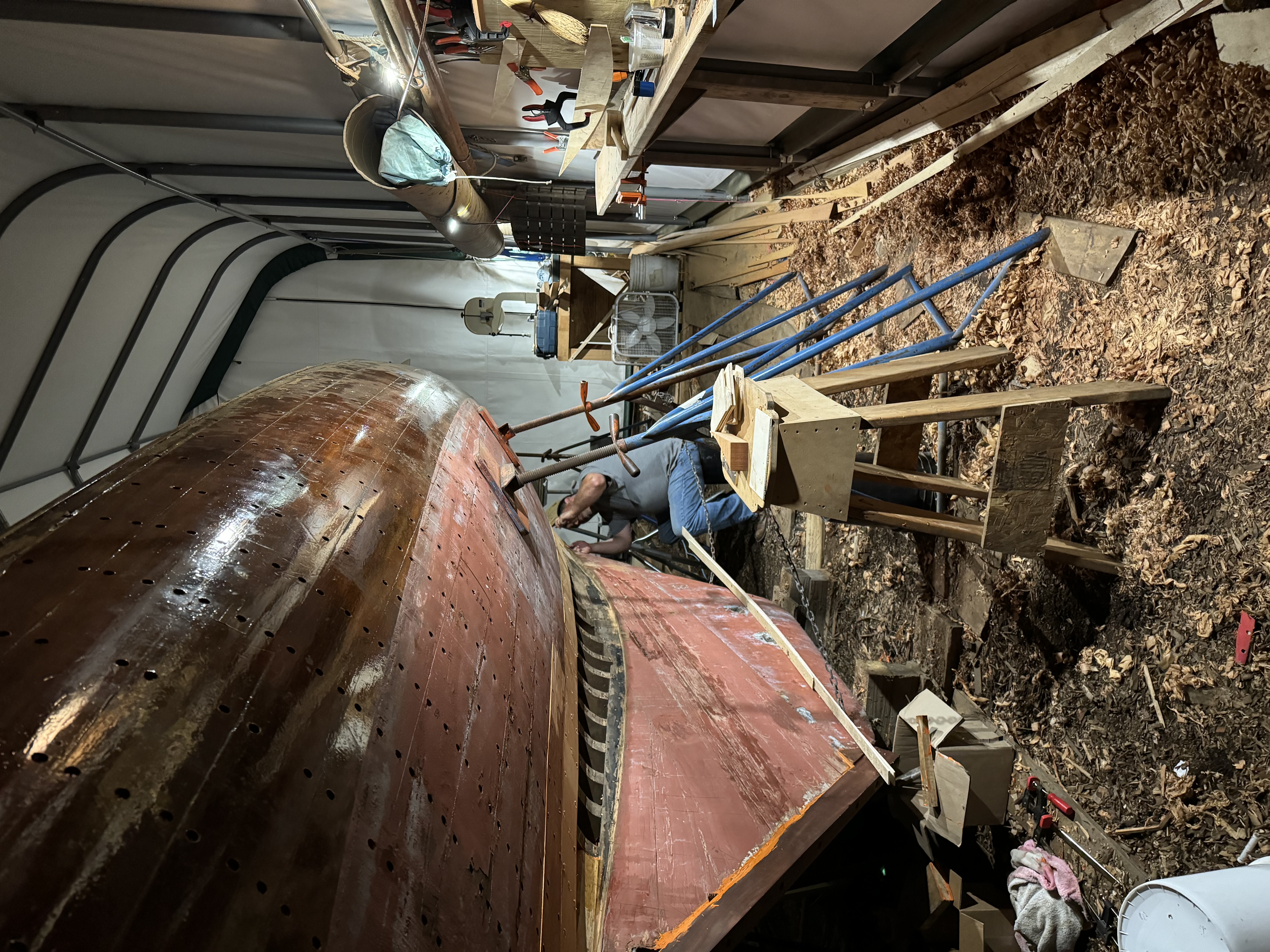
Wide shot of person working on the hull planking
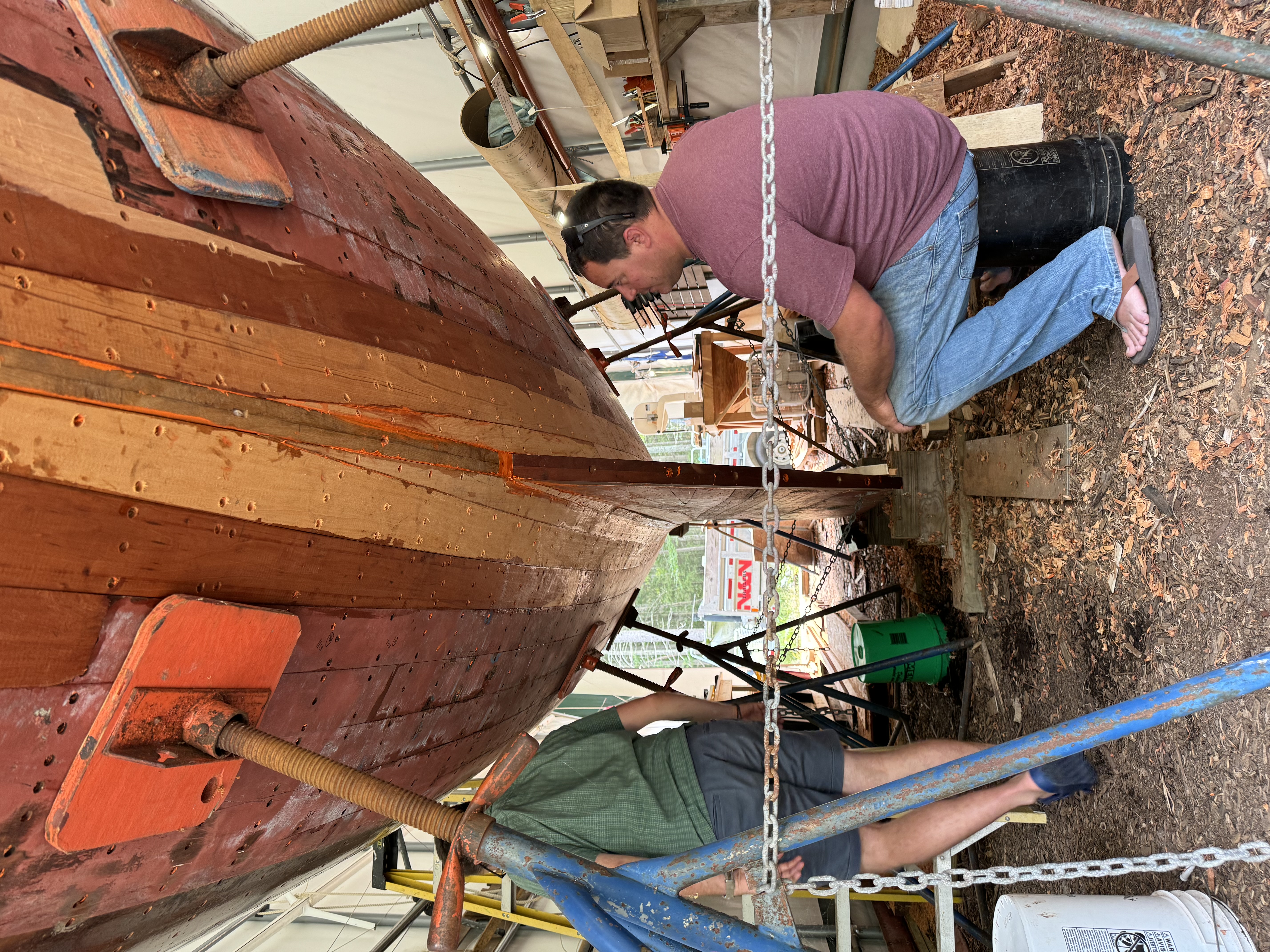
Working the hull. Incredibly gratifying to see new wood gradually filling in what was once open space.
Two people working together on the stern planking
A view of the finished planking from the stern.
Completed stern view showing new planking with red lead visible at the tuck
The starboard side.