At long last, Ariadne returns to the sea. Briefly.
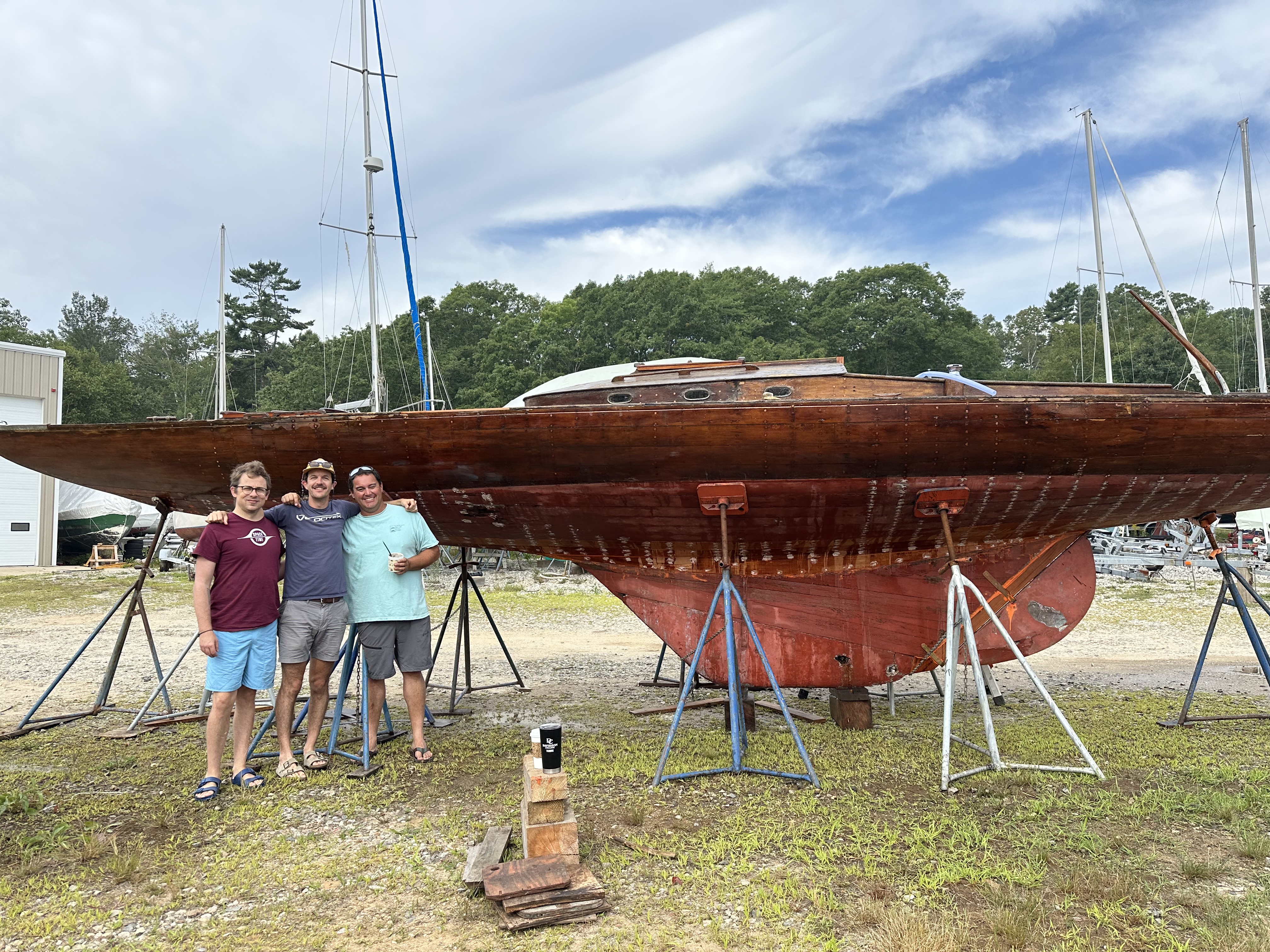
Final prep
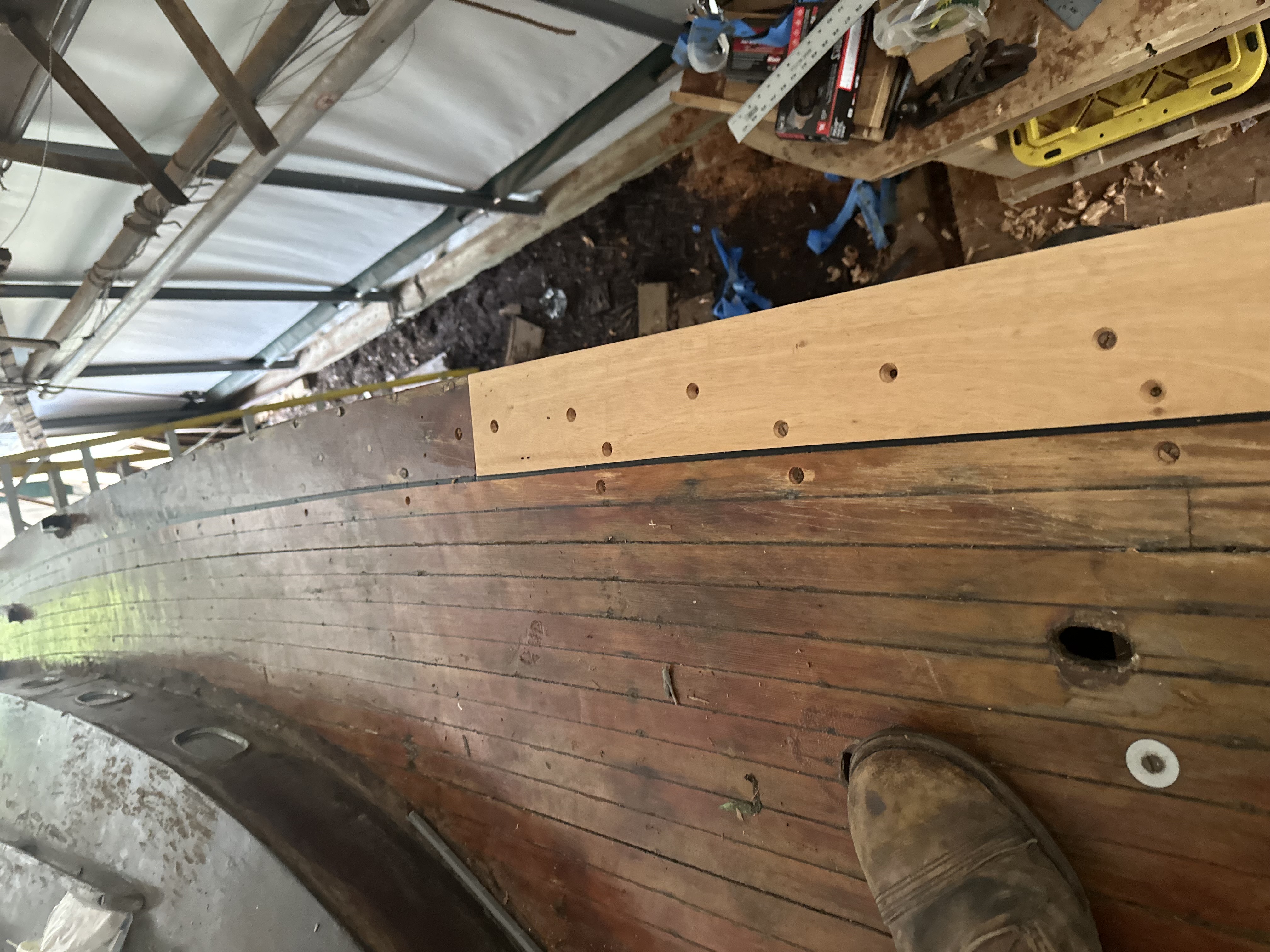
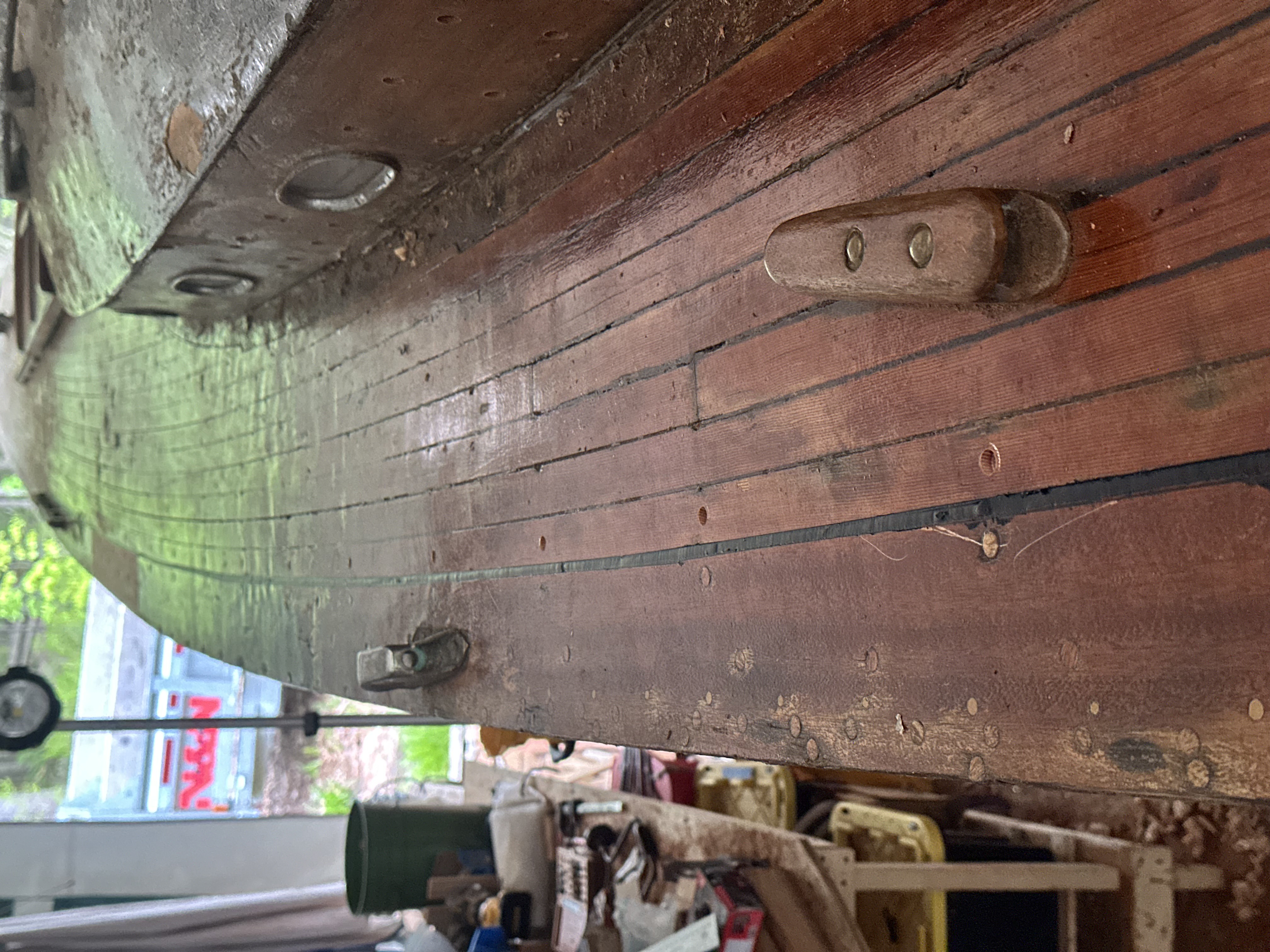
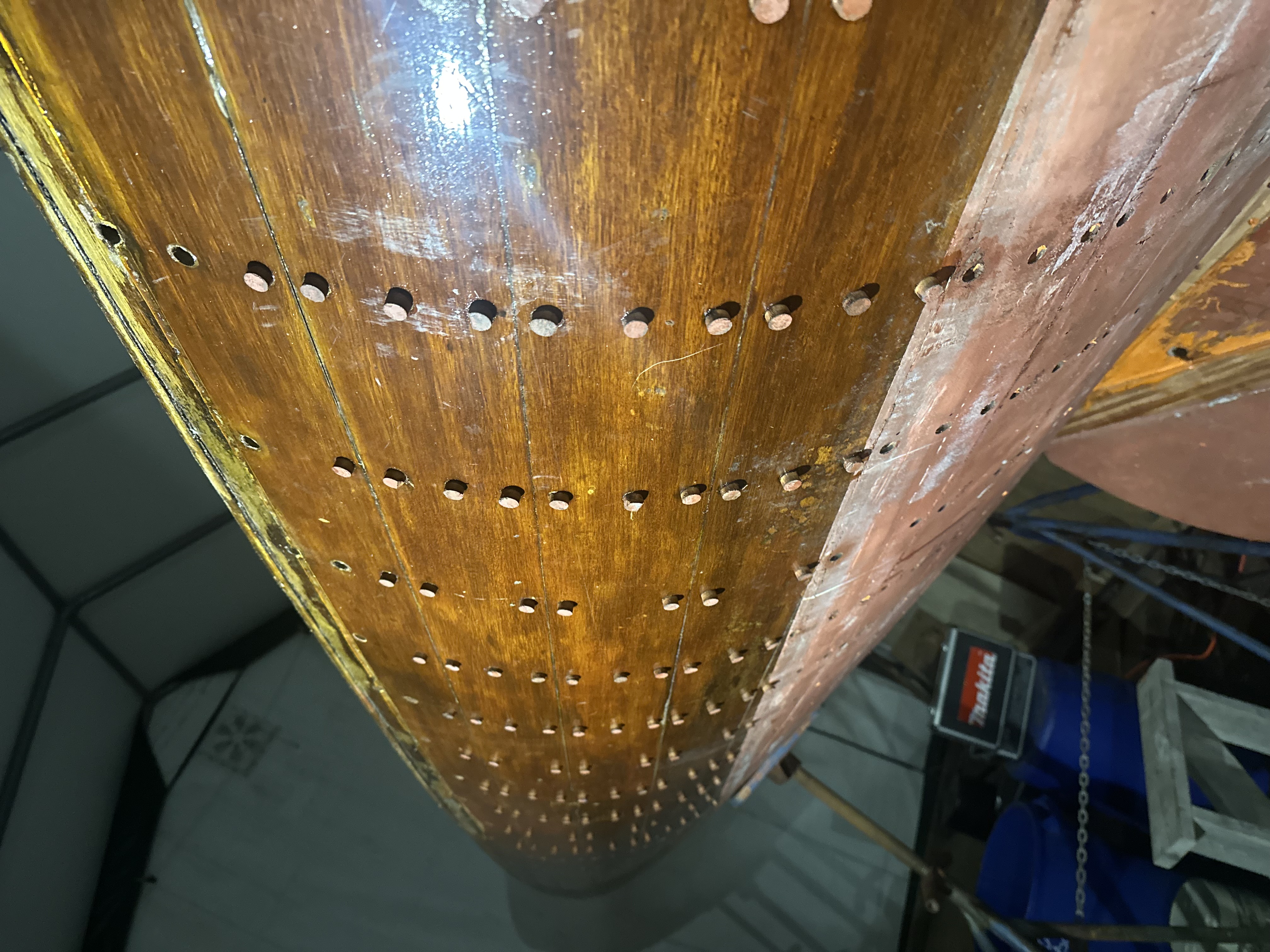
Before launch, there was an extensive tick list to be handled - many jobs to either complete or half-ass enough to avoid causing new problems once the boat goes outside. The biggest concern at this point was whether the boat would float. More on that later. The second biggest concern was freshwater (rainwater) intrusion through the dilapidated deck. Freshwater is far more injurious to wood than saltwater as it facilitates rot, and saltwater largely does not.
Moving out of the tent
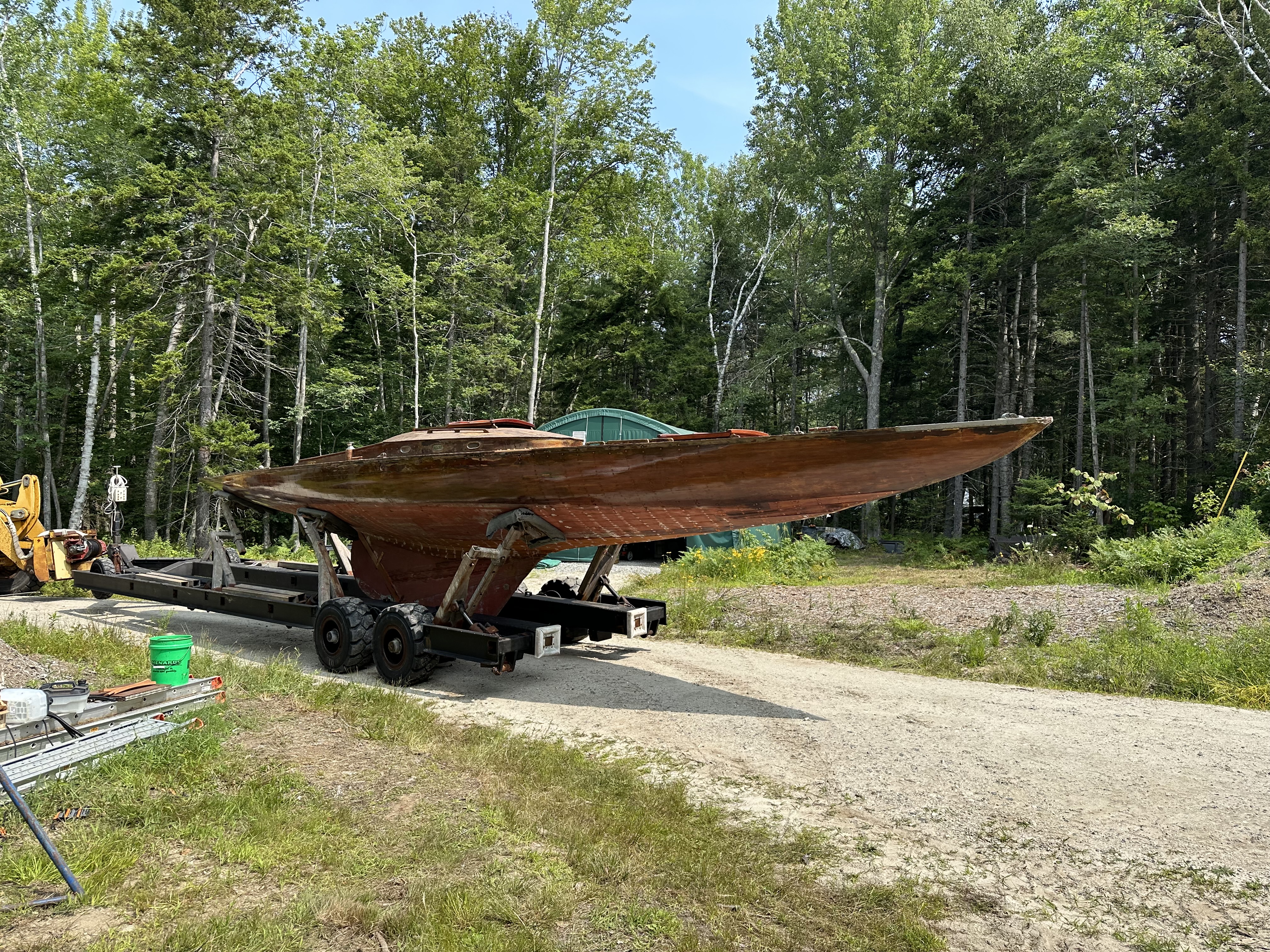
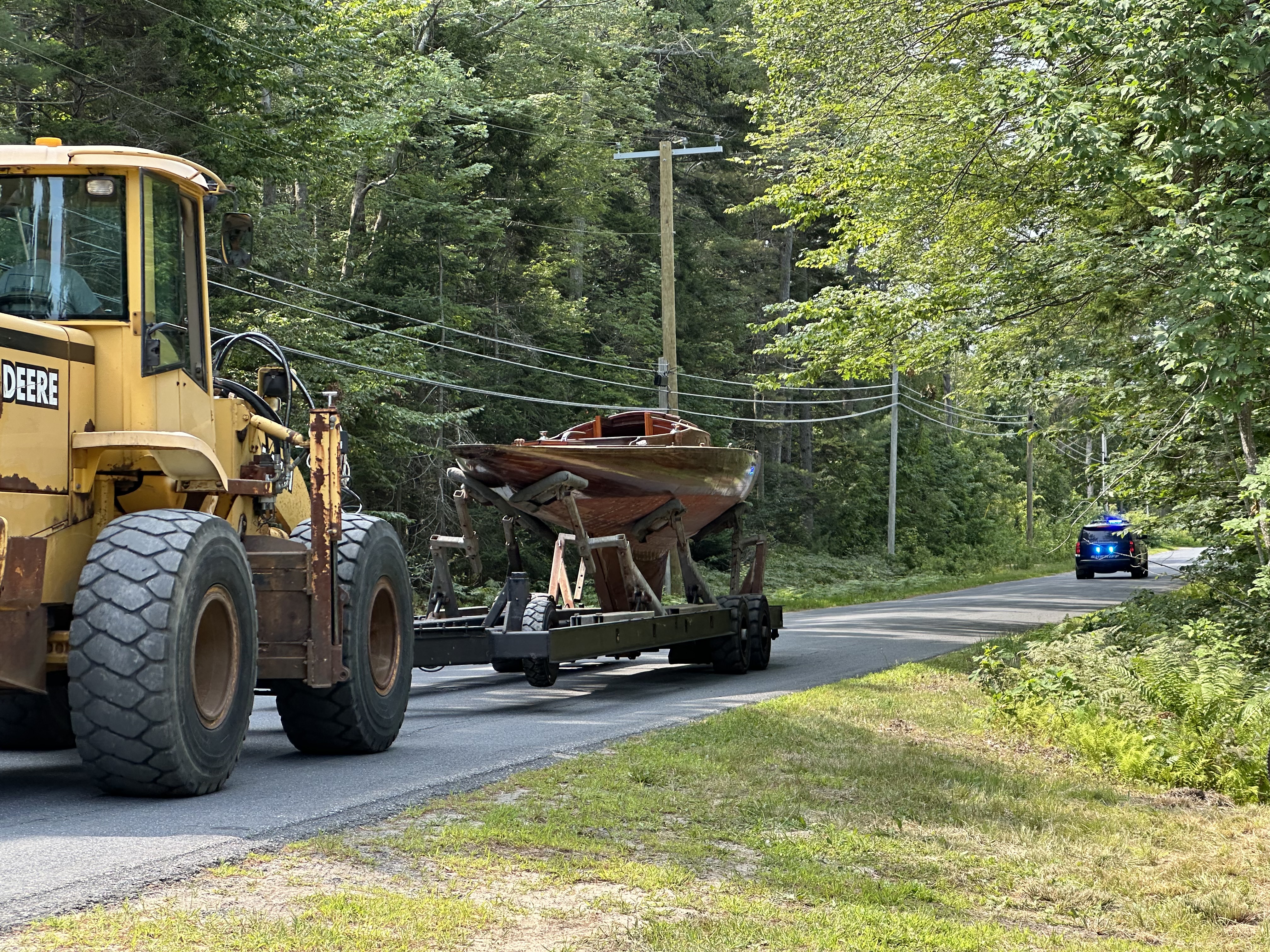
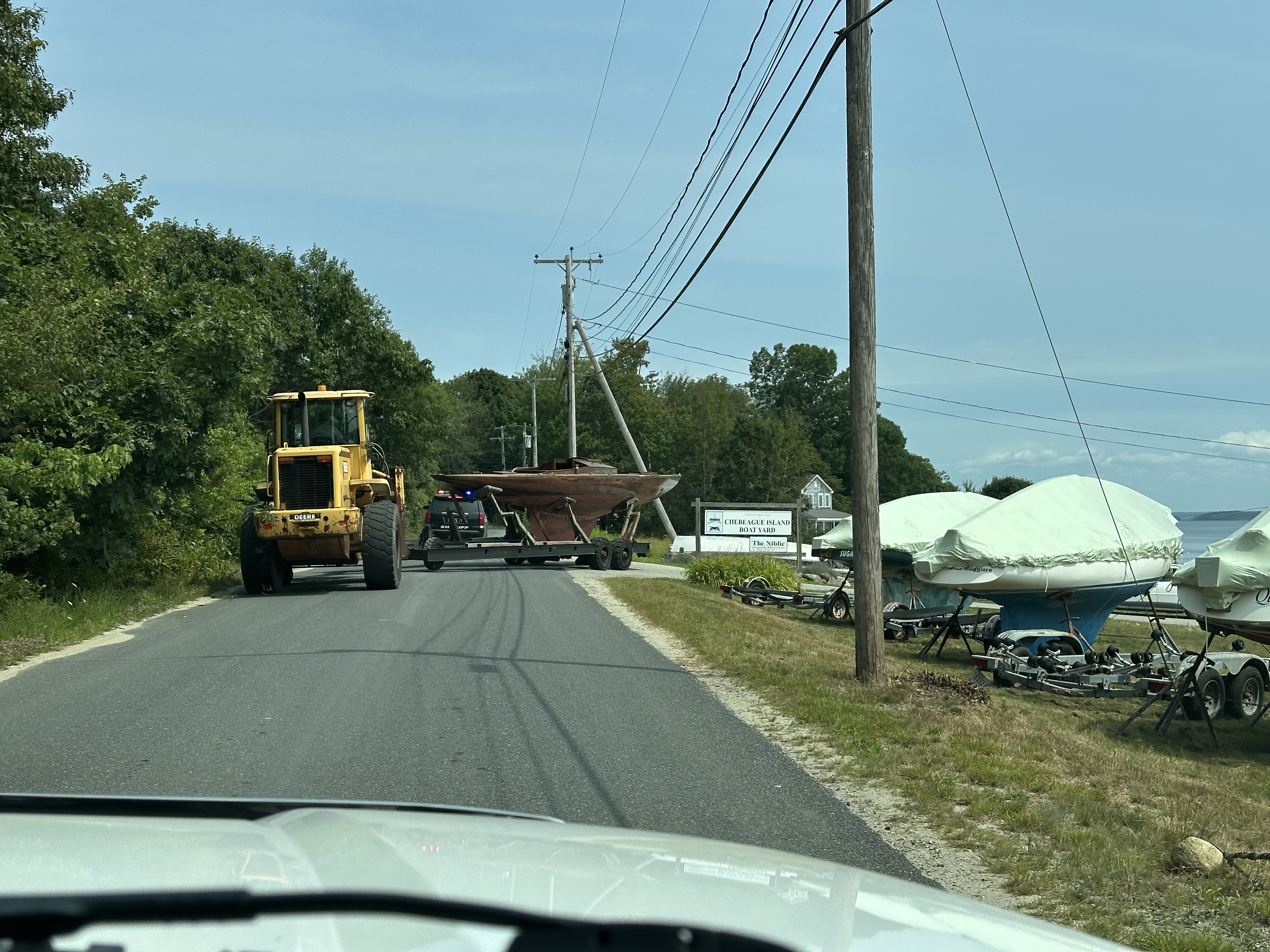
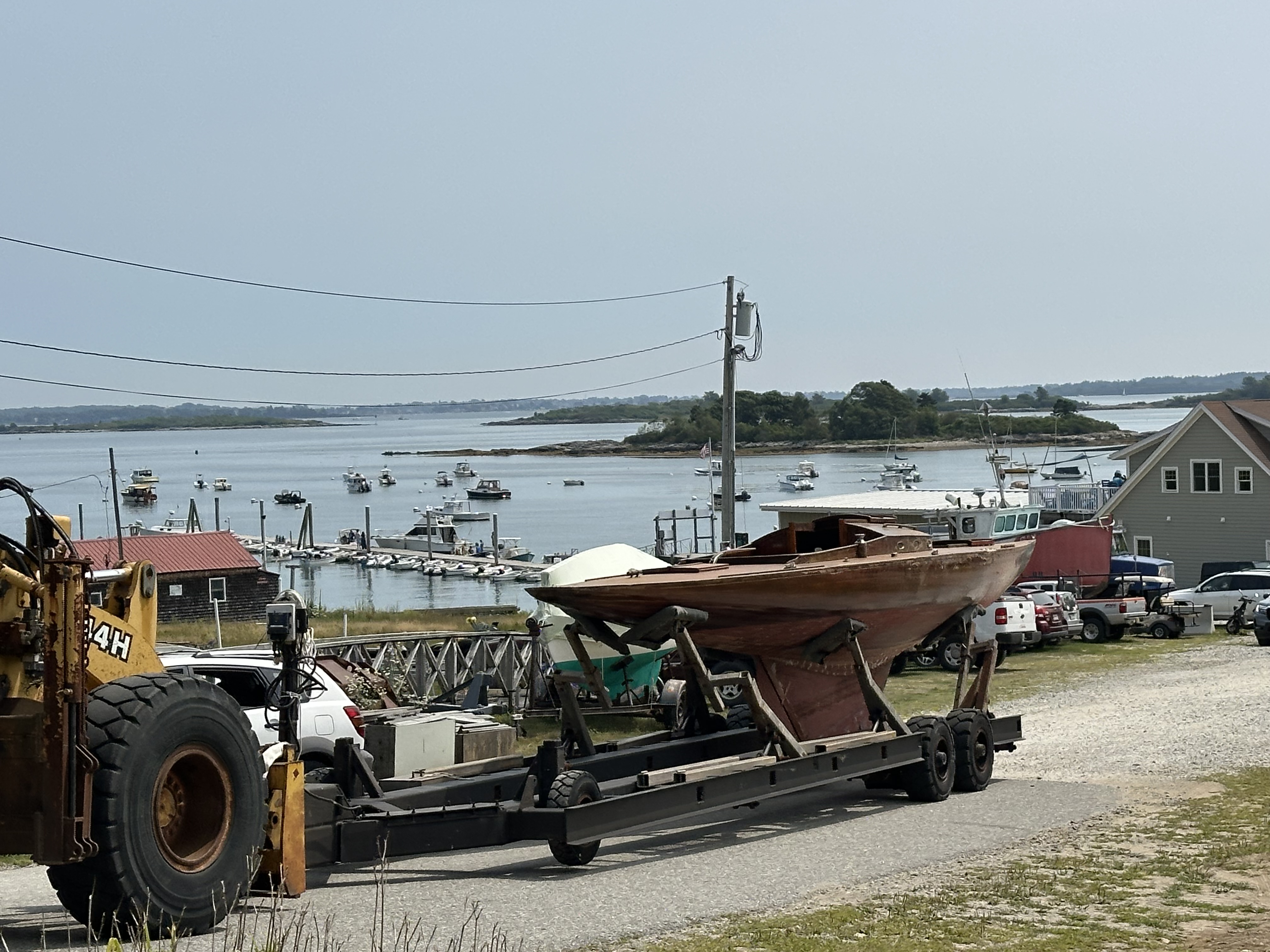
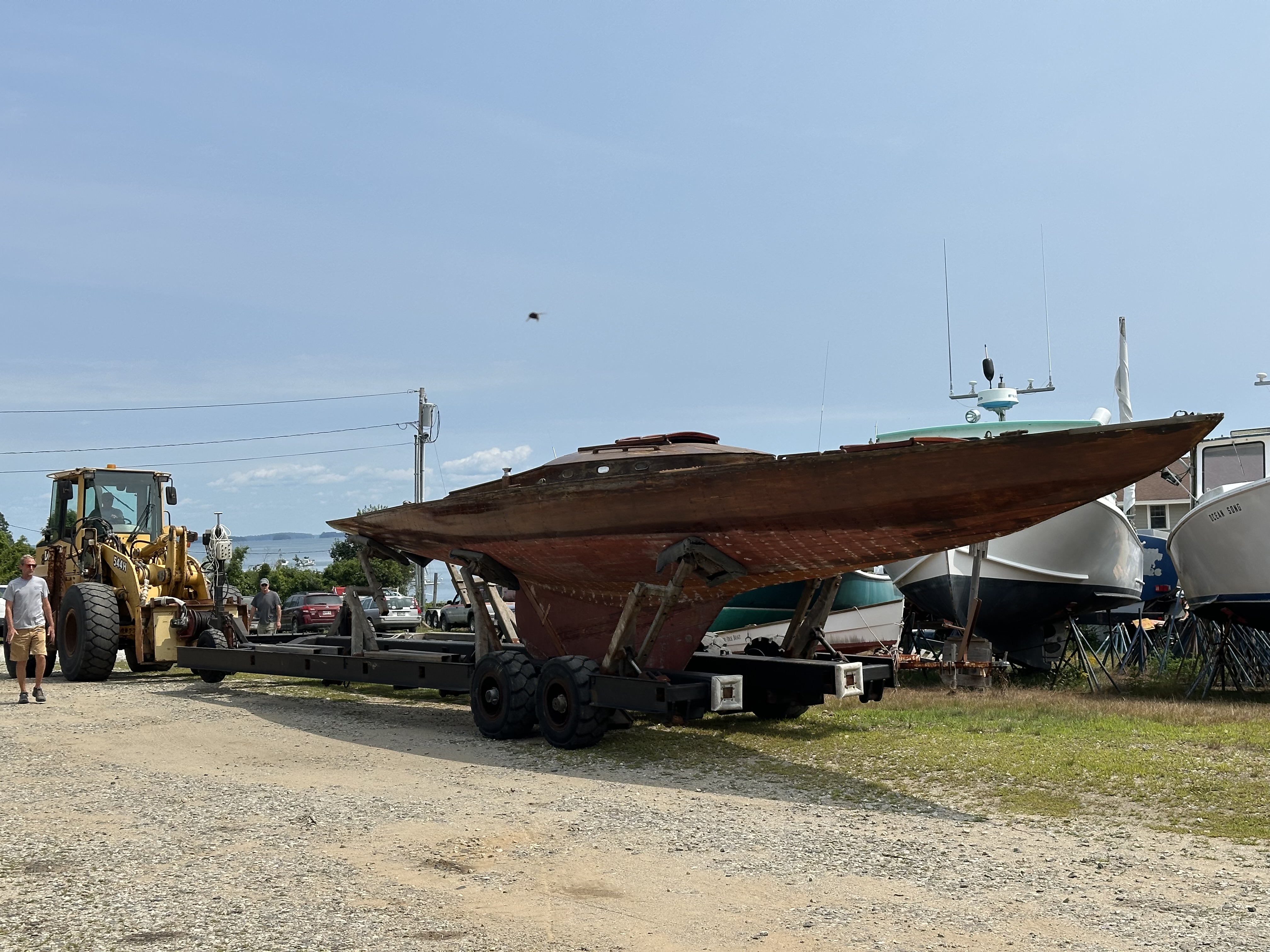
Getting Ariadne out of her tent involved the boatyard’s front-end loader, a pneumatic trailer, and some careful maneuvering.
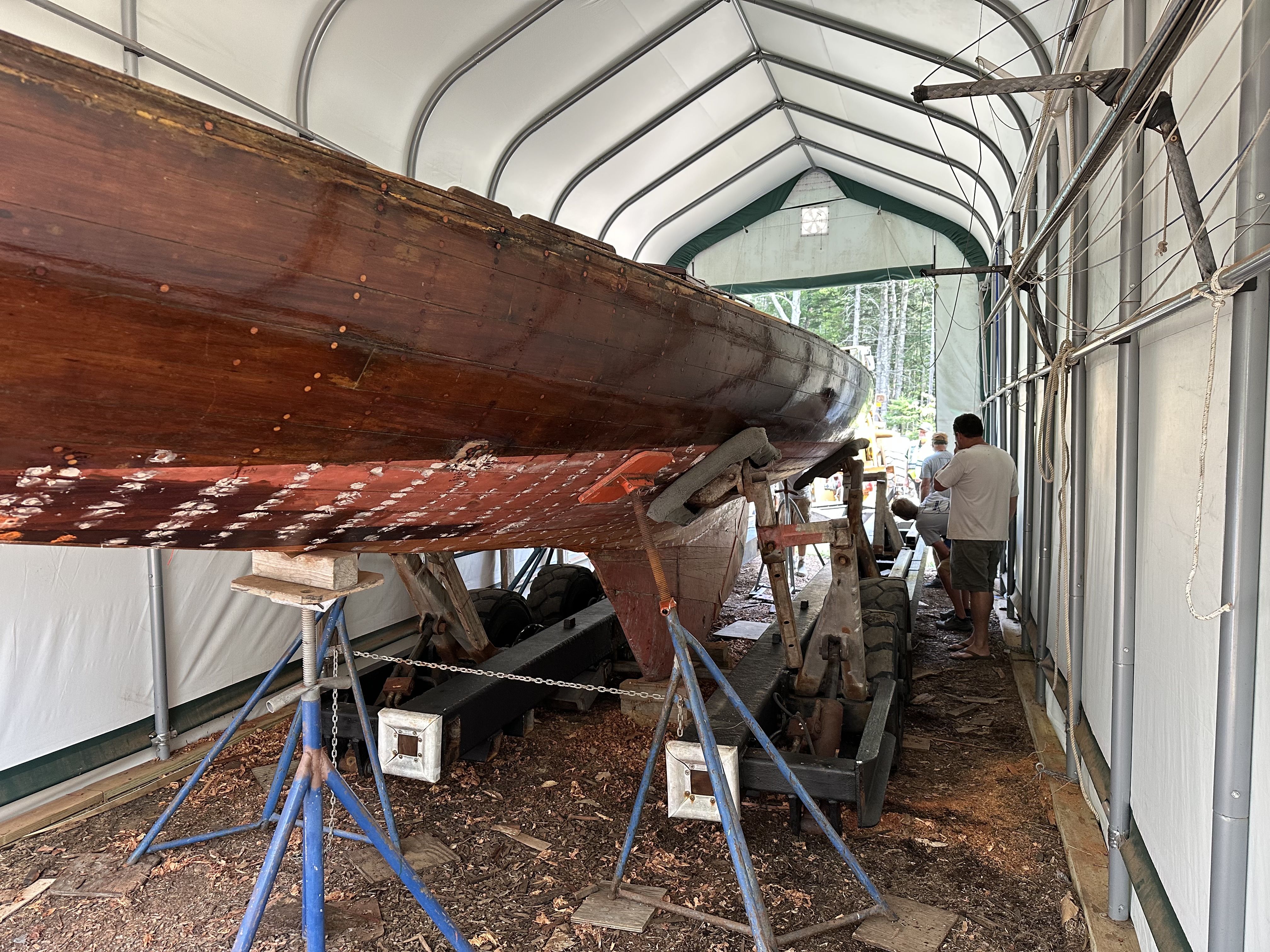
Loading the boat onto the trailer inside the tent.
Pulling the boat out of the tent.
Pre-swelling
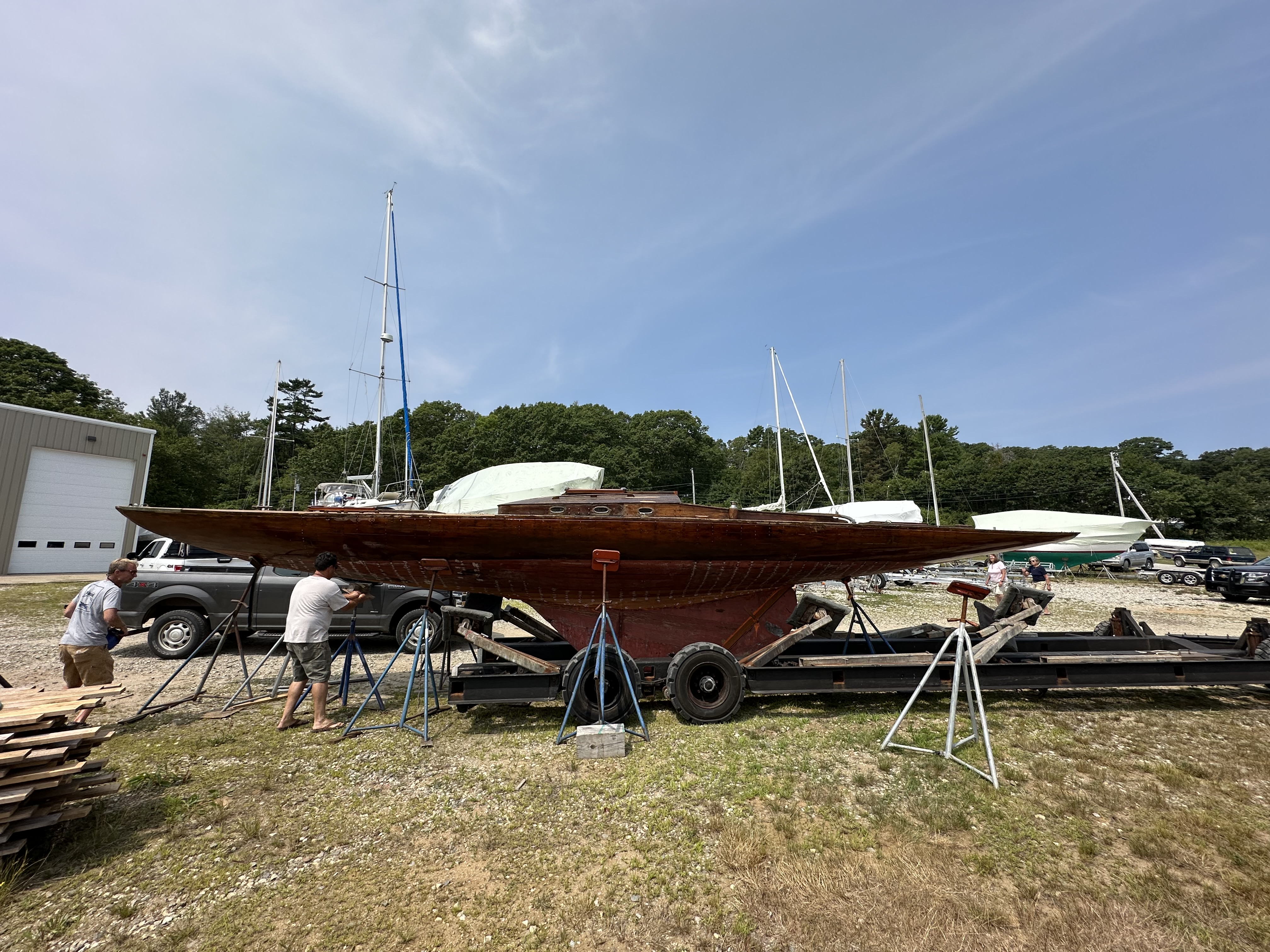
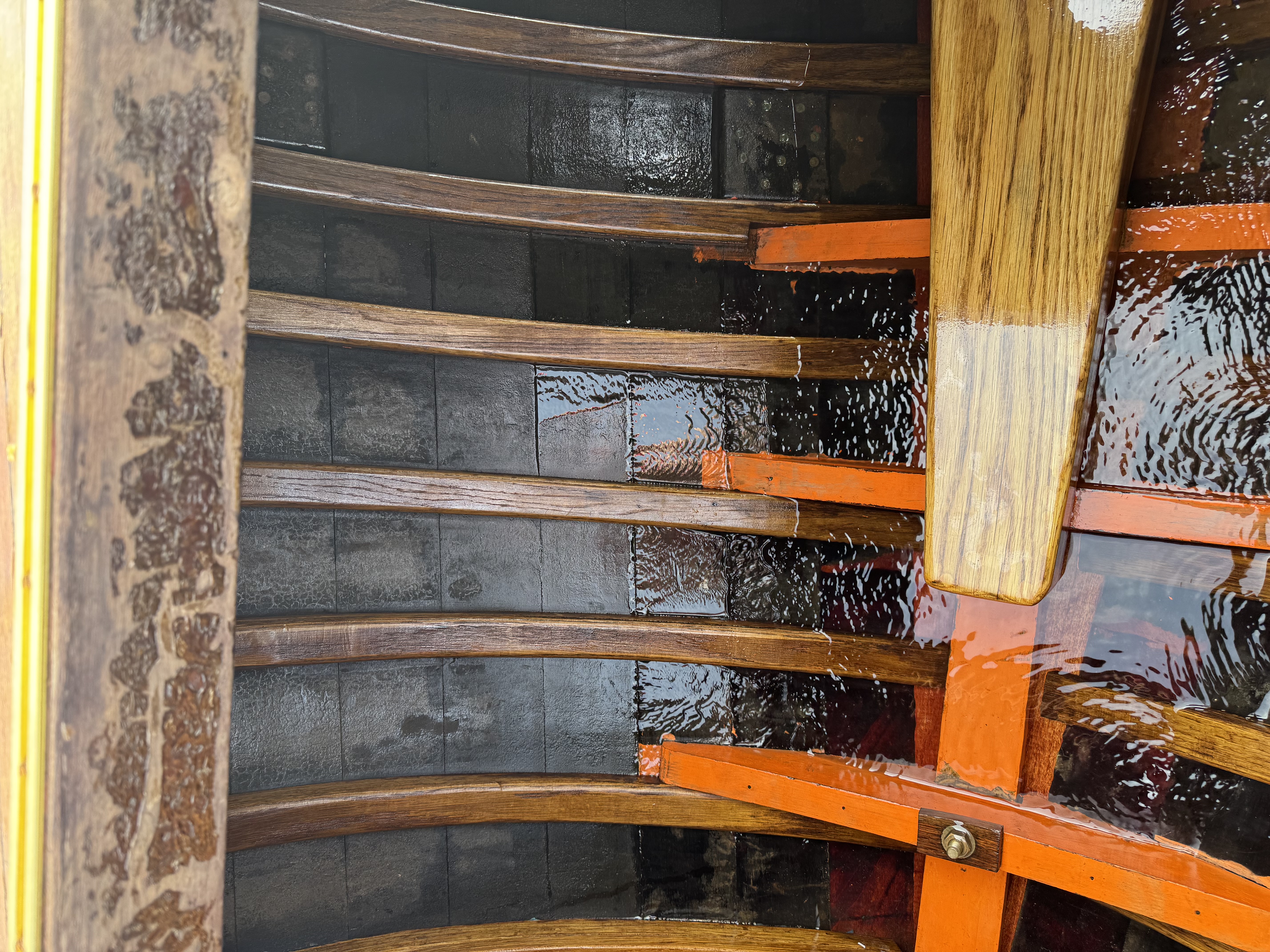
Ariadne is tight-seamed carvel. A carvel hull relies on the planks swelling with water to close up the seams, especially when there is no cotton caulking or seam compound to rely on. Especially when the boat has been out of the water for years and is totally dried out, before launch, you need to soak the hull for days. Running hoses over the topsides and sprinkers the interior to let the wood take up as much water as it can before launch. The alternative is launching dry and watching the ocean pour in. Turns out we did that anyway.
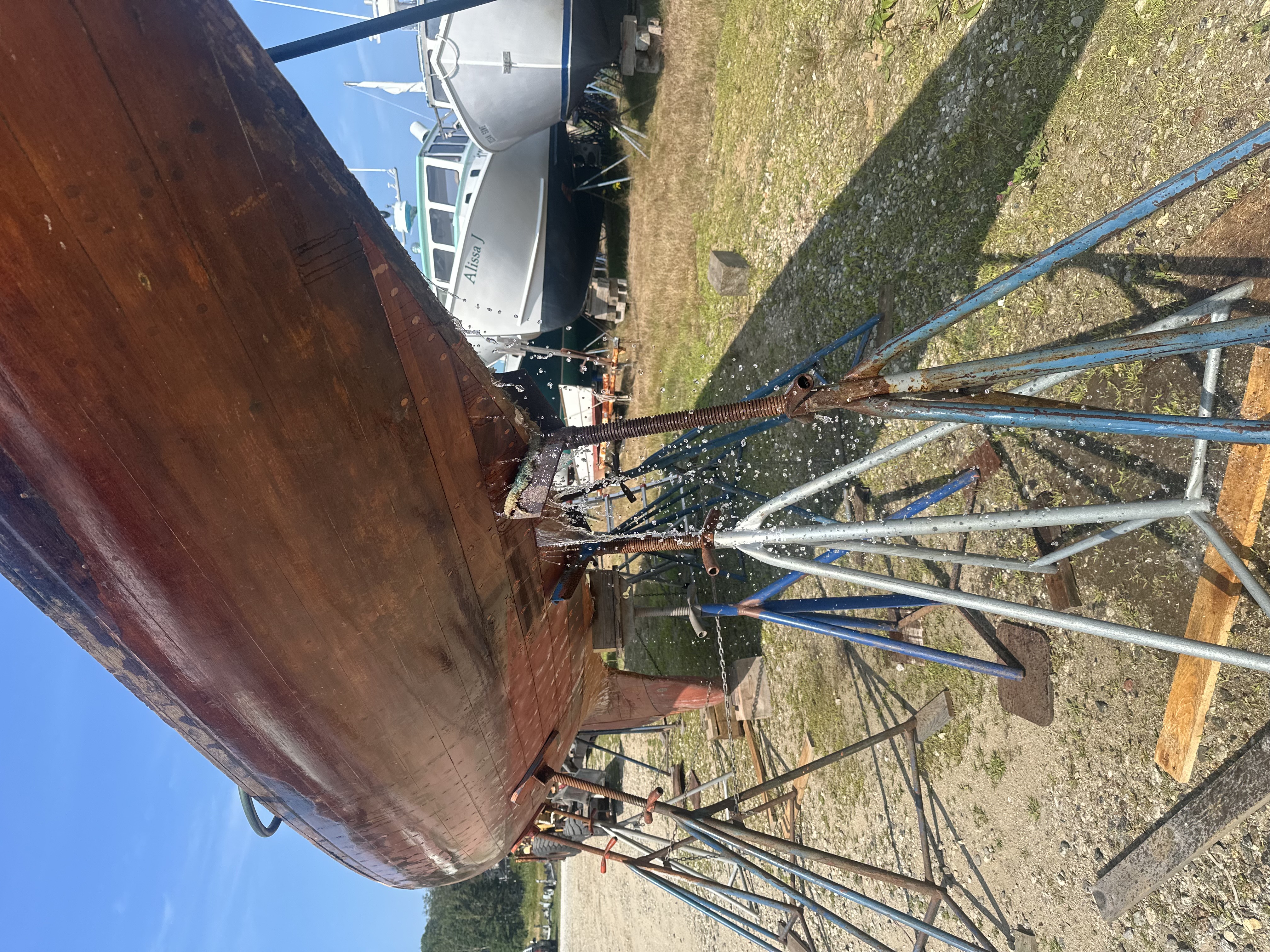
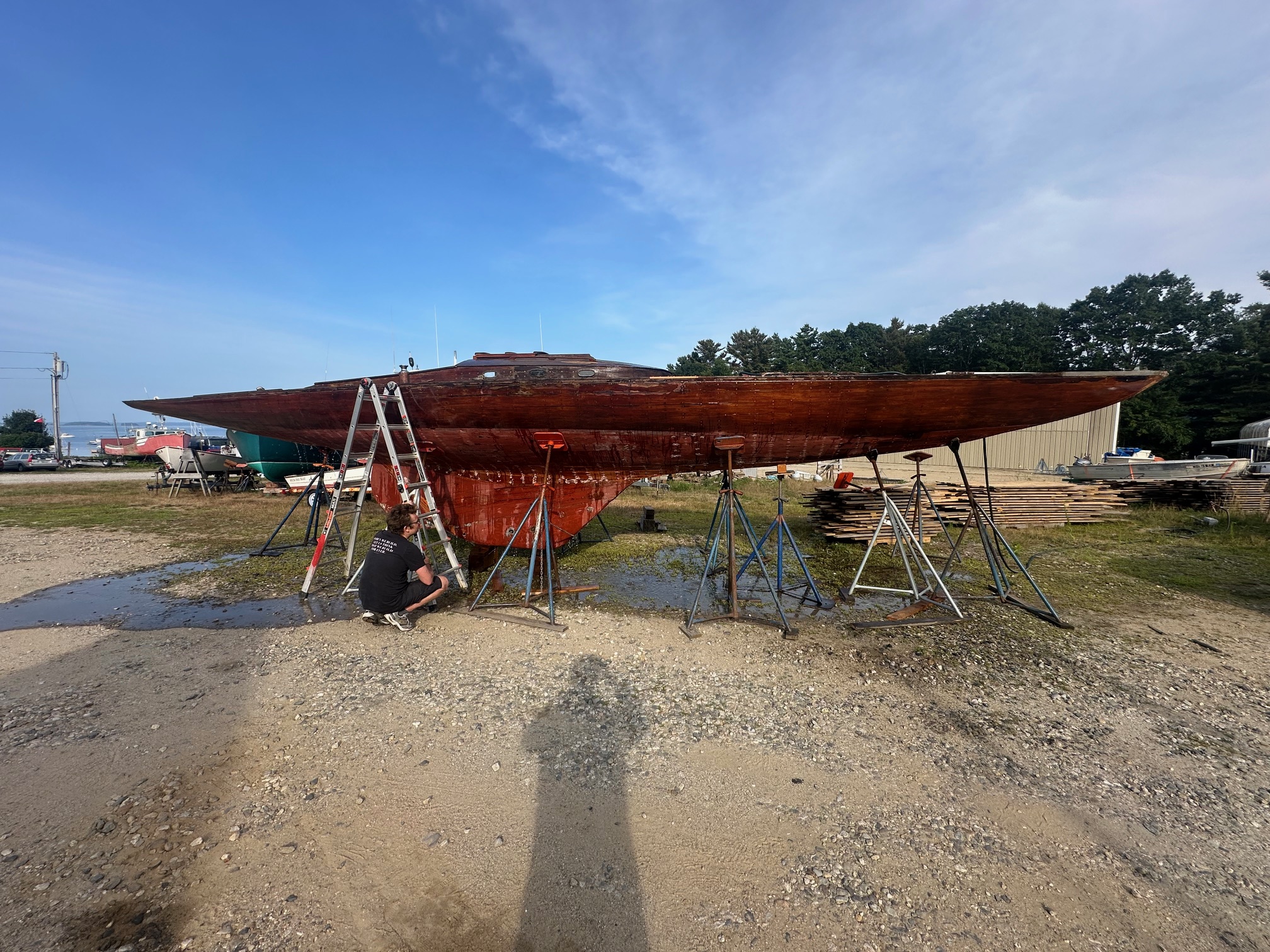
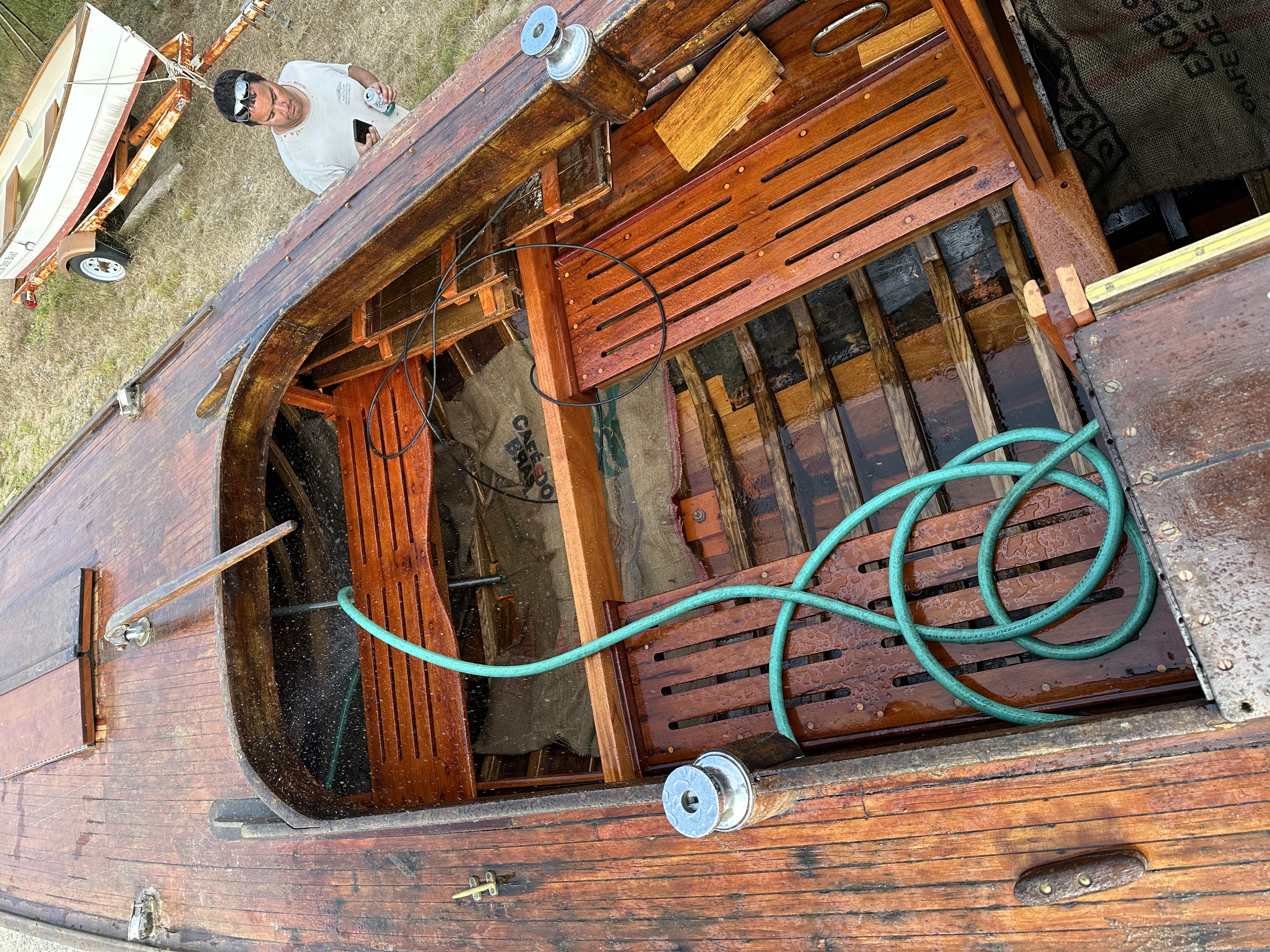
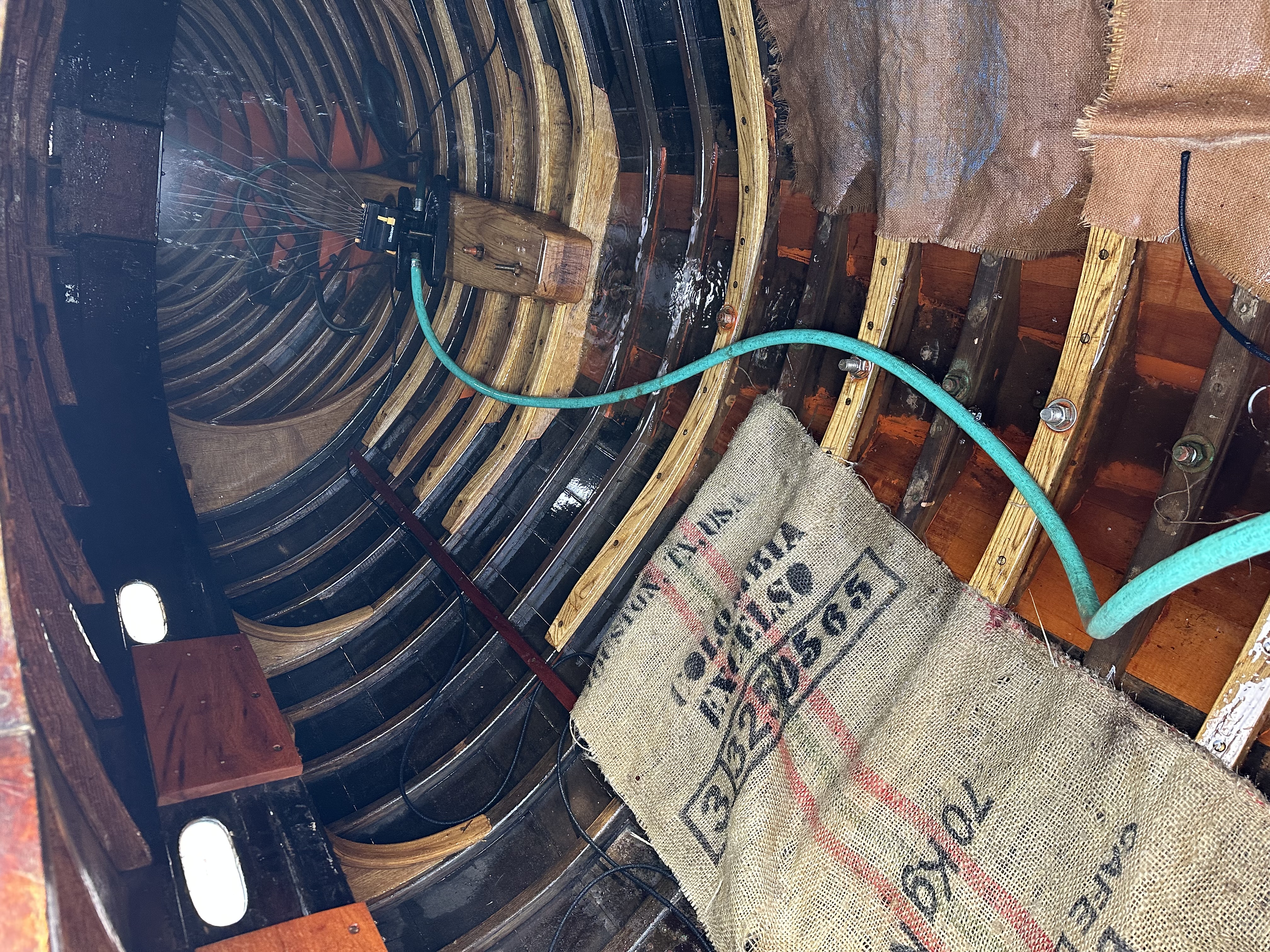
Water running through the hull during the pre-swell soak.
Launch
Our launch window only allowed us to pre-soak for a day. This felt…rushed. But hey, YOLO?
Time lapse from the cab of the boatyard's wheel loader, pushing Ariadne on the hydraulic trailer down to the water.
The three owners aboard for the first time. A tense and thrilling moment.
Pump!!!
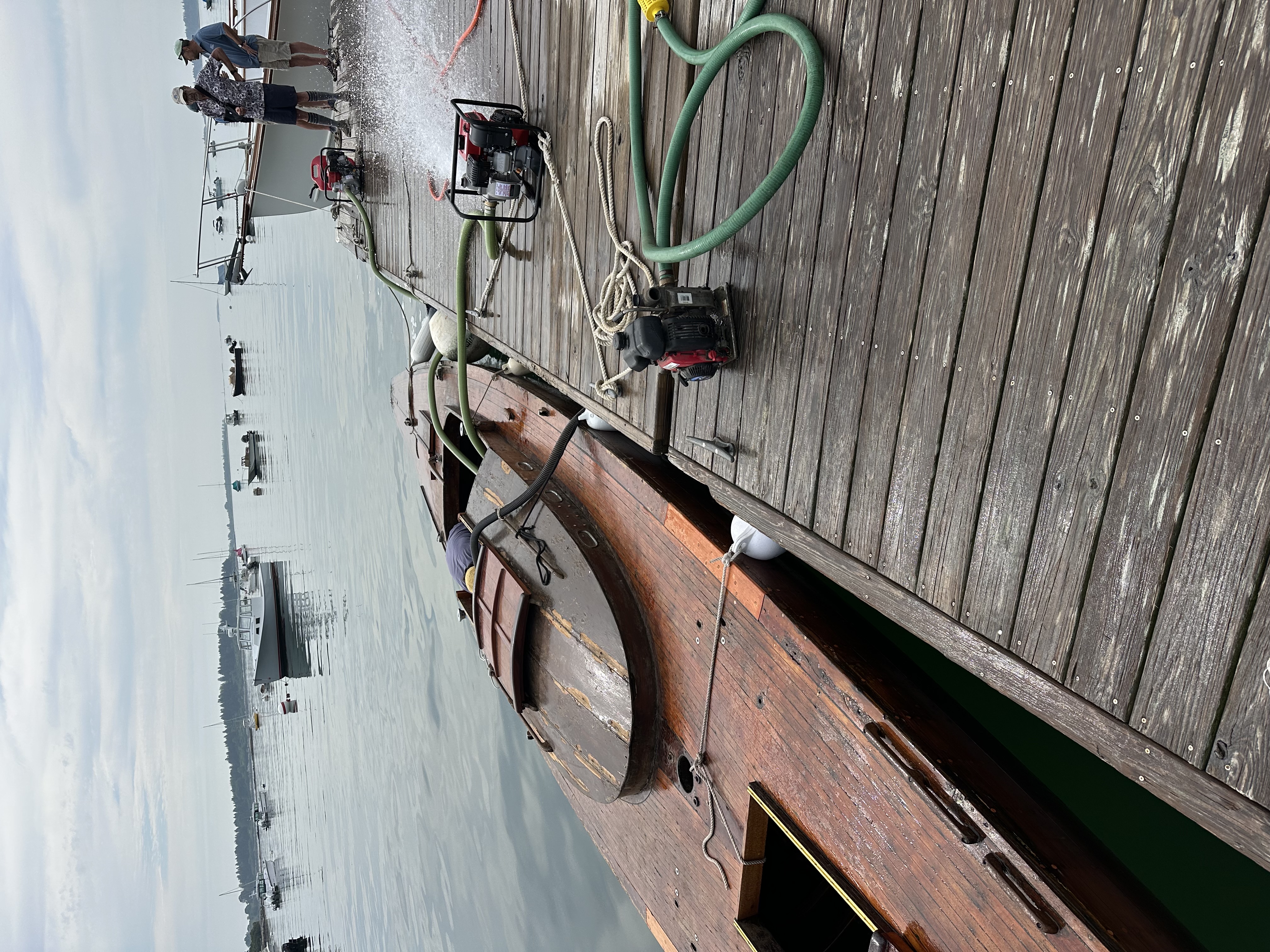
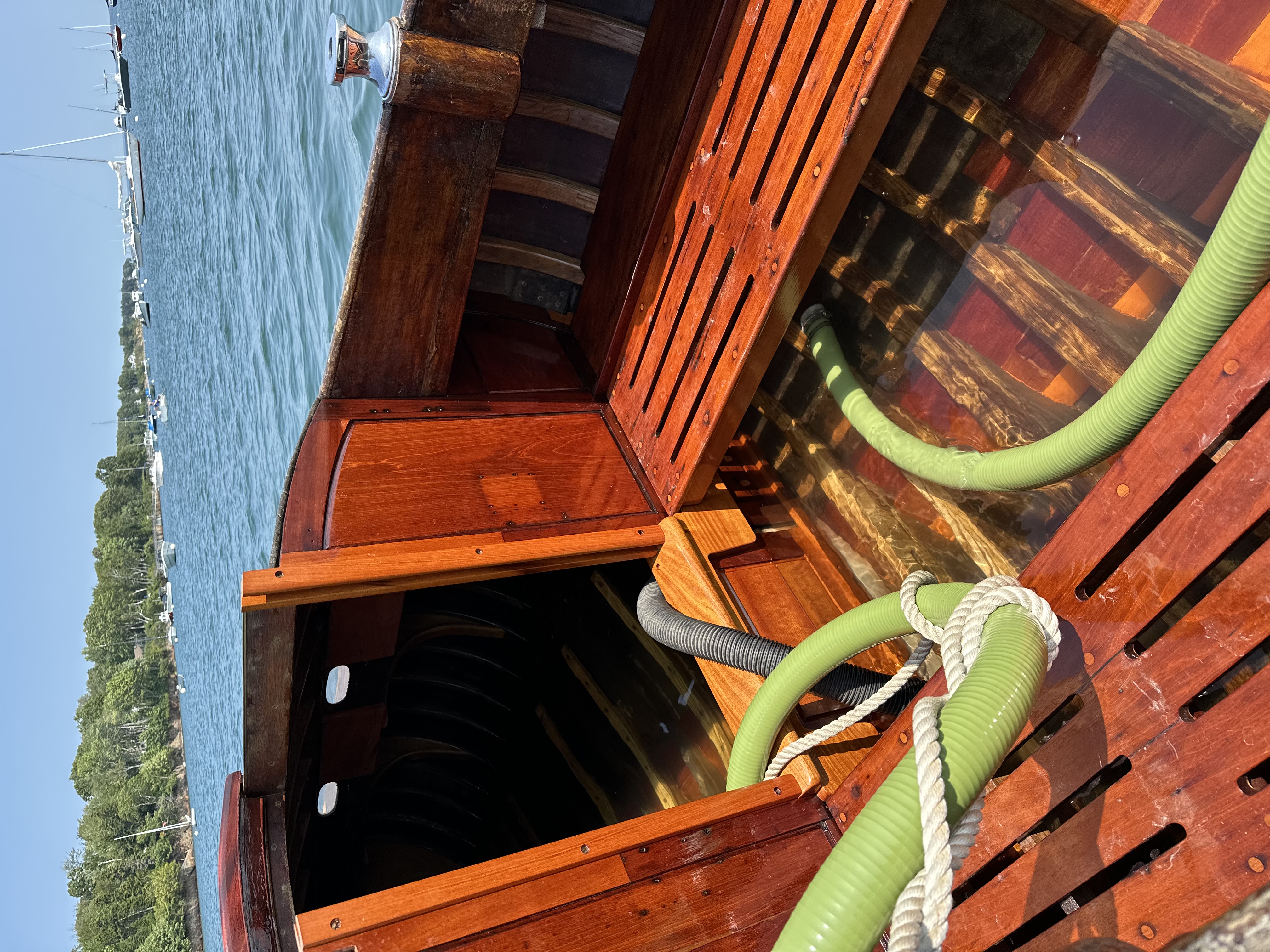
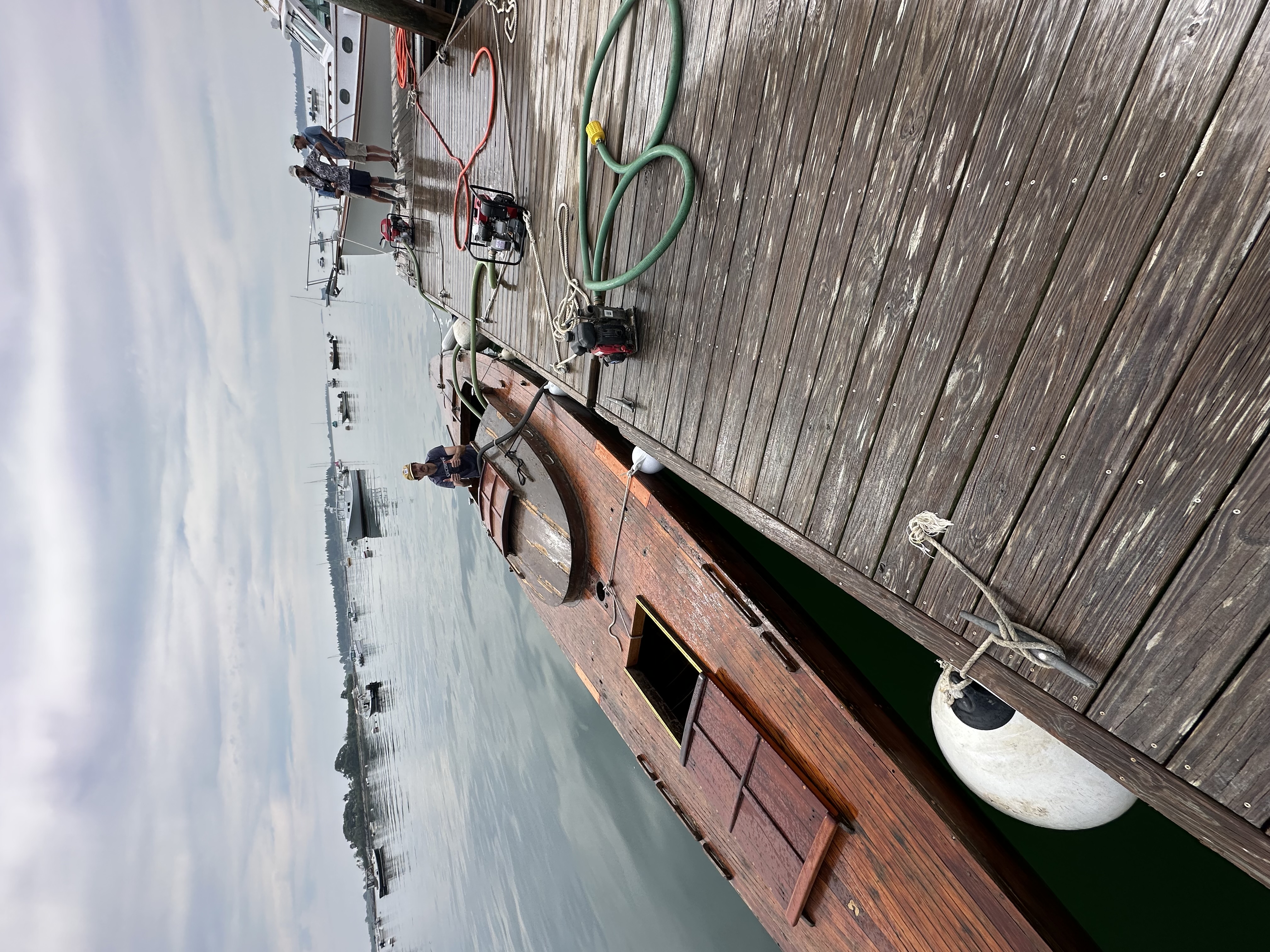
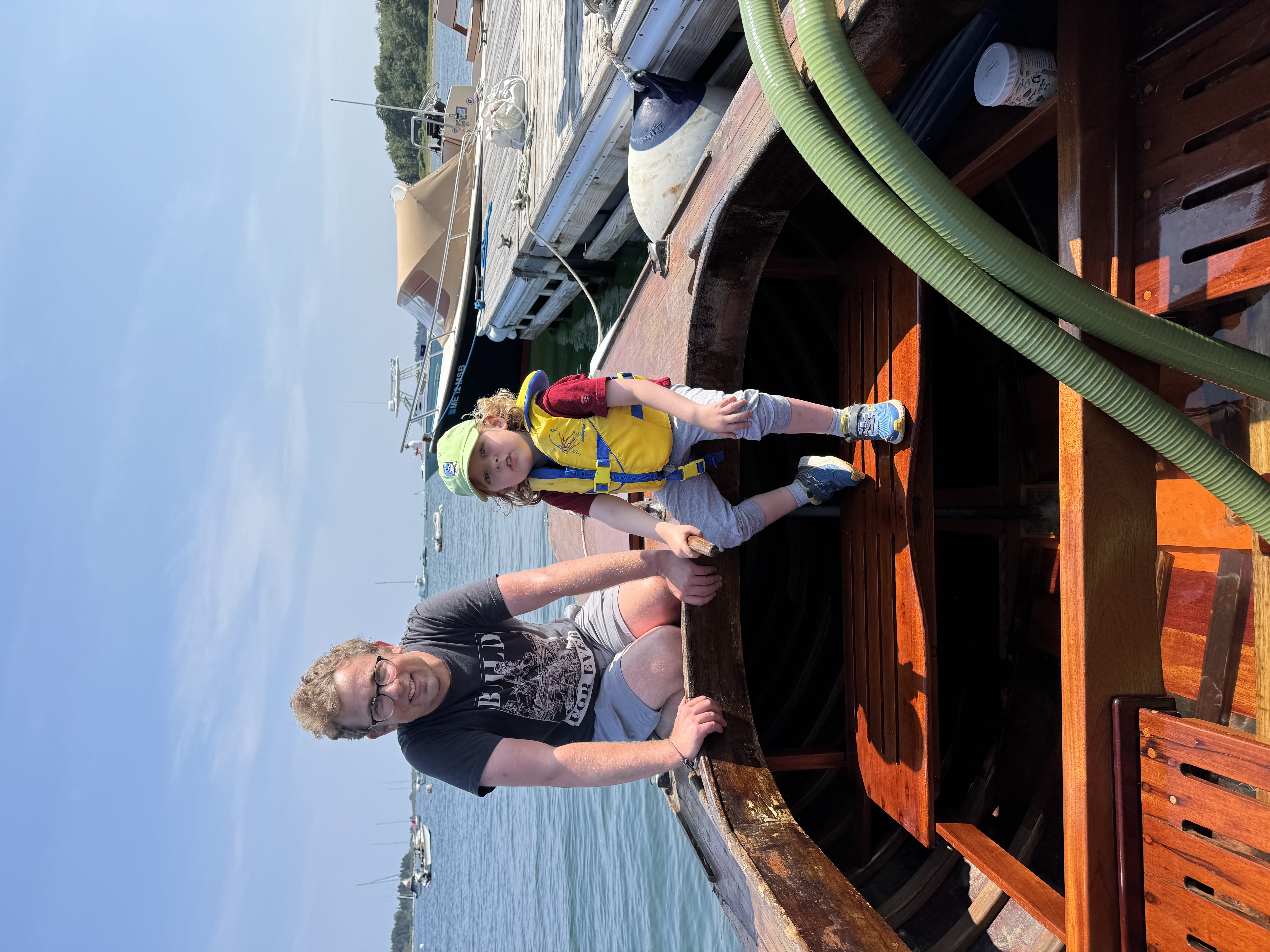
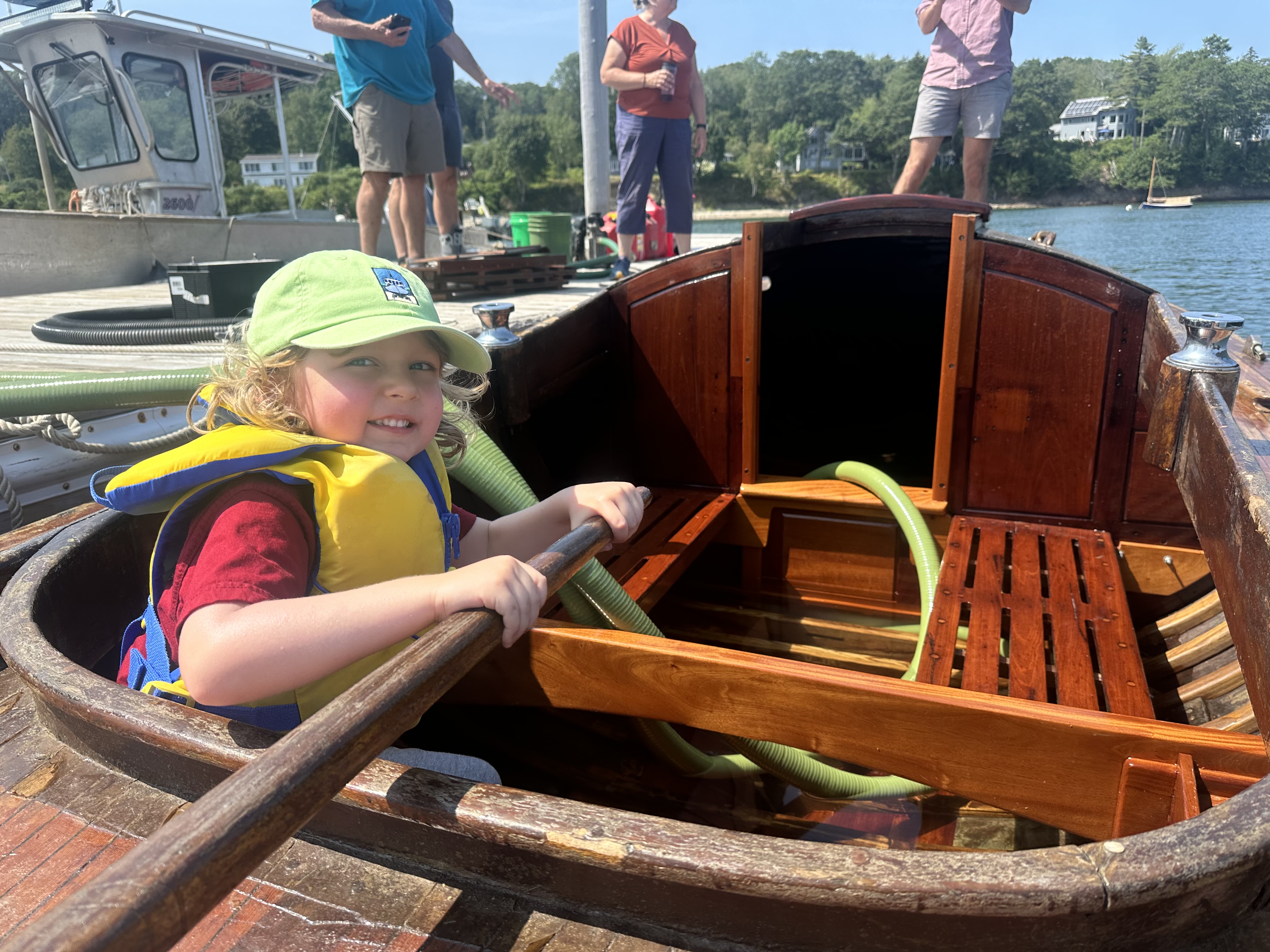
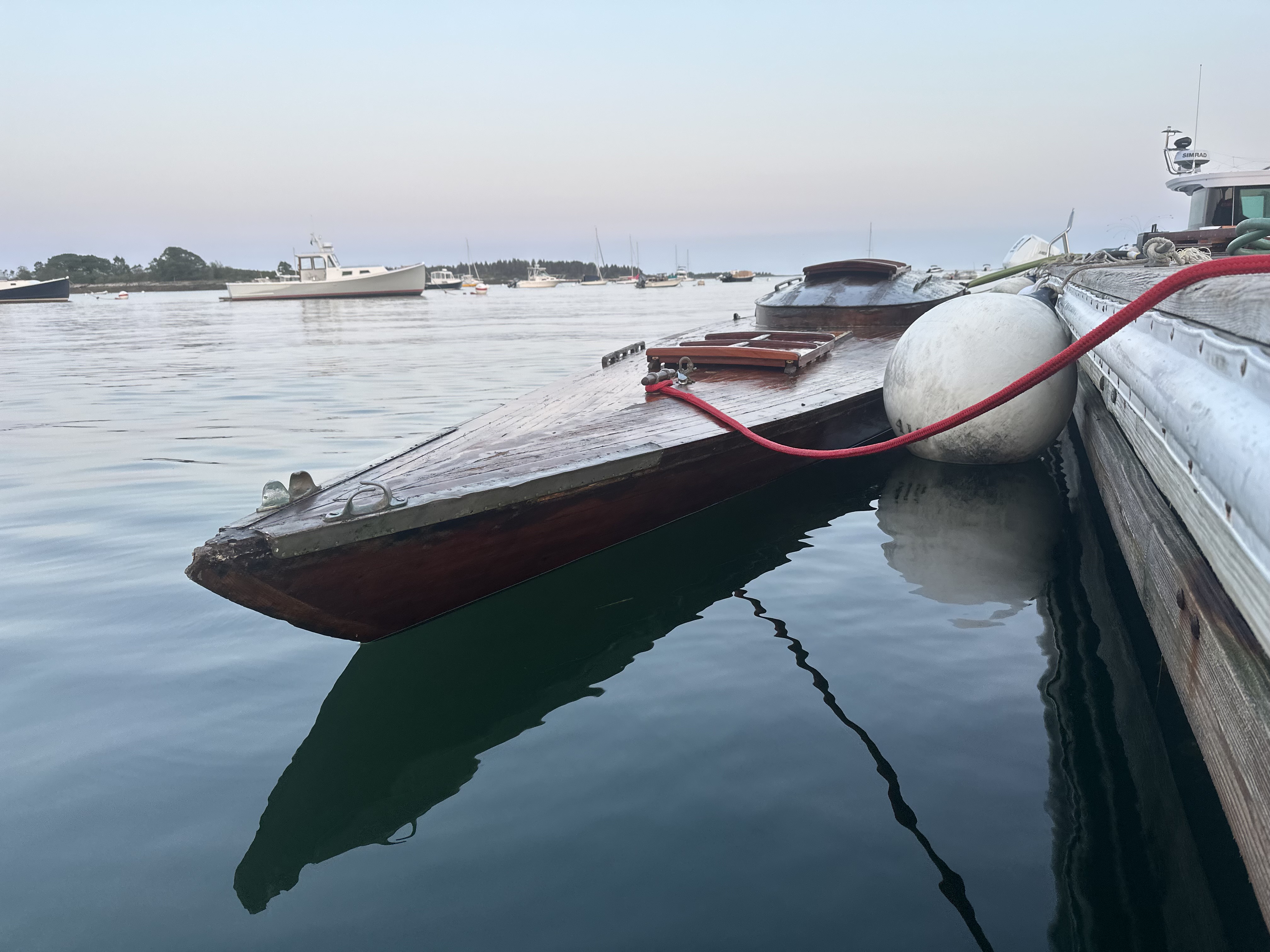
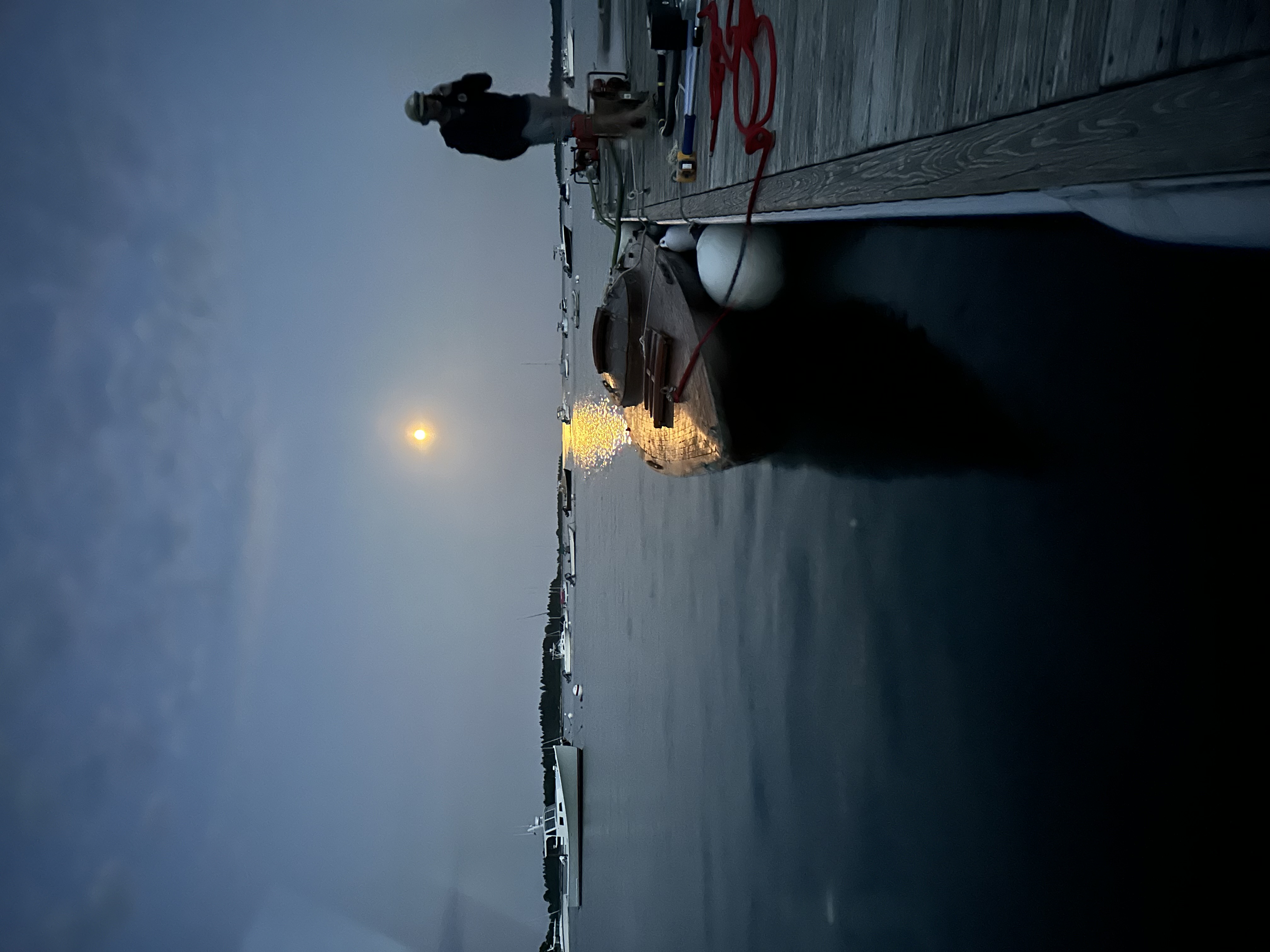
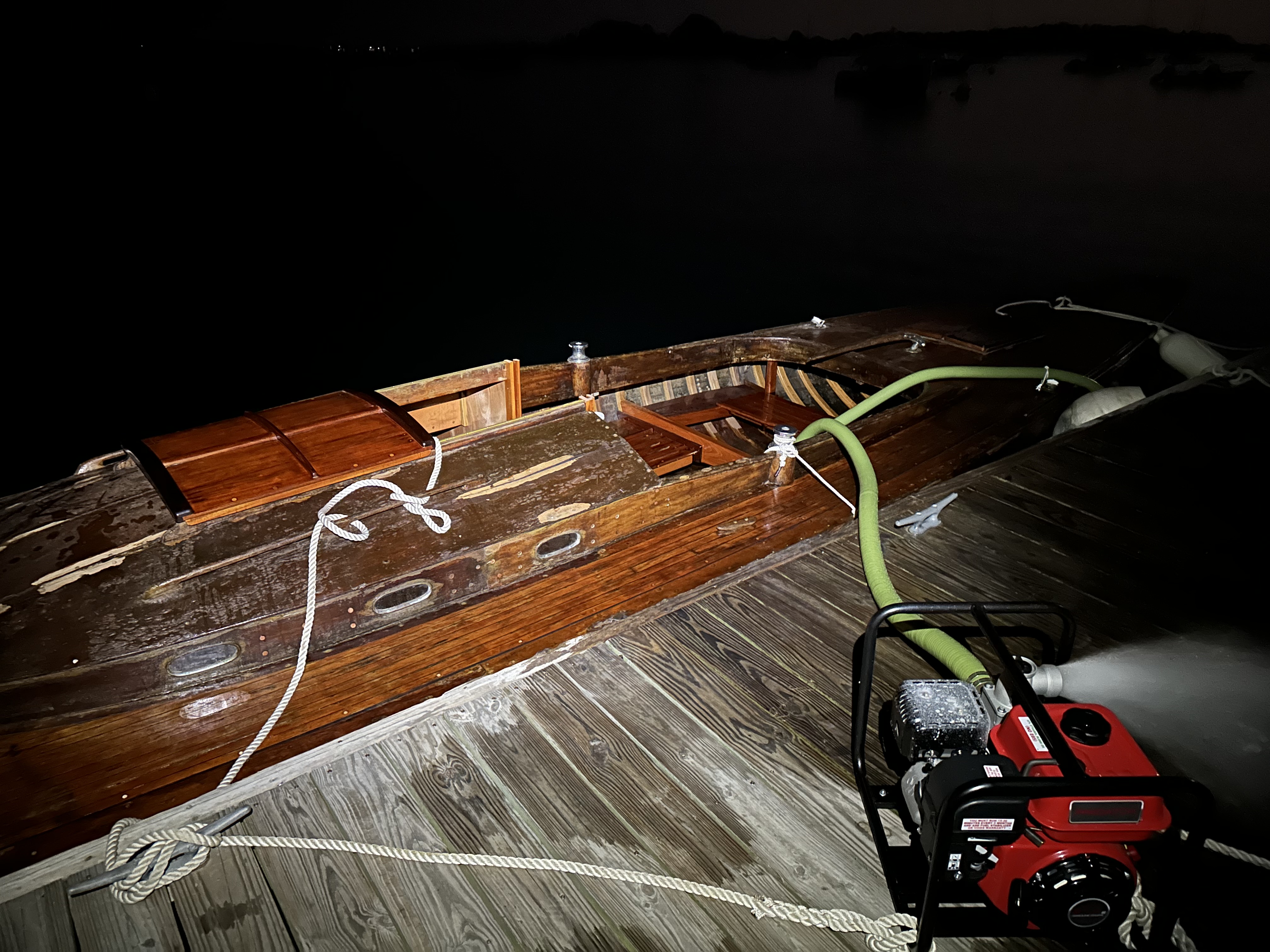
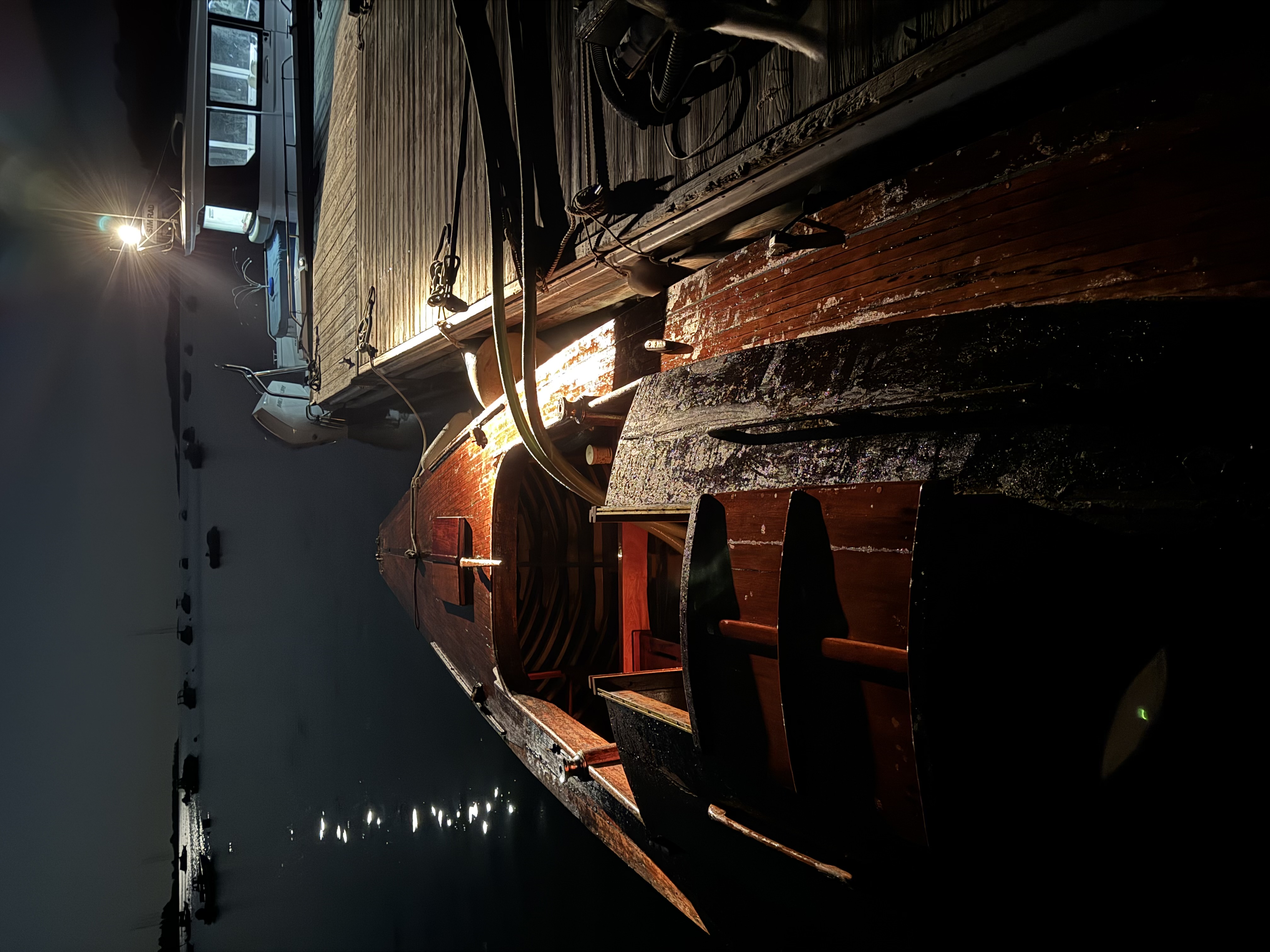
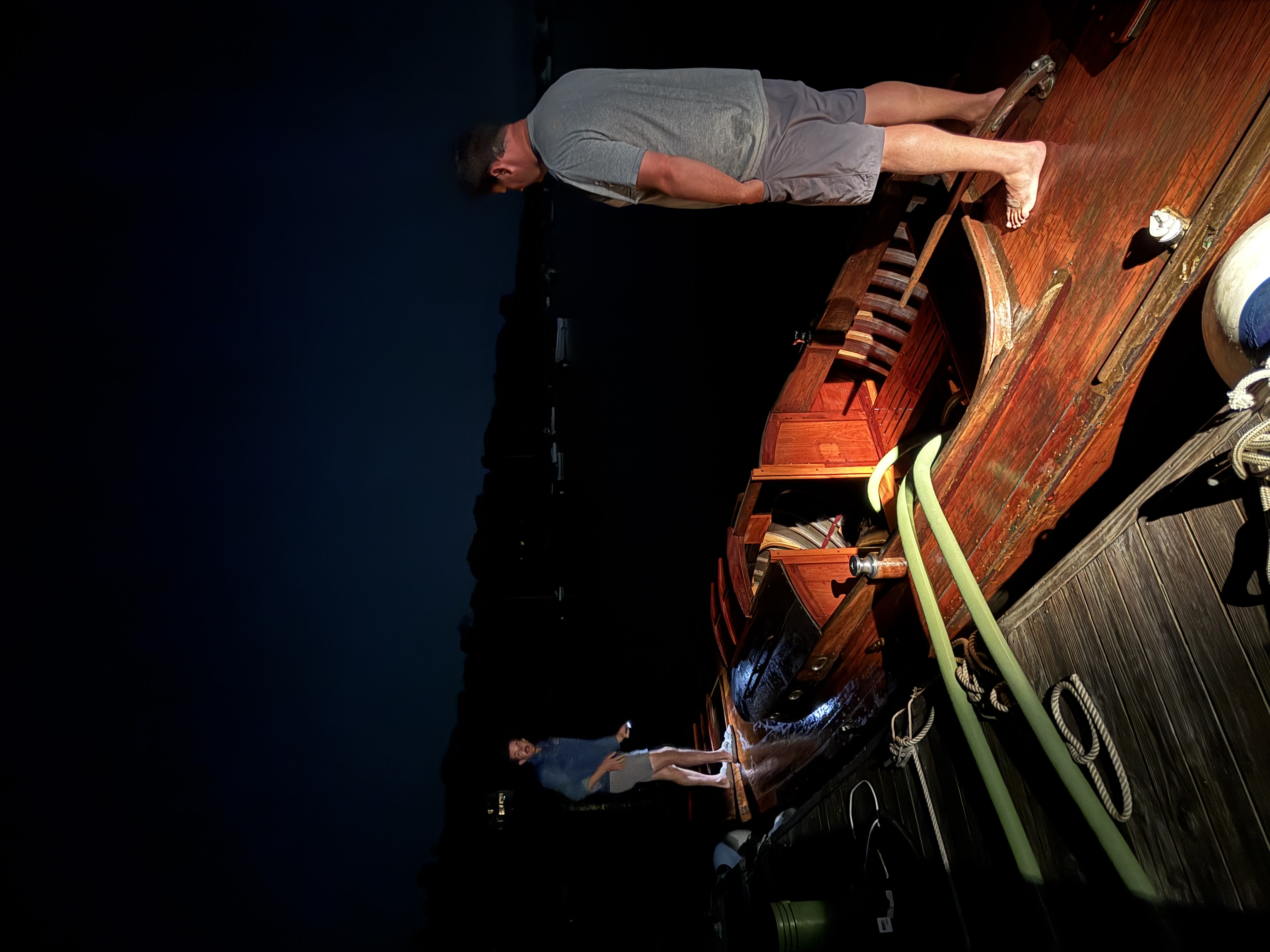
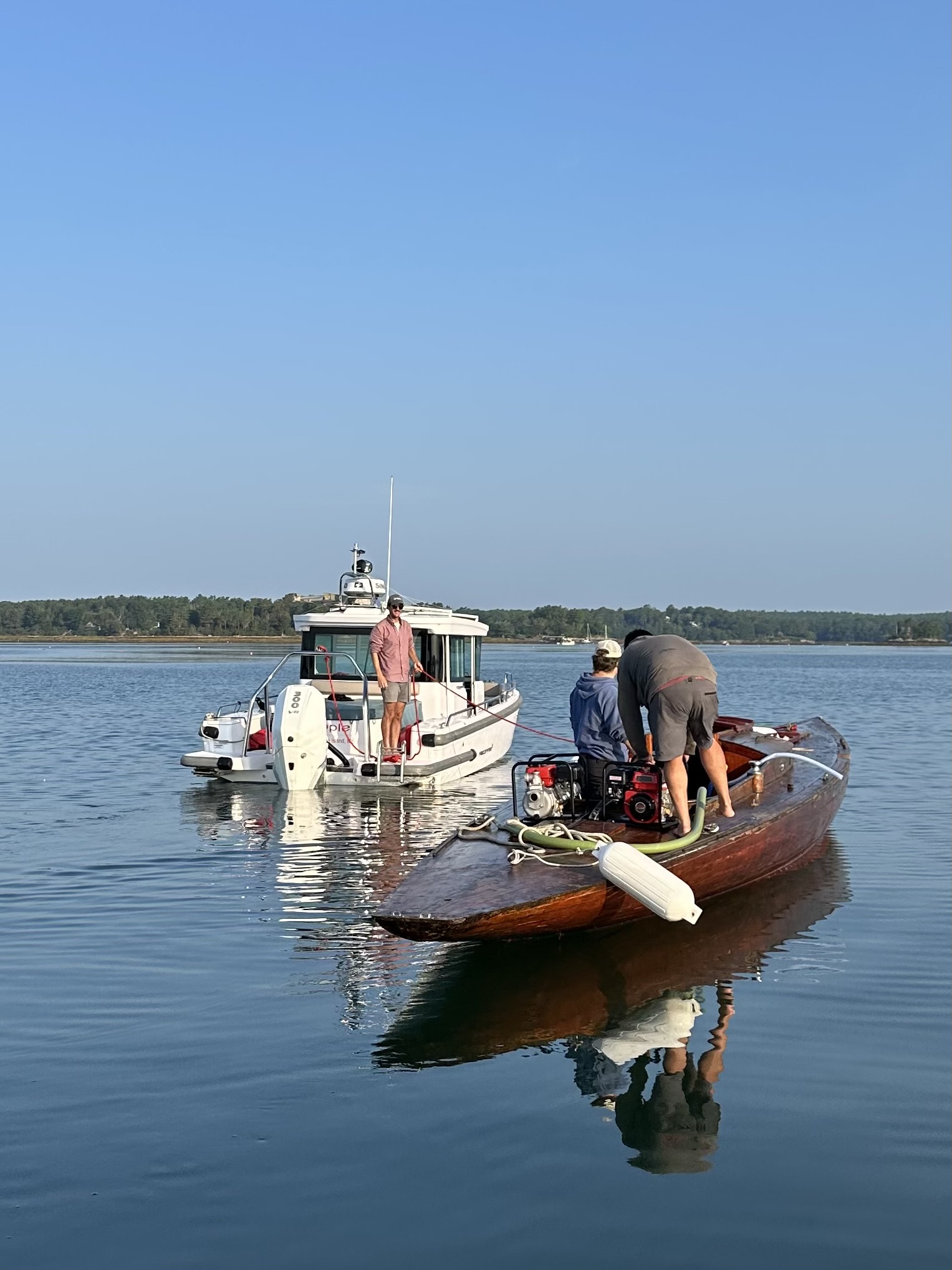
Every old wooden boat leaks at launch. You plan for it — bilge pumps at the ready, a watch schedule to have someone watching around the clock — but it’s still unnerving to see water pouring in from the outside! We also had absolutely no prior experience with this, so had no idea what to expect. I won’t lie. I thought it was about a coin flip as to whether we’d make it from the launch ramp to the float where we had two gas-powered trash pumps ready and waiting. The boatyard crew thought that we might be better served going back on the trailer. But we went for it, and it all worked out.
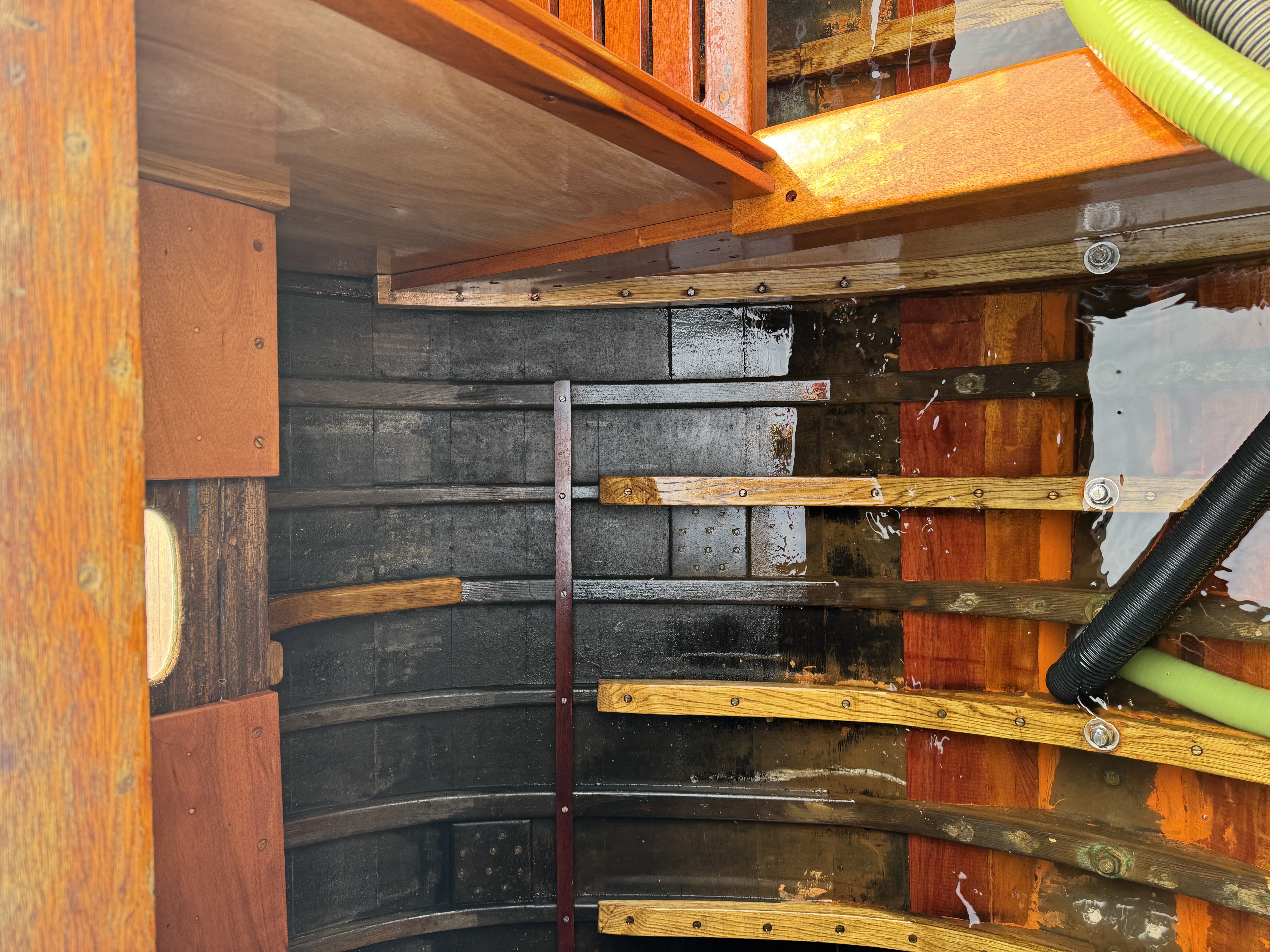
At the end of the day, the new planking we put in took up great and didn’t leak hardly at all, which was extremely gratifying. EXCEPT a couple of sections up at the bow, where we had done our first planking work ever. So that was unfortunate. But we found a temporary fix (slickseam / quickseam) and will eventually perform a more permanent operation now that we are more confident and more skilled.
Ocean streaming in. Gas trash pumps ran around the clock for the first six hours, then gradually the seams closed up.
To the mainland
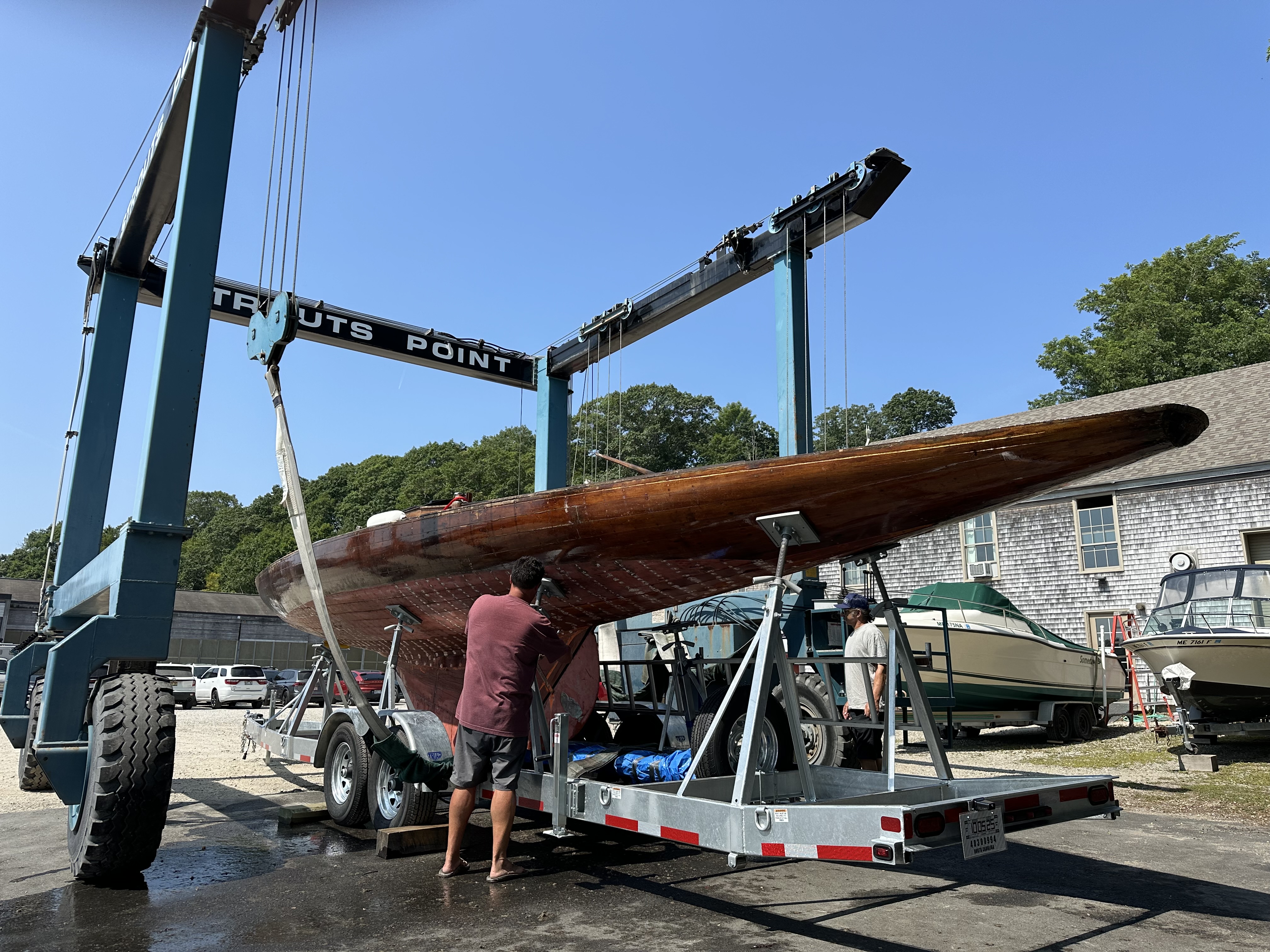
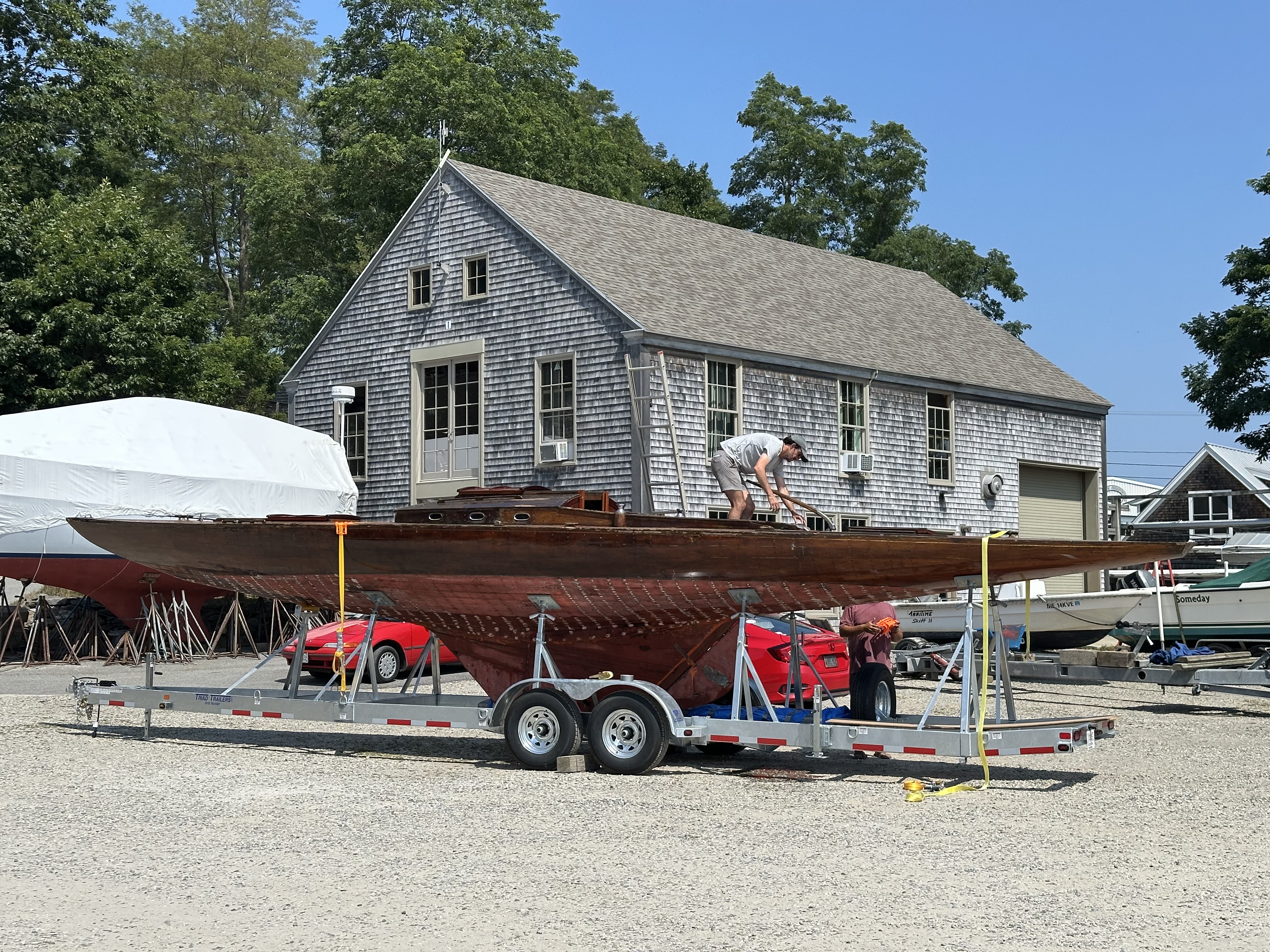
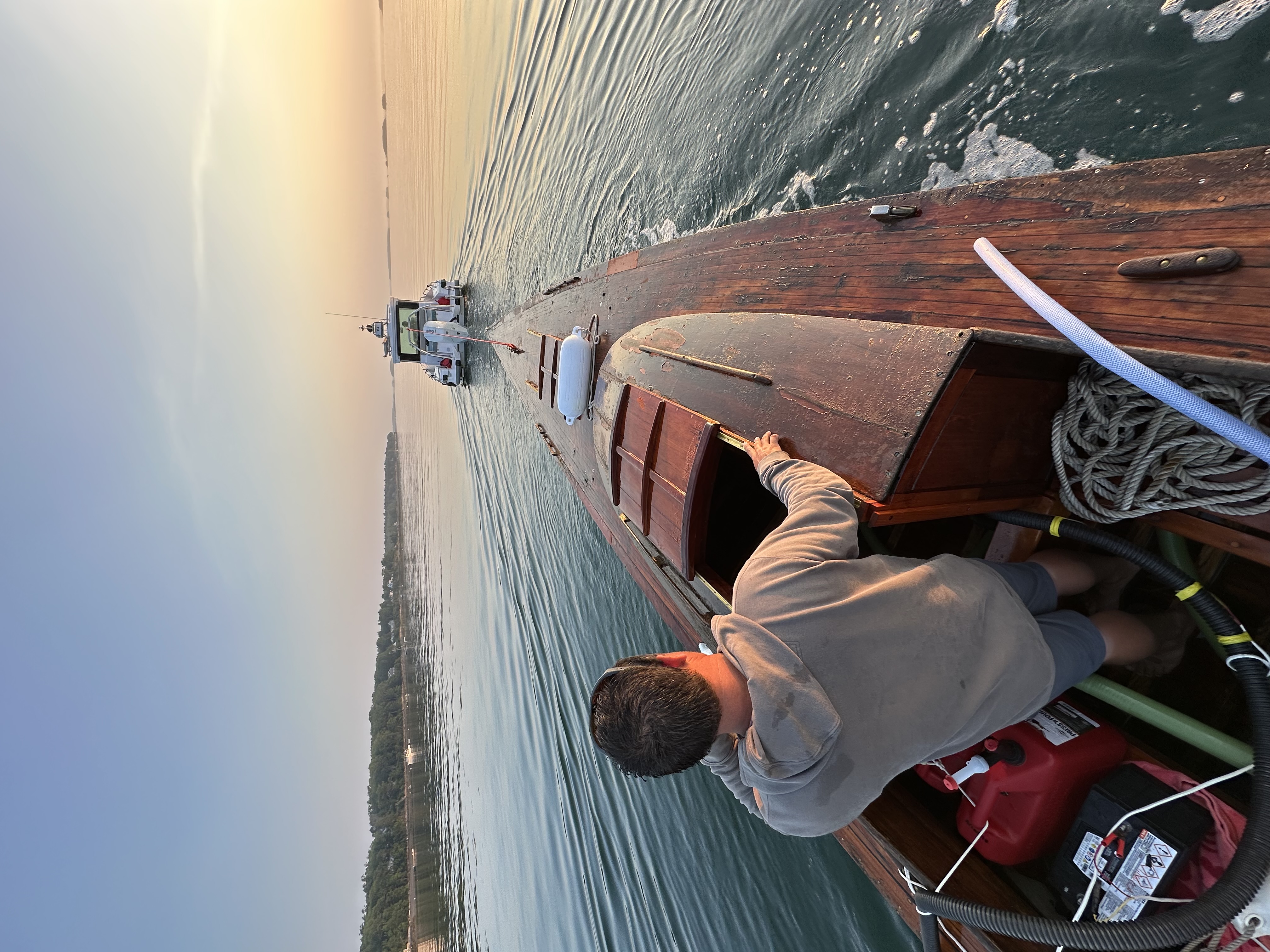
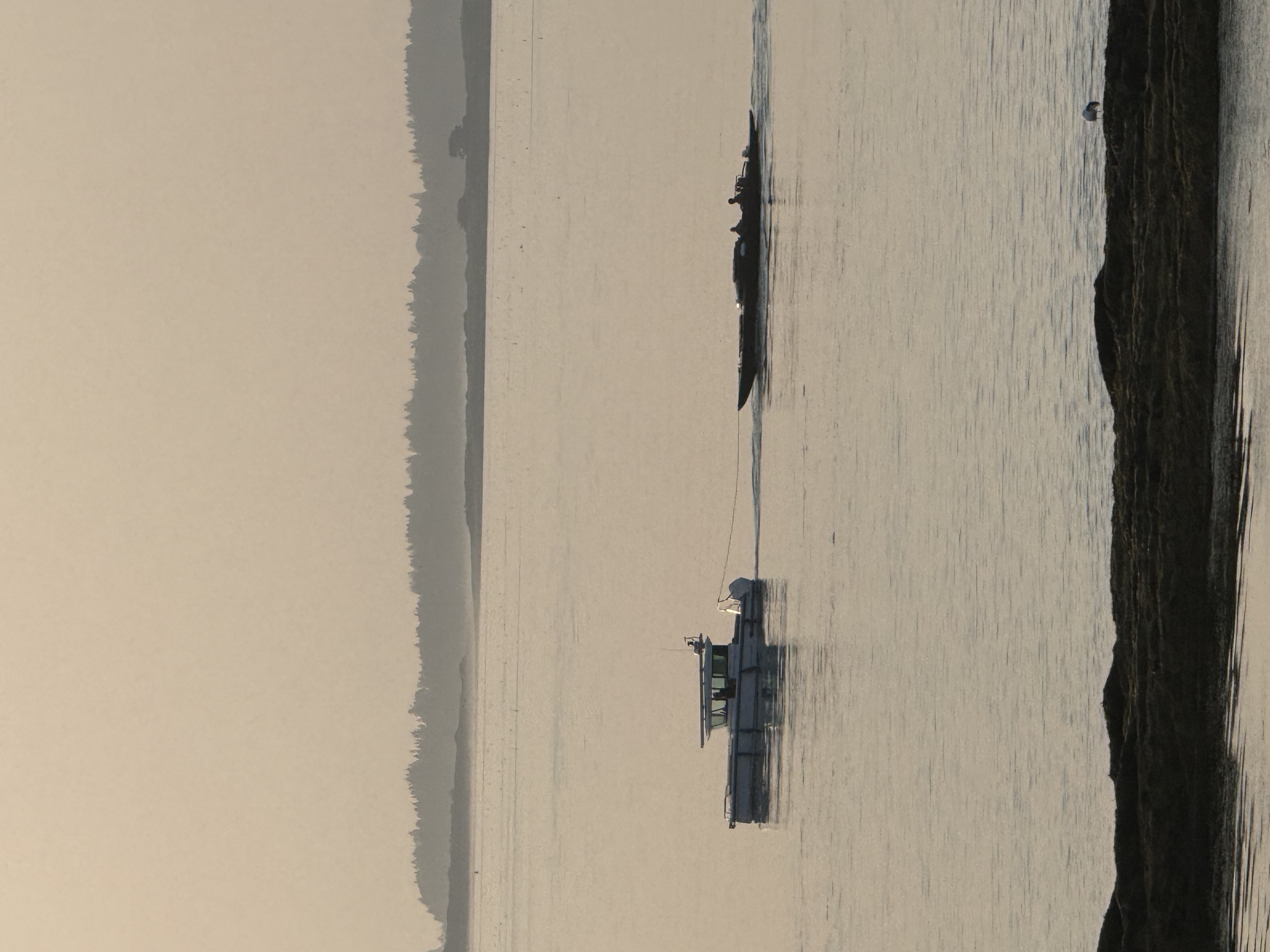
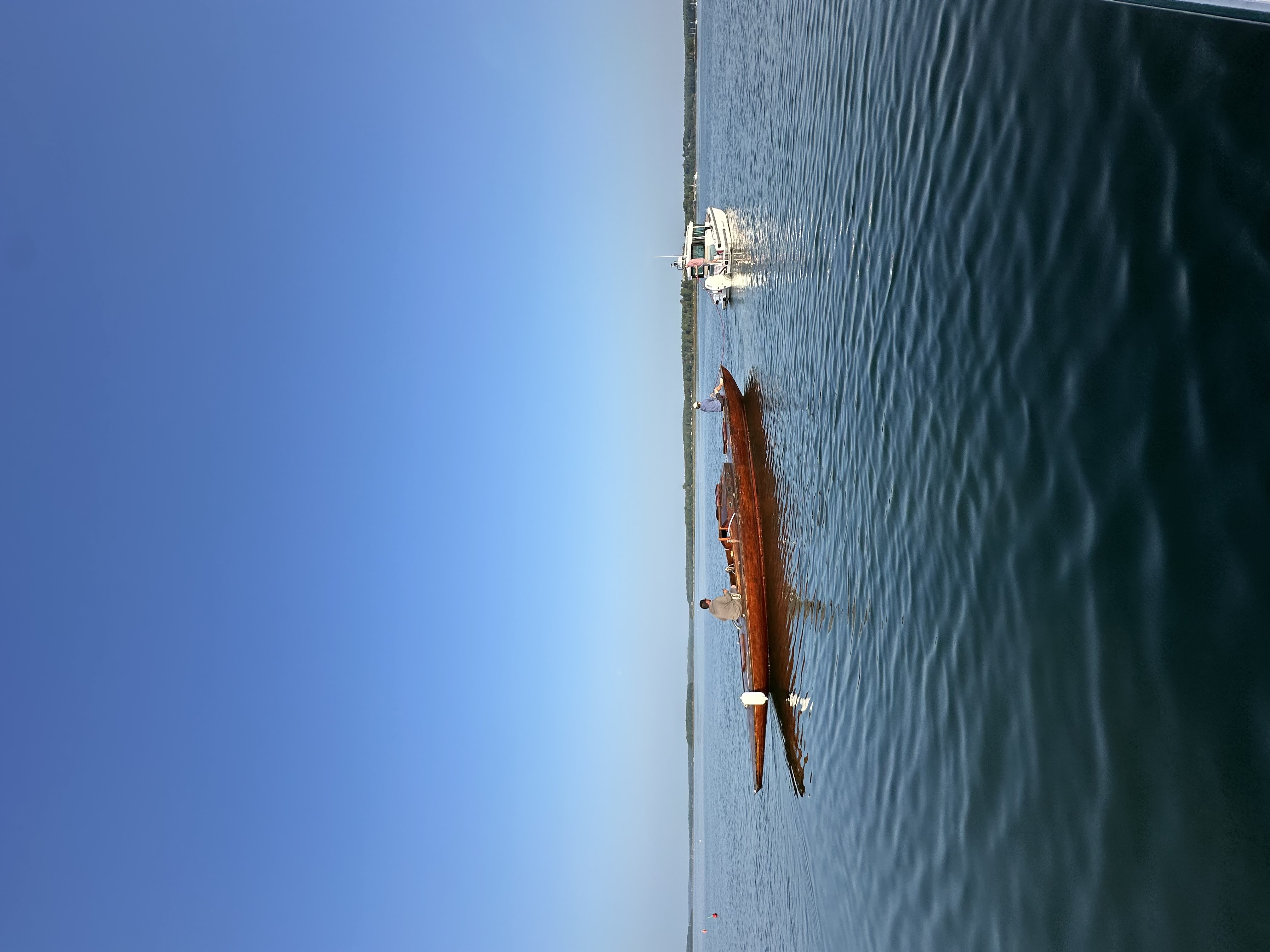
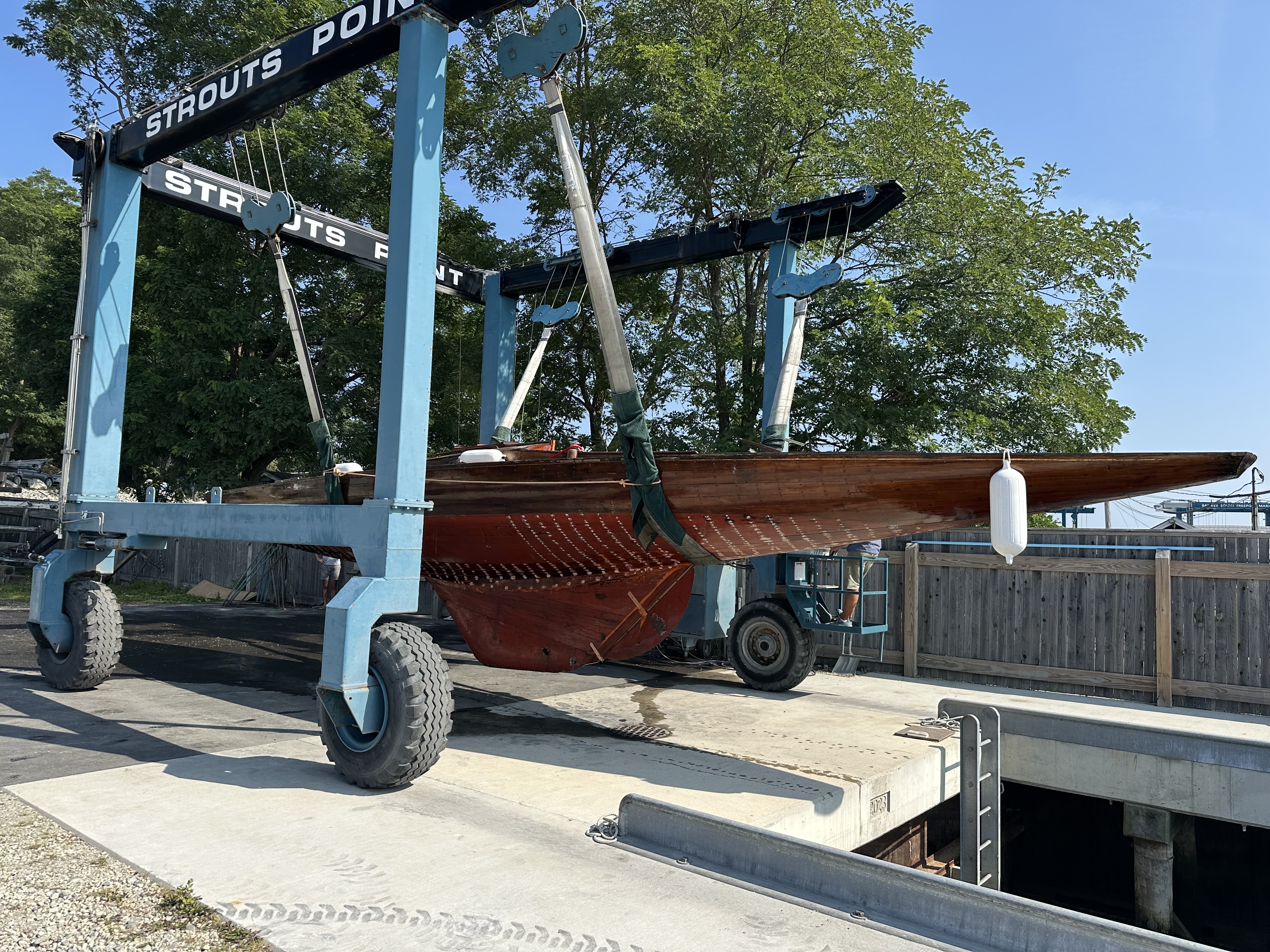
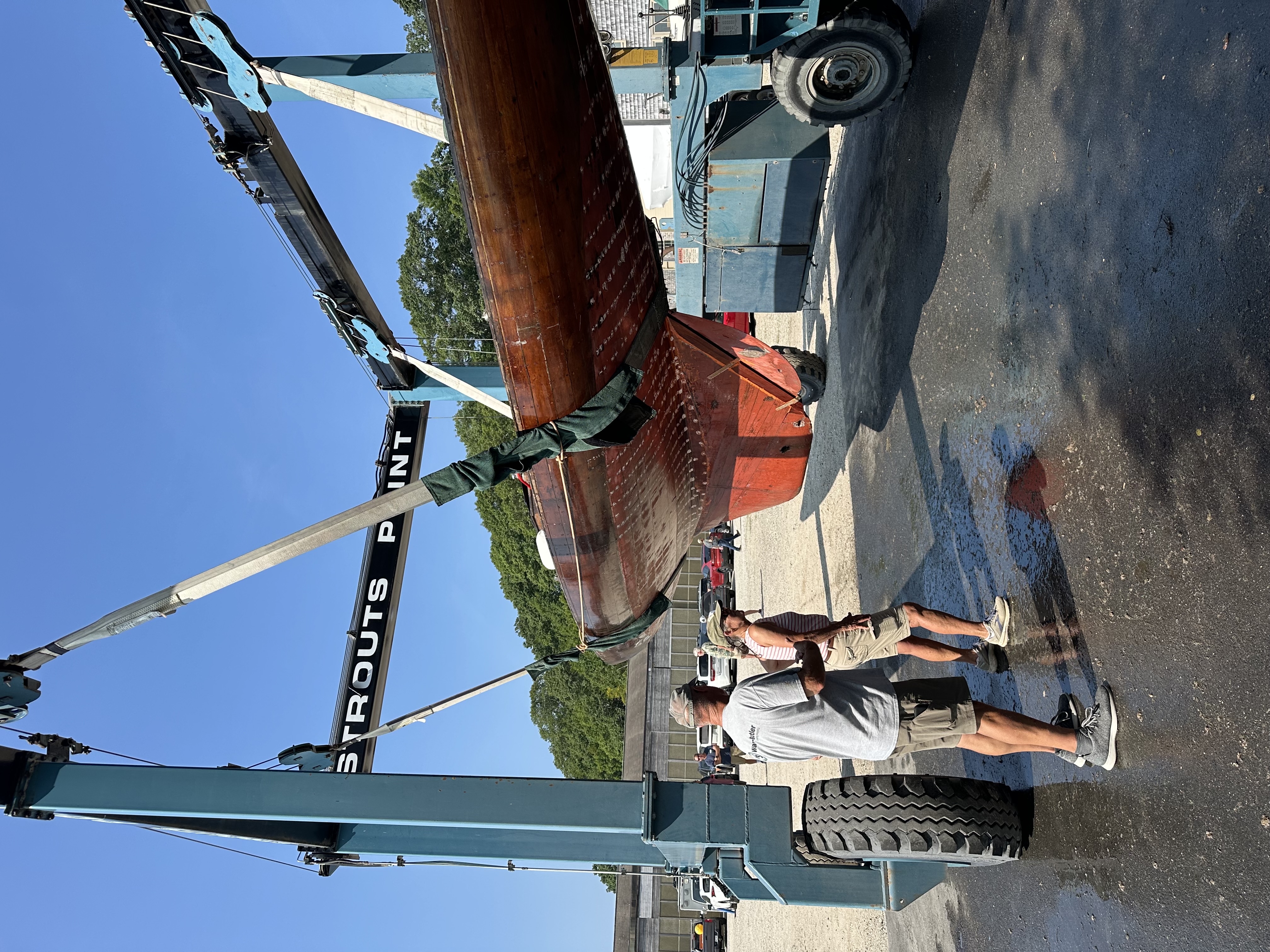
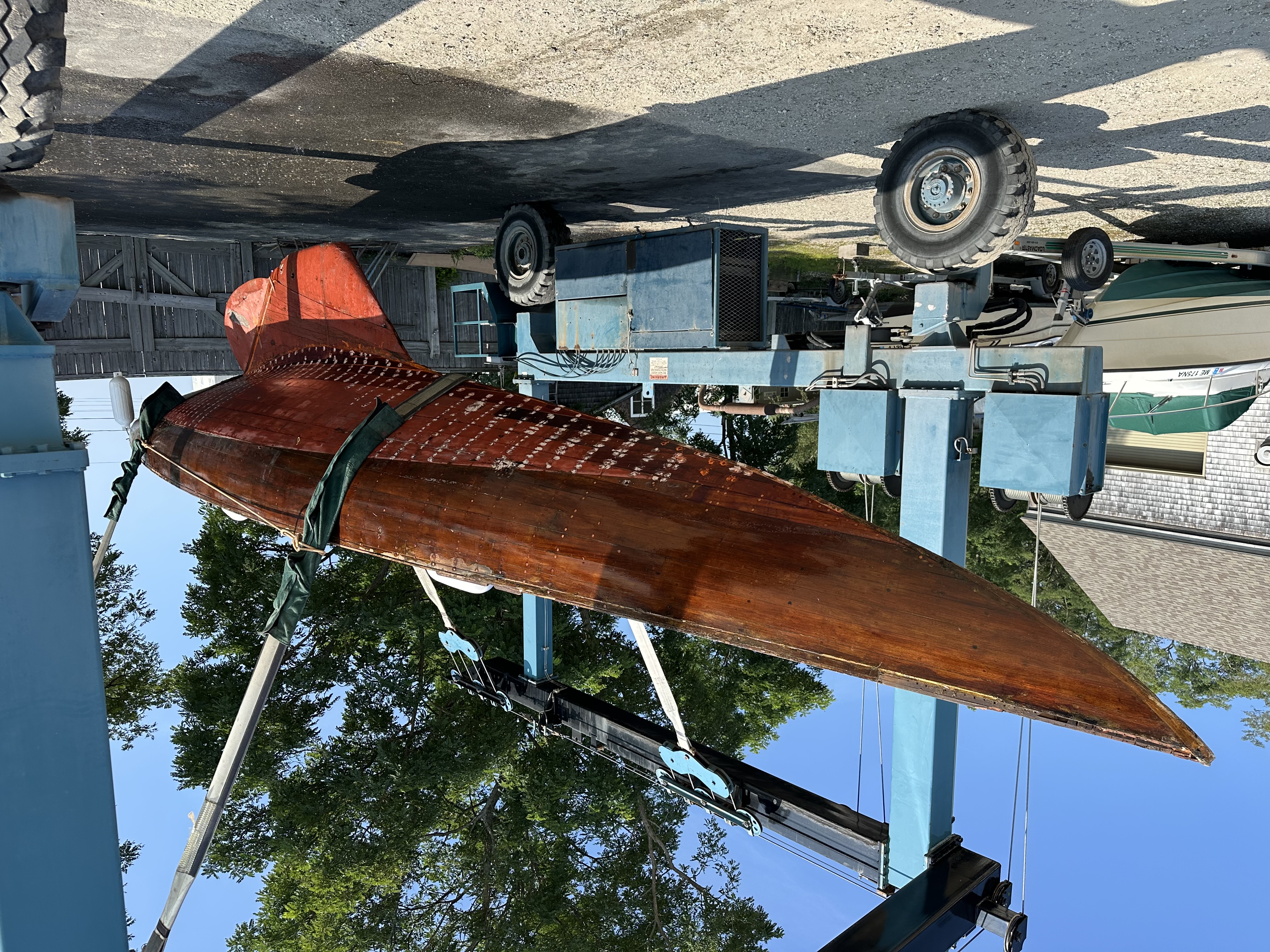
After three days, the leaking slowed to something manageable (pumps off for an hour at a time!) and it was time to get her off the island. She was towed across to the mainland and hauled out on the Travelift at Strouts Point for her transit to the midwest for further work.
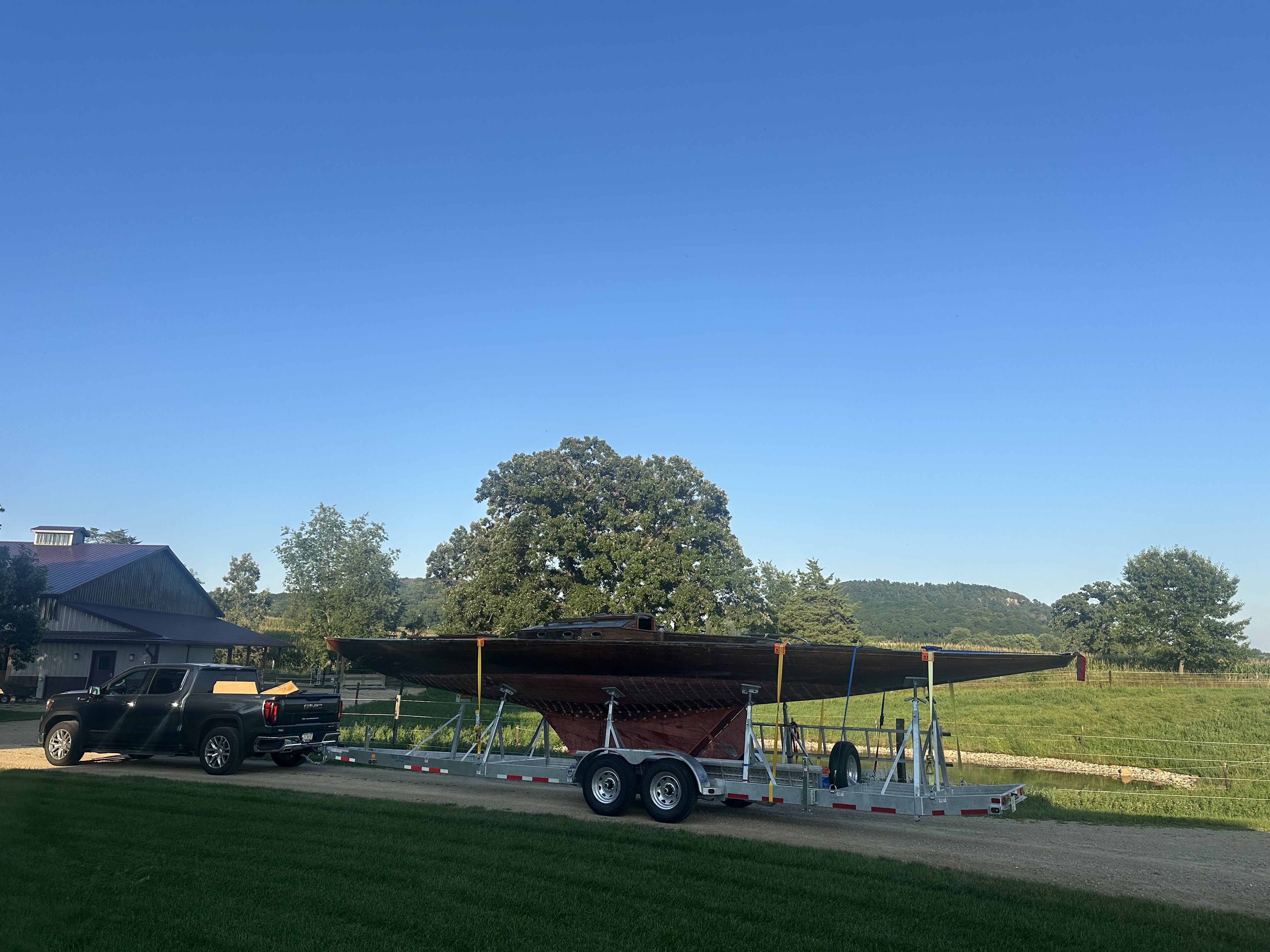
To Wisconsin
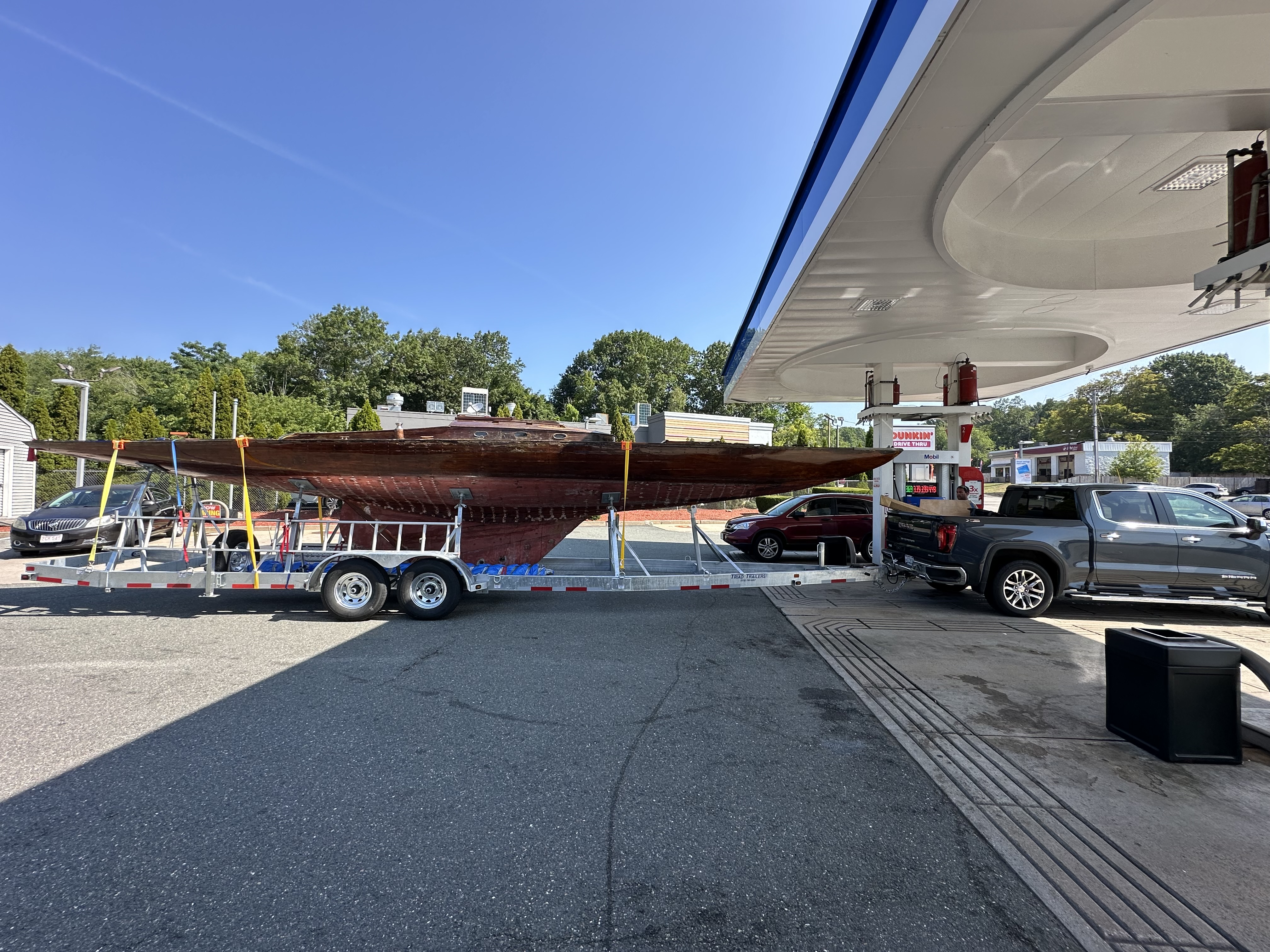
At this stage in the game, the boat is solid enough to handle the vibrations and stresses of a thousand miles in a trailer, so we decided to take her to our primary state of residence to make it easier to finish the job. We had a trailer made to fit Ariadne and hit the road.