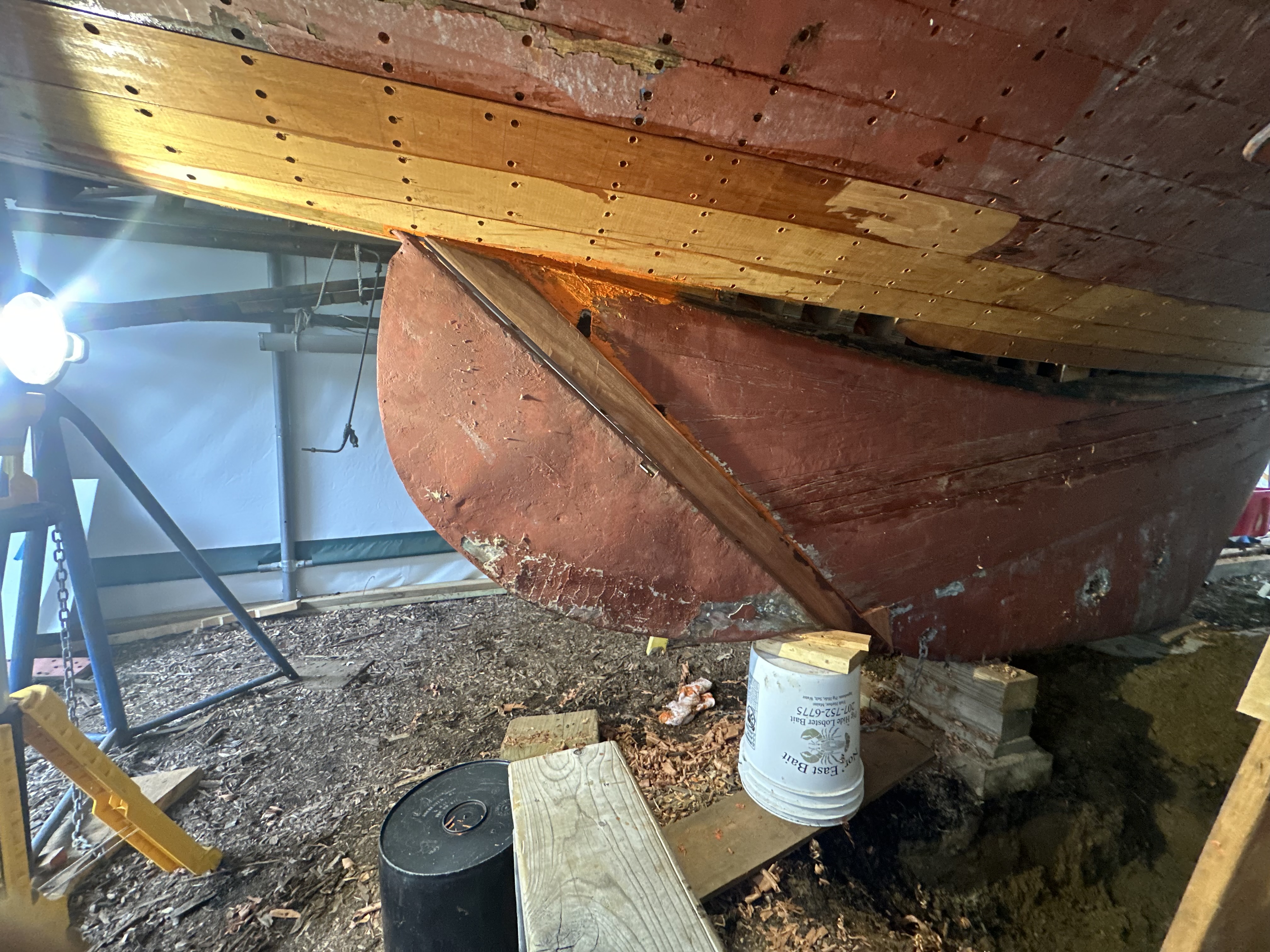
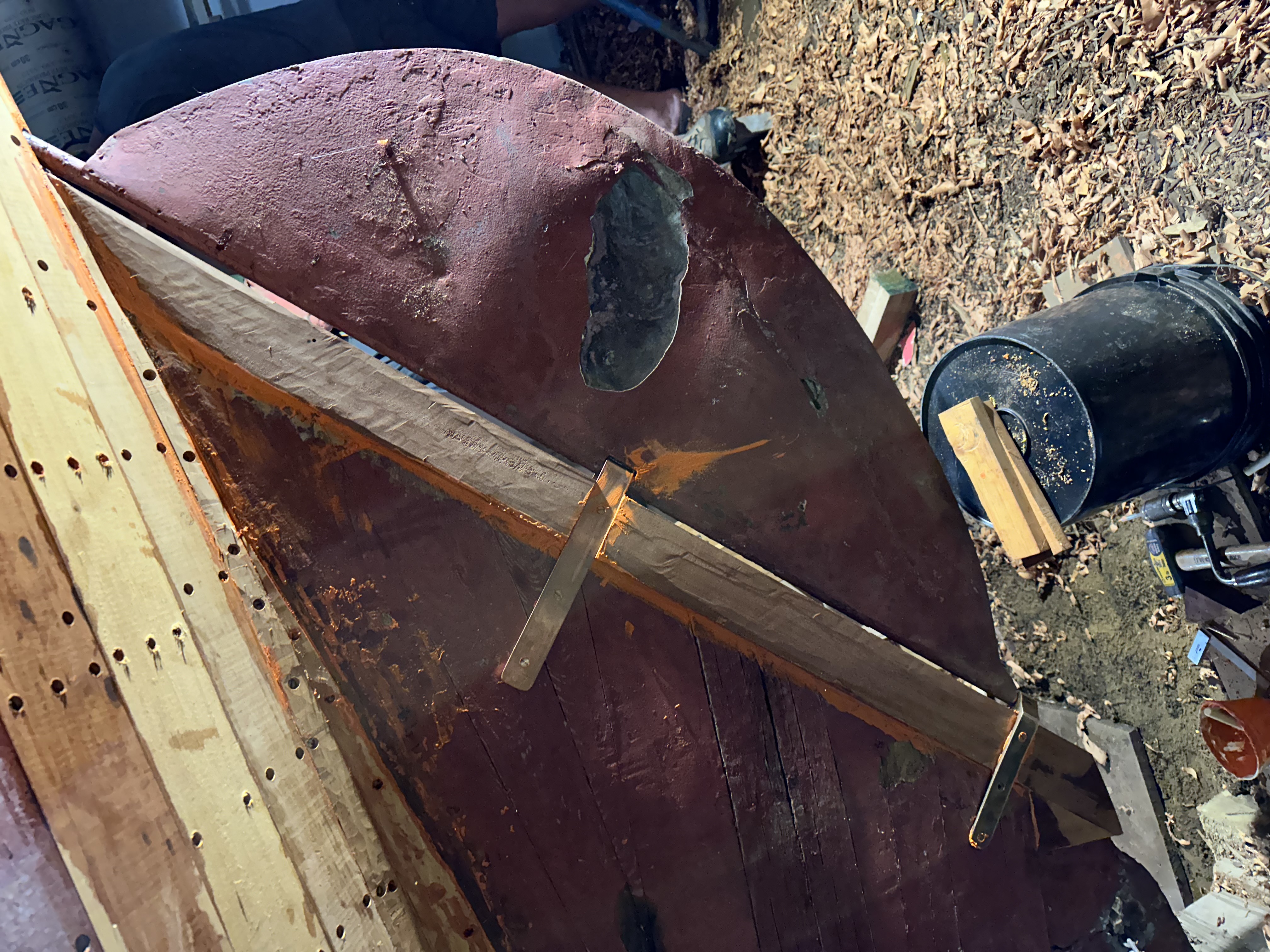
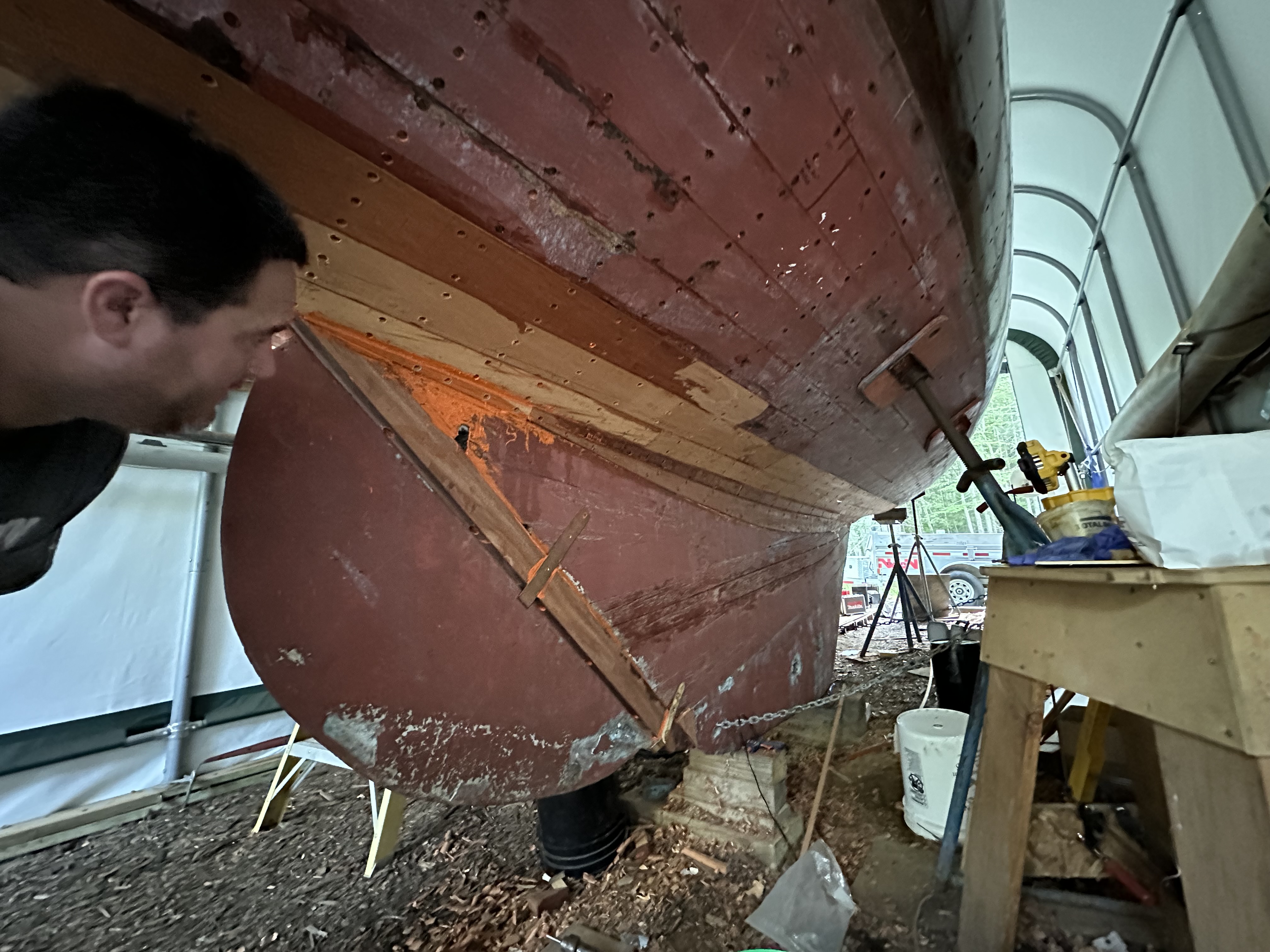
With the new mahogany sternpost installed, it was time to rehang the rudder. This involved more earthmoving than you might initially think.
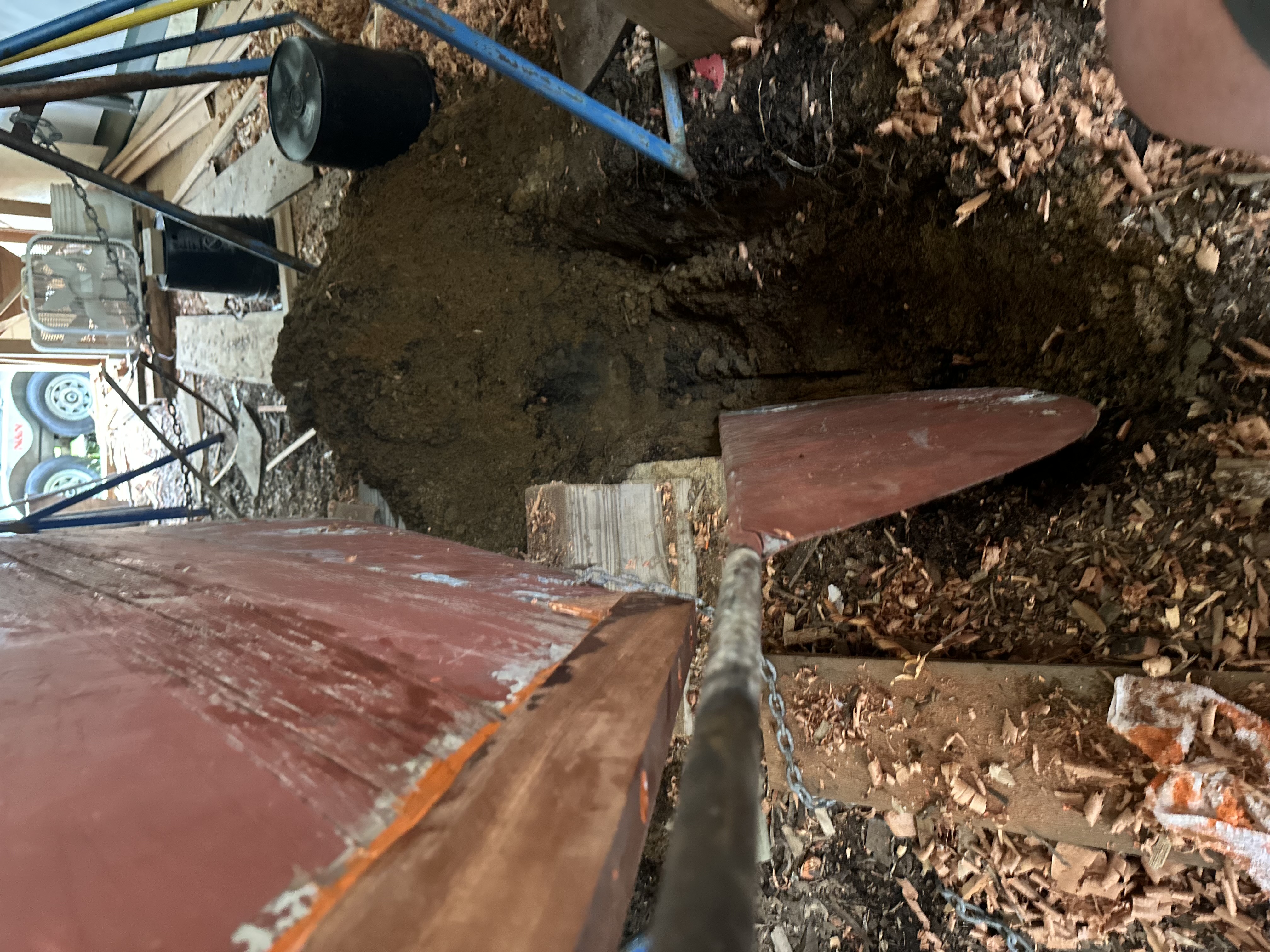
Digging the hole
The rudder drops out the bottom of the boat. There’s no other way. The rudder and attached post tube slides down through the hole in the aftertimber and exits below the hull. The problem is that when the boat is sitting on blocks, there isn’t nearly enough clearance underneath to pull the assembly clear. So we dug a hole.
Drilling the hole for the rudder post
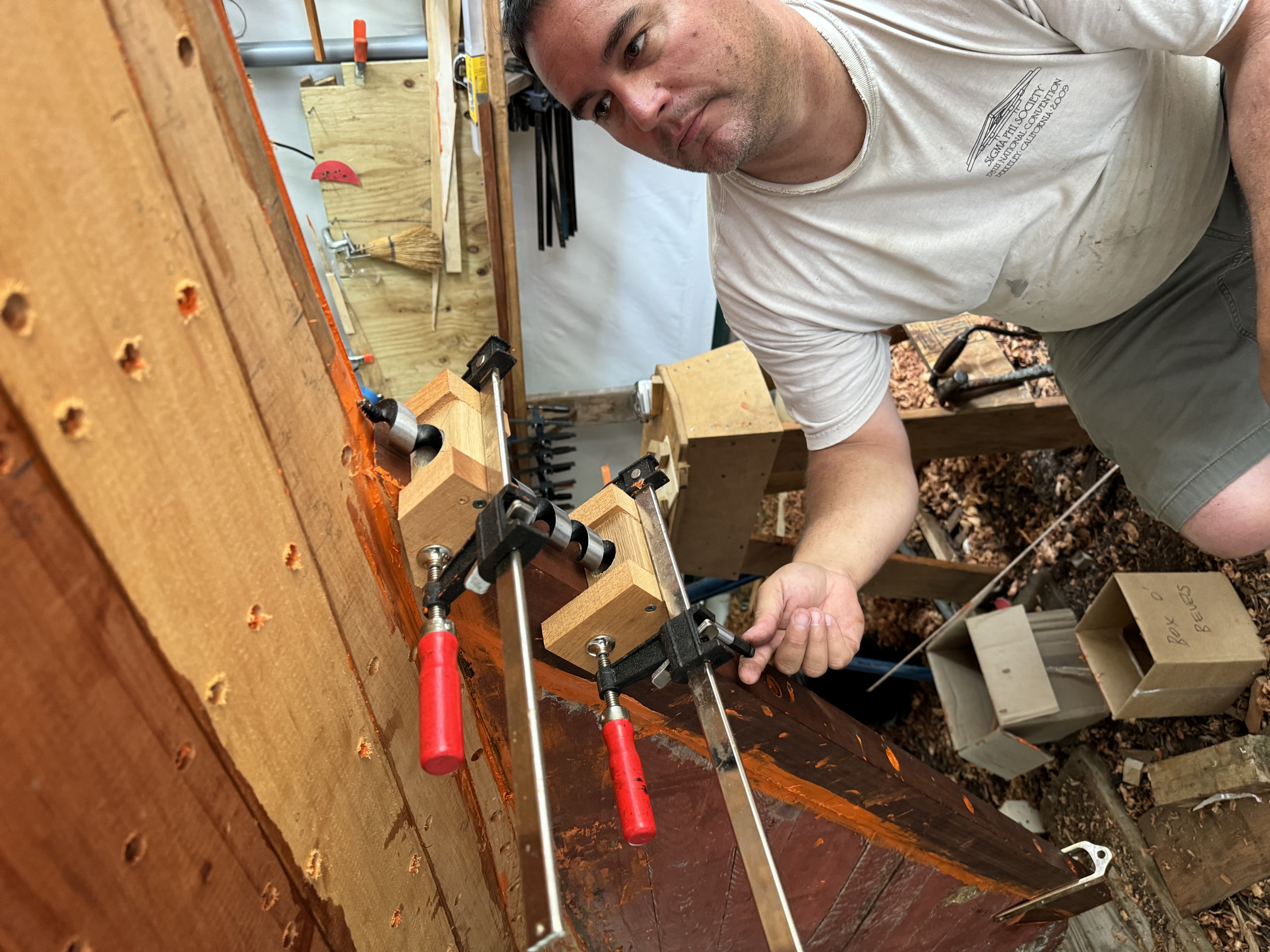
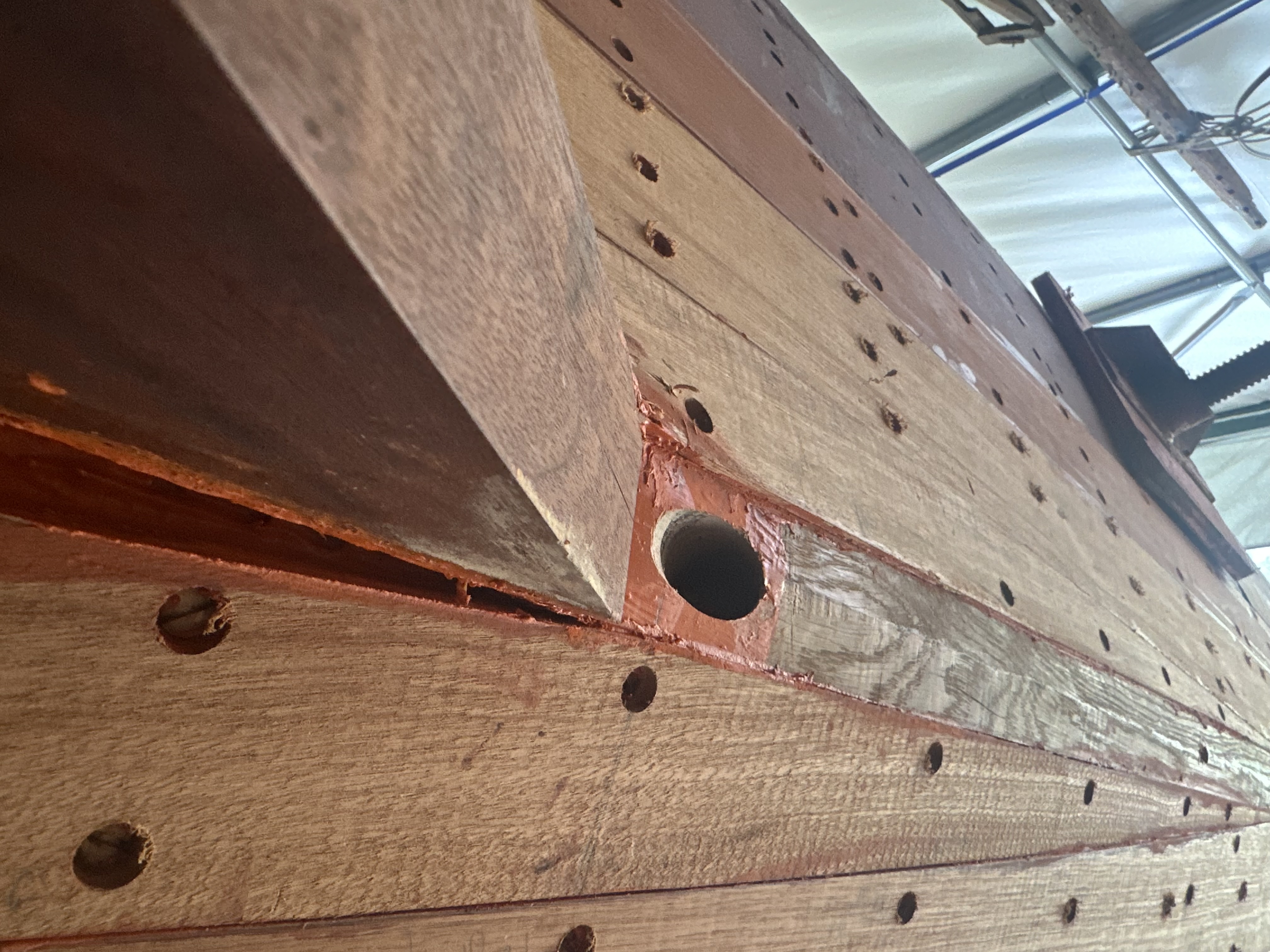
The trickiest part of the whole operation was drilling the hole through the aftertimber for the rudder post to pass through. Get this wrong and the rudder hangs crooked, which means the boat won’t steer straight, leaks, or both. It’s one of those things that you want to get right the first time.
We used a jig clamped to the sternpost to guide the drill. Ideally you’d use a barefoot auger for a job like this — an auger bit without the pilot screw - so it doesn’t pull itself through the wood and follow any weaknesses or irregularities in the grain. We used what we had, and the hole was only a few inches. You really want a barefoot auger for long holes that need to be dead straight, like for a prop shaft.
A new copper strap
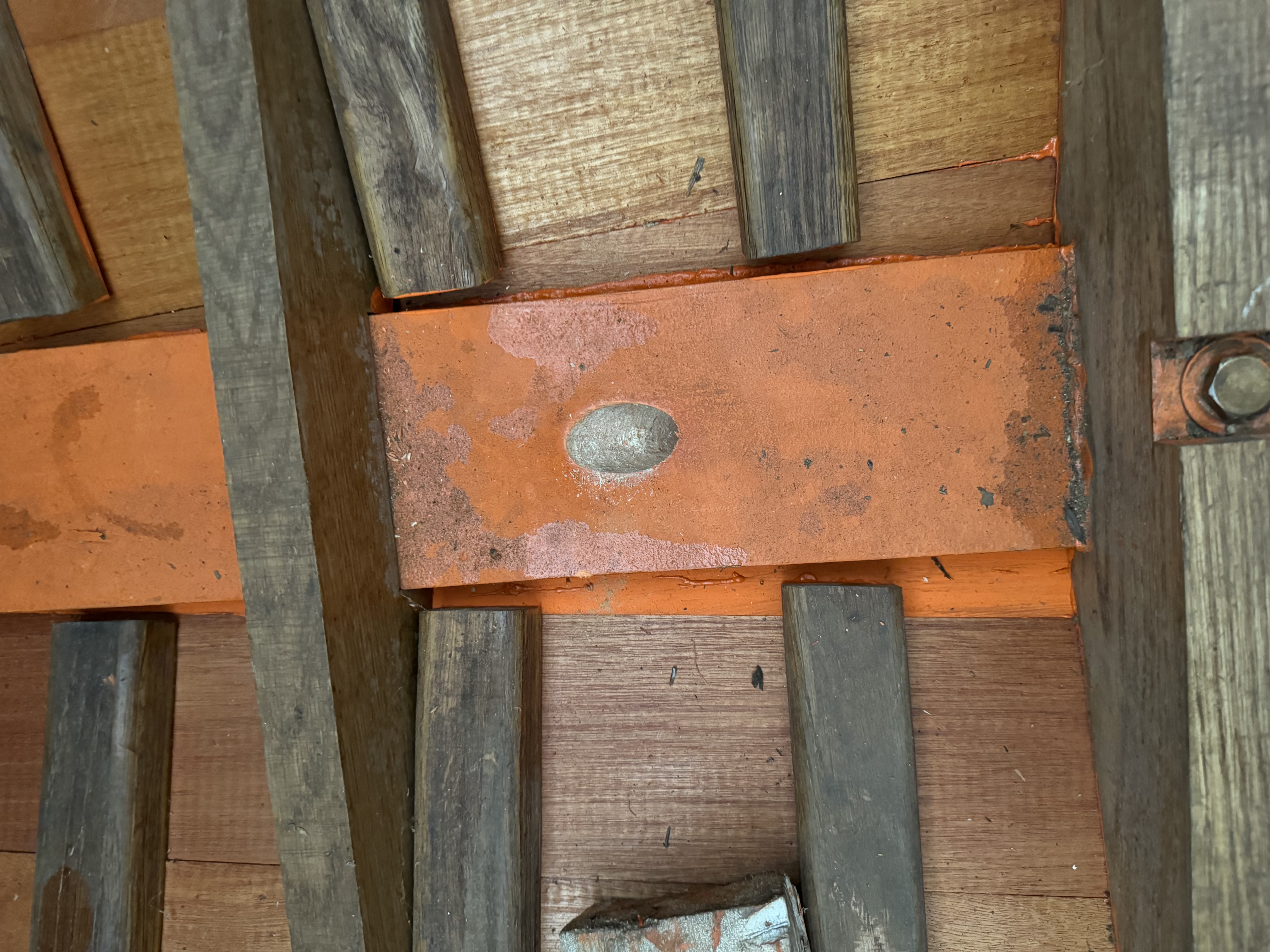
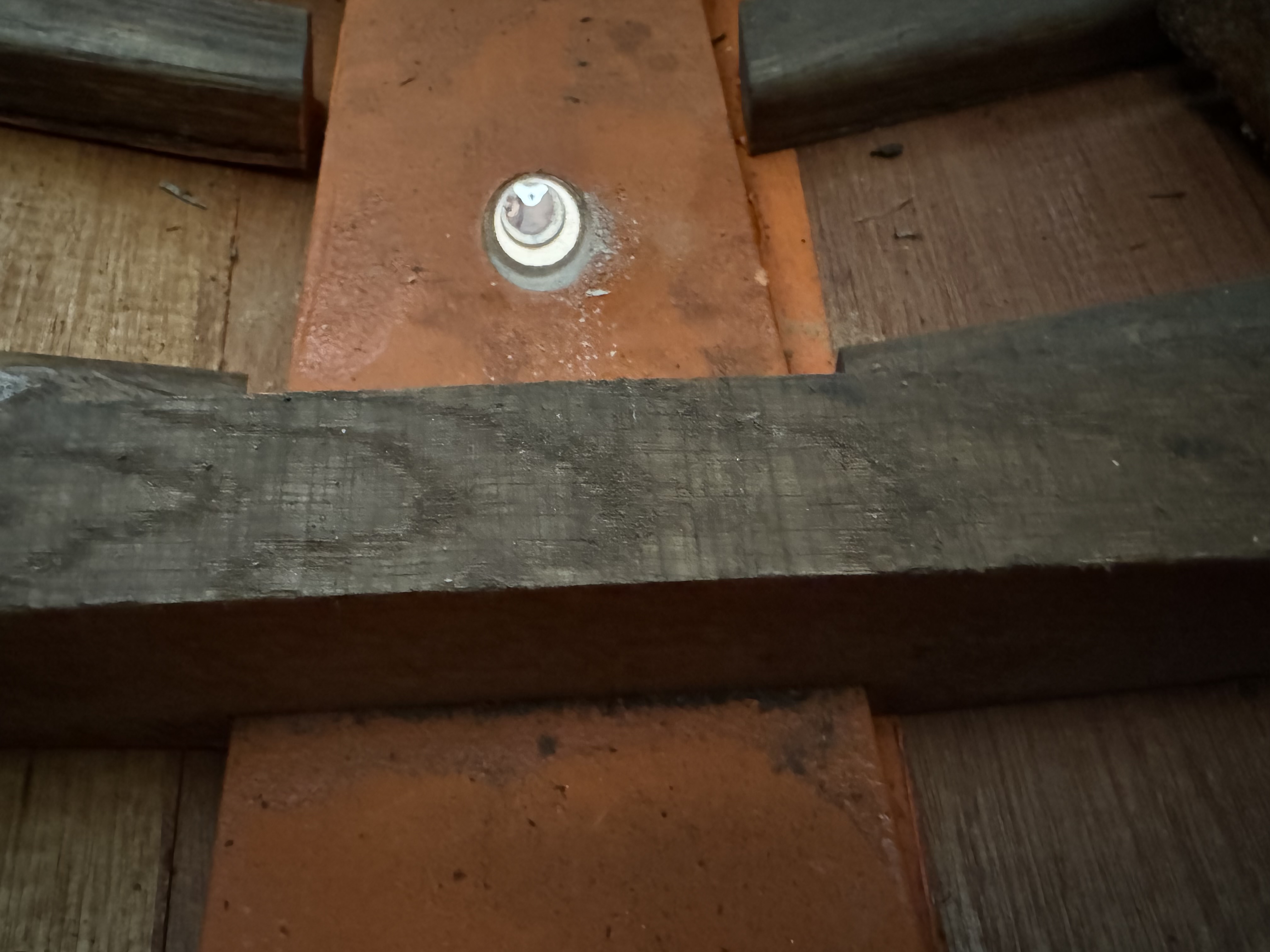
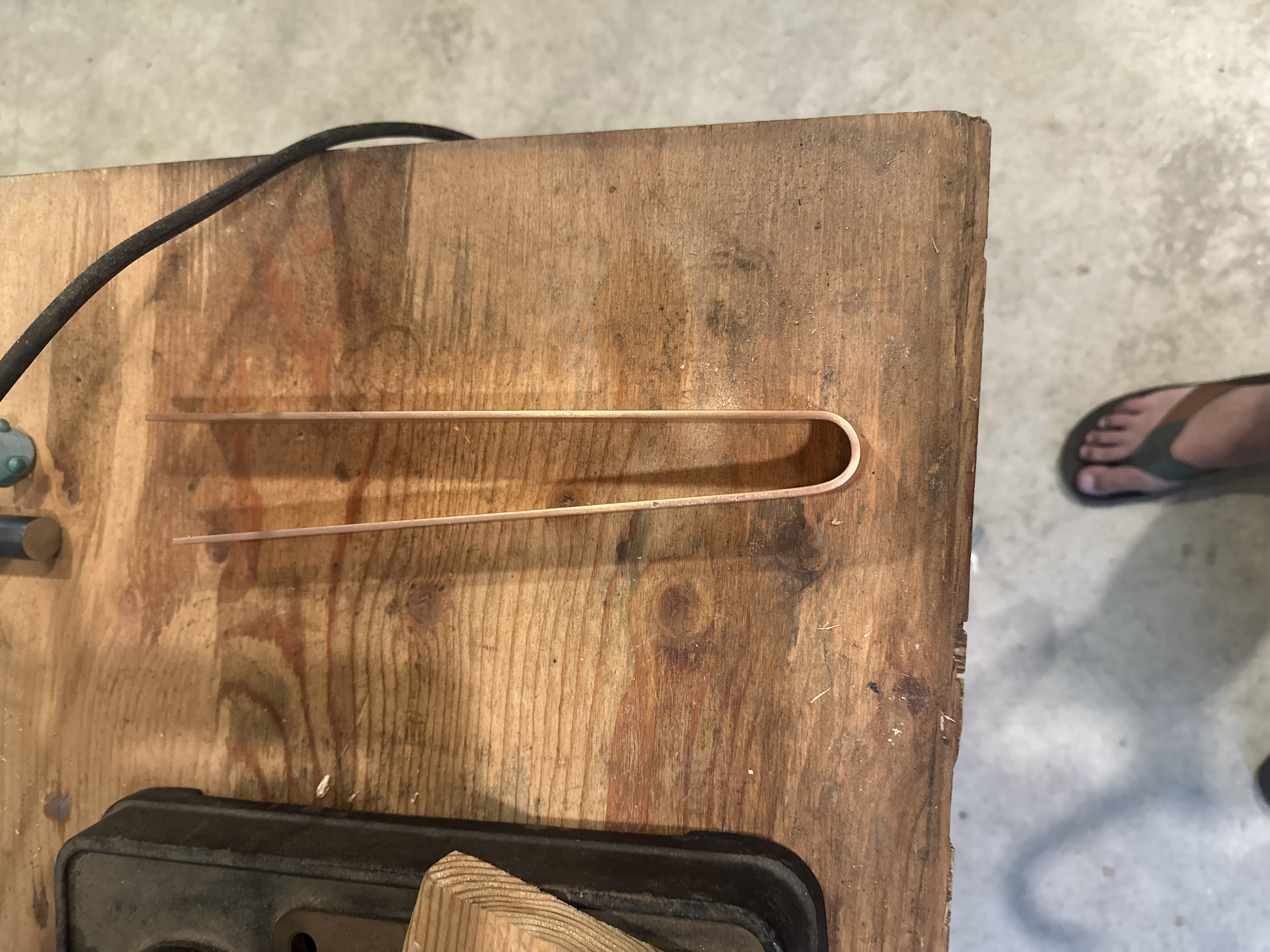
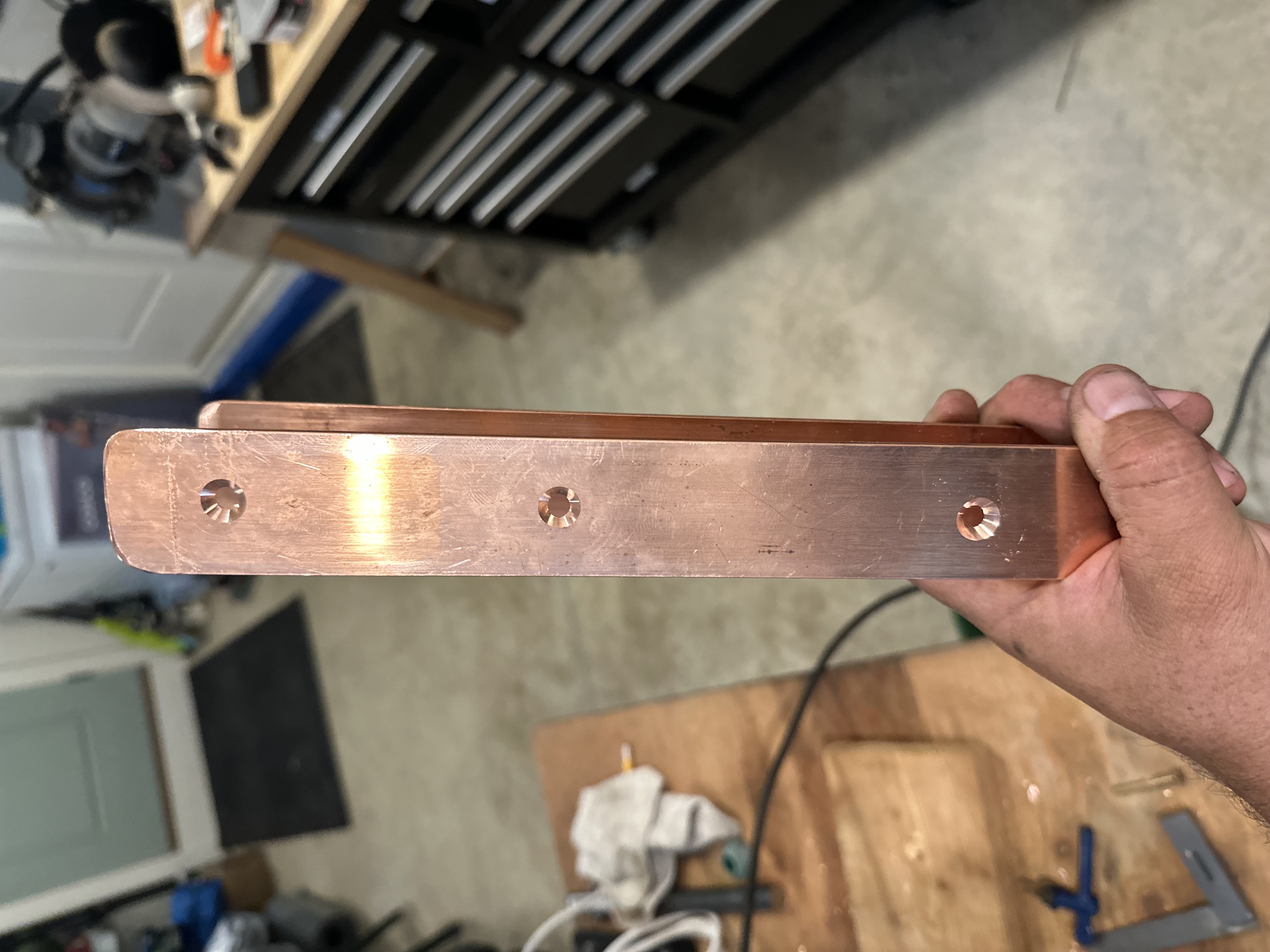
The rudder post is held against the sternpost in three places. First, where it goes through the hole in the aftertimber, there’s a flange bearing. It’s held by a bronze gudgeon at the very bottom. And lastly at the midpoint by a strap — a piece of metal that wraps around the rudder post and fastens to the sternpost to keep the rudder from wandering. The original strap was, to put it charitably, undersized.
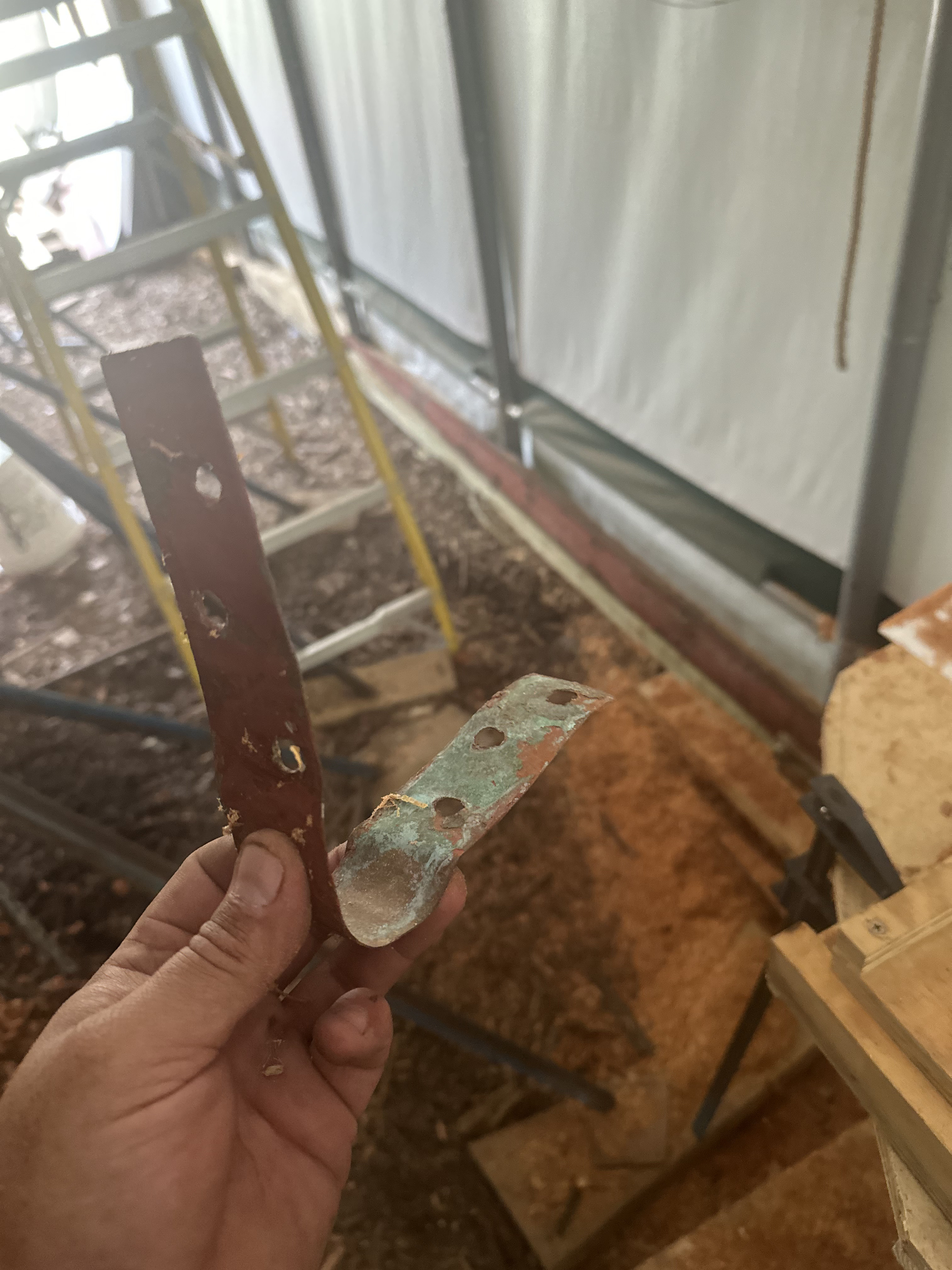
We made a new one from copper plate. Copper is an acceptable material here — it’s compatible with the bronze rudder post in terms of avoiding galvanic corrosion in salt water. Importantly, it was easily available, soft enough to form, easy to work, and stiff enough to hold the rudder in place.
Hanging the rudder
With the new sternpost already in place, we could now hang the rudder. After much searching, we found an off-the-shelf bronze gudgeon for the bottom bearing. One of those rare cases where a production fitting matched what we needed.